
The smallest molecule. The most precise work.
1,300+ peer-reviewed studies. Zero known side effects.
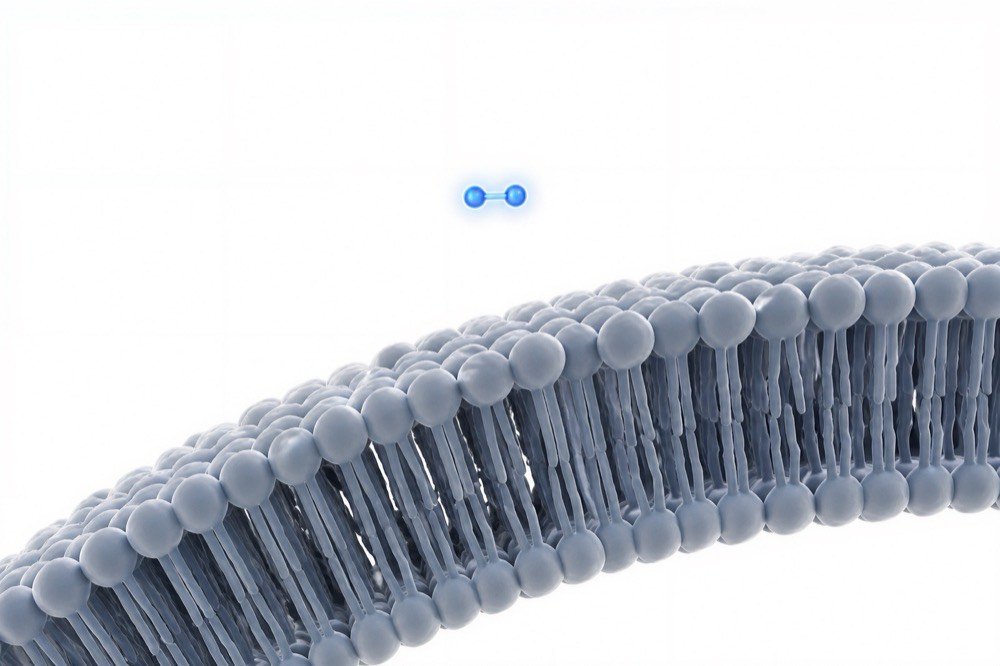
The problem with conventional antioxidants.
Your body produces free radicals constantly — during exercise, metabolism, immune responses. Some of these radicals are useful. Hydrogen peroxide (H2O2) helps your immune system fight pathogens. Superoxide signals your cells to adapt to stress. Nitric oxide regulates blood flow.
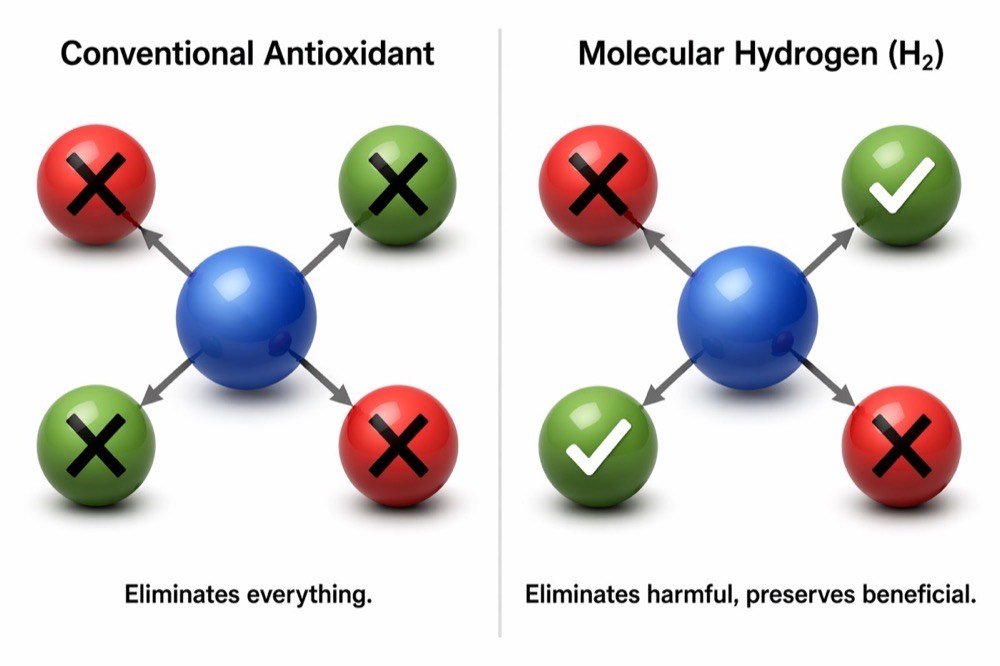
Conventional antioxidants — vitamin C, vitamin E, polyphenols — don't discriminate. They neutralise all free radicals, including the ones your body deliberately created.
Imagine a security guard who tackles everyone in the building — intruders and employees alike. That's how most antioxidants work.
What the body actually needs is a selective antioxidant. One that targets only the destructive radicals and leaves the beneficial ones untouched.
What makes molecular hydrogen selective.
Molecular hydrogen (H2) targets only two radicals: the hydroxyl radical (•OH) and peroxynitrite (ONOO⁻). These are the two most destructive oxidants in human biology — responsible for DNA damage, lipid peroxidation, and protein degradation at the cellular level.
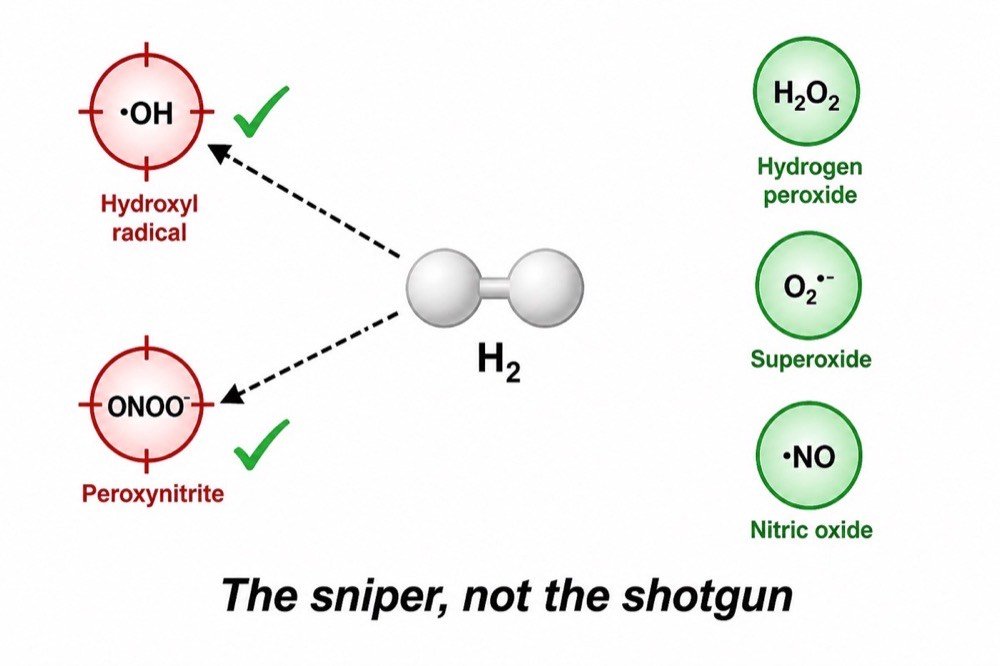
Everything else — hydrogen peroxide, superoxide, nitric oxide — is left untouched. The beneficial radicals keep doing their jobs. The destructive ones are neutralised.
H2 + 2 •OH → 2 H2O
The only byproduct is water.
This selectivity is what makes molecular hydrogen fundamentally different from every other antioxidant. It doesn't override the body's own systems. It works with them.
Beyond scavenging: the Nrf2 pathway.
Hydrogen doesn't just fight free radicals directly. It activates the Nrf2 pathway — your body's master switch for antioxidant gene expression.
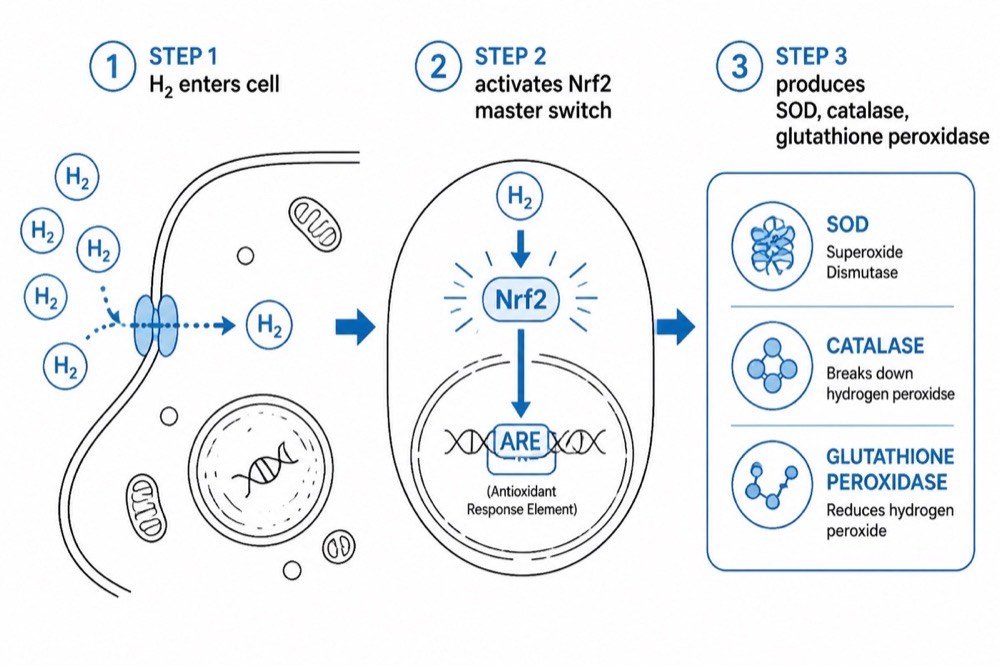
When H2 activates Nrf2, the body produces its own antioxidant enzymes: superoxide dismutase (SOD), catalase, glutathione peroxidase. These are far more powerful than any supplemental antioxidant because they're produced by your own cells, in the right quantities, at the right locations.
Hydrogen doesn't just fight free radicals. It trains your cells to fight them better on their own.
This is the difference between handing someone a fish and teaching them to fish. Molecular hydrogen does both — scavenges the worst radicals immediately, then upregulates the body's own defence system for the long term.
The smallest molecule, the deepest reach.
Molecular hydrogen is the smallest molecule in existence. Two atoms. Nothing smaller that still qualifies as a molecule.
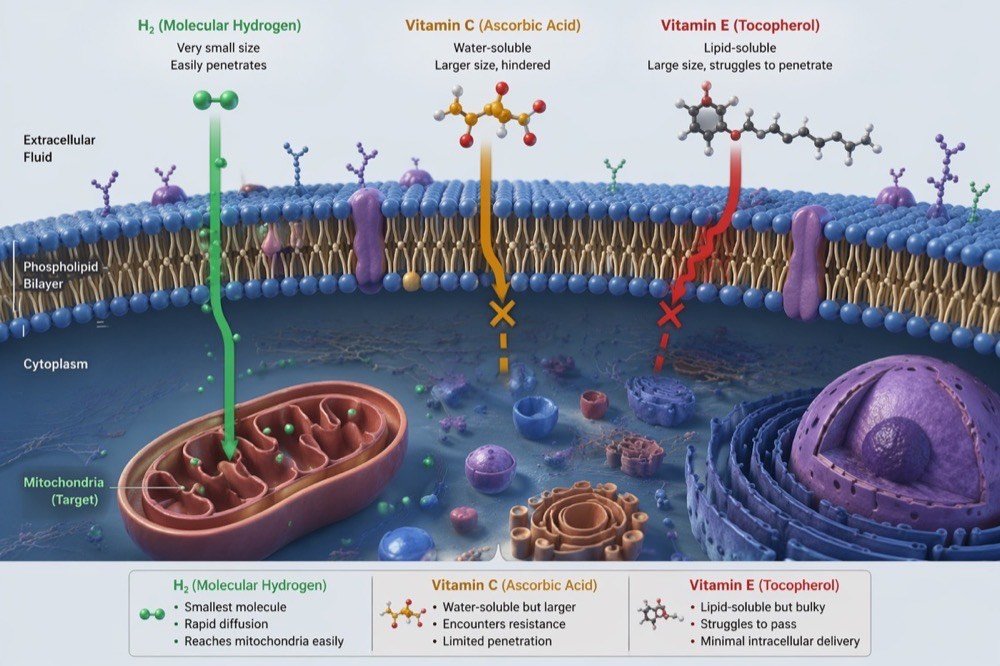
This size matters because the worst oxidative damage happens inside mitochondria and cell nuclei — areas most antioxidants can't reach. The cellular membrane is selective. Large molecules like vitamin C and vitamin E struggle to cross it.
H2 passes through cellular membranes as easily as it passes through a glass wall. It reaches the mitochondria — where energy is produced and where the most destructive free radicals accumulate — and neutralises hydroxyl radicals at the source of damage.
No other antioxidant can make this claim with the same ease.
Why there is no overdose.
Molecular hydrogen doesn't accumulate in the body. Unlike minerals or fat-soluble vitamins, hydrogen doesn't store. Excess is exhaled through the lungs and diffused through the skin within minutes. No residue. No buildup. No accumulation in any organ.
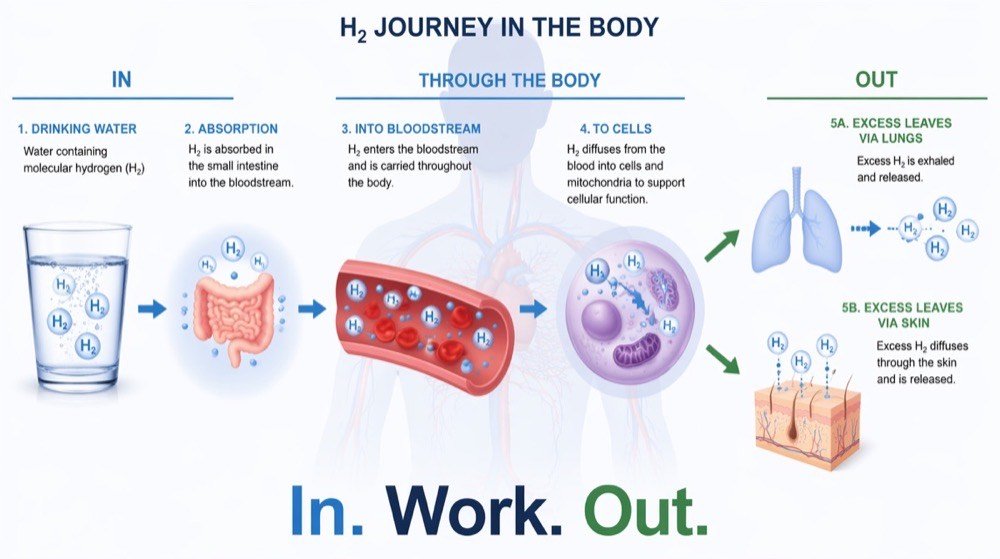
The U.S. FDA classifies hydrogen gas as GRAS — Generally Recognized As Safe. Professional deep-sea divers have been breathing hydrogen-rich gas mixtures at extreme pressures for decades. The safety data isn't theoretical — it's operational.
It passes through and leaves — like a breeze through an open window.
Zero known side effects across 3,000+ published studies. No contraindications with medications. No toxicity threshold. The molecule does its work and exits.
The research landscape.
Since Ohsawa's landmark 2007 publication in Nature Medicine, molecular hydrogen research has expanded across every major biomedical discipline. The numbers tell the story.
Key studies.
Nature Medicine
H2 selectively neutralises the most destructive free radicals — leaving beneficial ones untouched.
Nutrition Research
Hydrogen-rich water may support lipid and glucose metabolism.
J Clinical Biochemistry & Nutrition
H2 water supports the body's own antioxidant defences in healthy adults.
Medical Gas Research
High-concentration H2 water associated with reduced oxidative stress markers.
Journal of Lipid Research
H2 water may support healthy LDL-cholesterol levels.
Medical Gas Research
321 original articles reviewed — confirming H2 benefits across multiple biological systems.
Scientific Reports
H2 water associated with reduced inflammatory markers in healthy adults.
Full citations.
- Ohsawa, I. et al. "Hydrogen acts as a therapeutic antioxidant by selectively reducing cytotoxic oxygen radicals." Nature Medicine 13, 688–694 (2007).
- Kajiyama, S. et al. "Supplementation of hydrogen-rich water improves lipid and glucose metabolism." Nutrition Research 28(3), 137–143 (2008).
- Nakao, A. et al. "Effectiveness of hydrogen-rich water on antioxidant status." J Clin Biochem Nutr 46(2), 140–149 (2010).
- Ishibashi, T. et al. "Consumption of water containing a high concentration of molecular hydrogen reduces oxidative stress." Medical Gas Research 2, 27 (2012).
- Song, G. et al. "Hydrogen-rich water decreases serum LDL-cholesterol levels." Journal of Lipid Research 54, 1884–93 (2013).
- Ichihara, M. et al. "Beneficial biological effects and the underlying mechanisms of molecular hydrogen — comprehensive review of 321 original articles." Medical Gas Research 5, 12 (2015).
- Sim, M. et al. "Hydrogen-rich water reduces inflammatory responses and prevents apoptosis of peripheral blood cells in healthy adults." Scientific Reports 10, 12130 (2020).
The next step is a conversation.
A fifteen-minute consultation. No pressure, no commitment.
Reserve Your Consultation CallIndividual experience. Outcomes vary by person, condition, and lifestyle. Somawa products are wellness devices, not medical treatments.