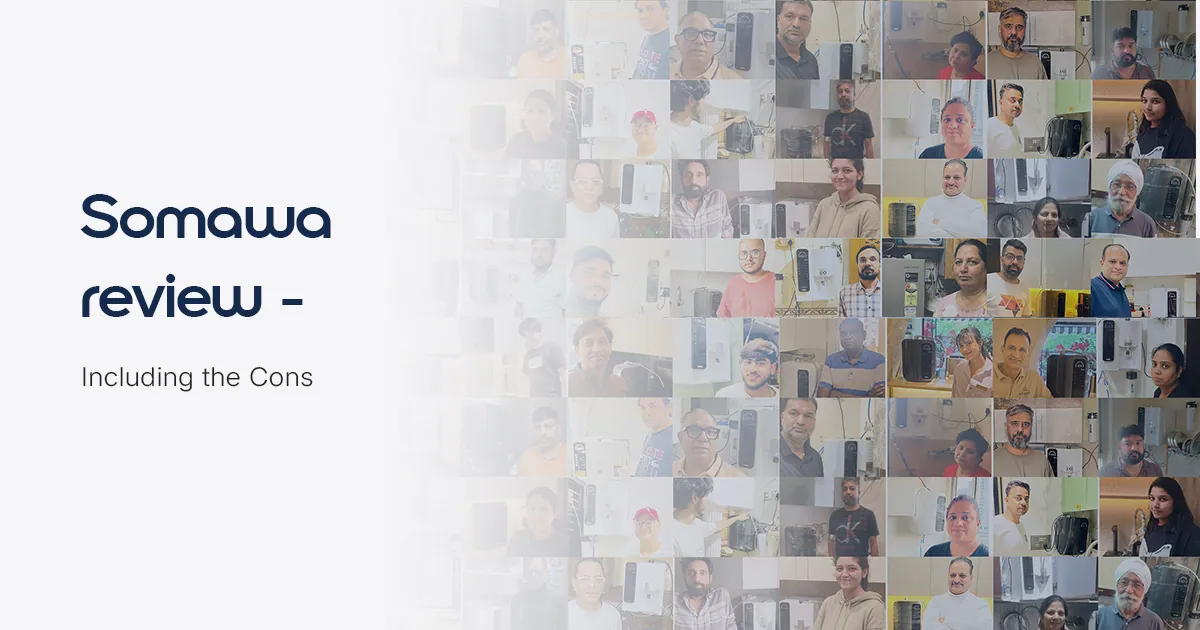
SOMAWA is a real Indian brand, incubated under the NRDC (Government of India) , with 5,00,000+ users across 500+ cities.
If you are reading this, there is a good chance a SOMAWA machine was demonstrated in your home recently — or in a neighbour’s kitchen — and someone in your family said the sensible thing: look it up before we decide.
That instinct is correct. A water ionizer is a serious investment, the category is crowded with exaggerated claims, and you should not spend over a lakh of rupees on anyone’s word alone.
A review written by the company itself, held to a higher standard precisely because of that. No anonymous praise. No borrowed stars. Only what can be verified.
Four independently verifiable checkpoints
What SOMAWA is
SOMAWA is an Indian alkaline water ionizer brand — designed, engineered and assembled in India, and incubated under NRDC, the National Research Development Corporation, an enterprise of the Ministry of Science & Technology, Government of India.
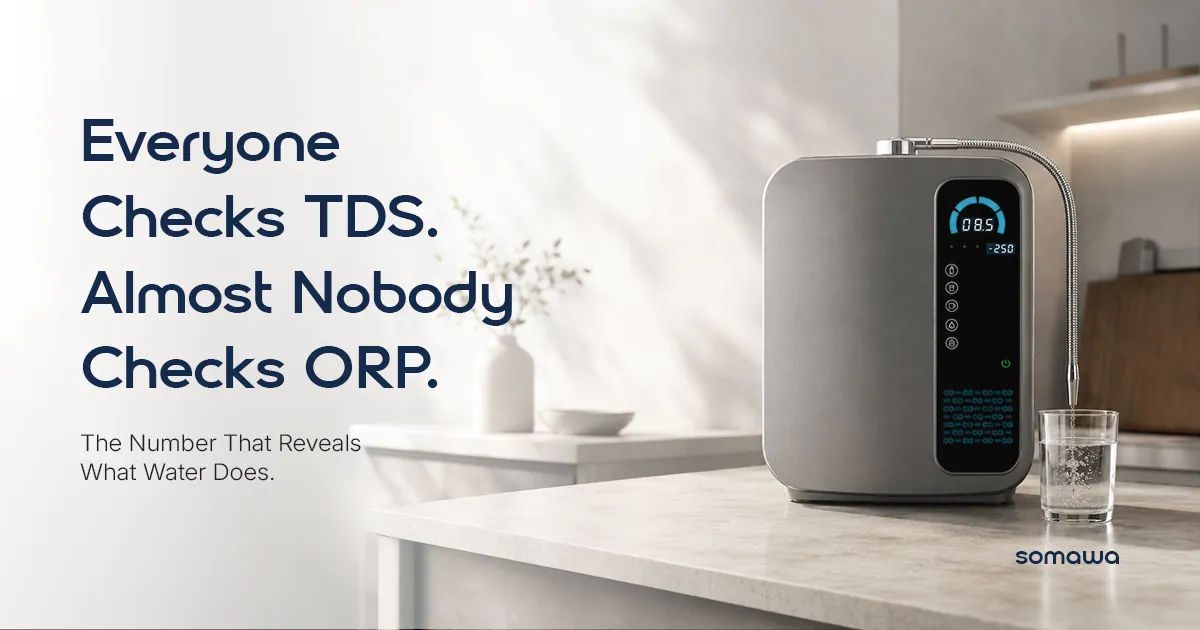
The machines connect to your existing water supply — most models after your RO — and restructure purified water through electrolysis across platinum-titanium plates. Three things change, and all three are measurable: the pH becomes selectable (from gently acidic water for skin to alkaline drinking water), molecular hydrogen dissolves into the water, and the ORP — oxidation-reduction potential — turns negative.
Every machine is built to a 25-year operational standard and serviced by direct SOMAWA technicians in 500+ Indian cities. No dealers, no third-party call centres.
What our customers say — in their words
We publish customer stories with names, cities and models, because a review you cannot trace is not a review. Three of the families you will find on our Stories page:
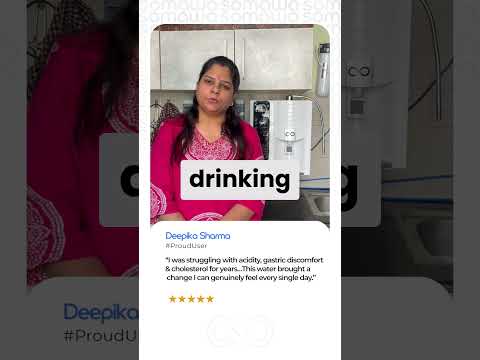
- Deepika Sharma, Faridabad — Udaka, since 2025. “I was struggling with acidity, gastric discomfort and cholesterol for years… this water brought a change I can genuinely feel every single day.” Her words, on video.
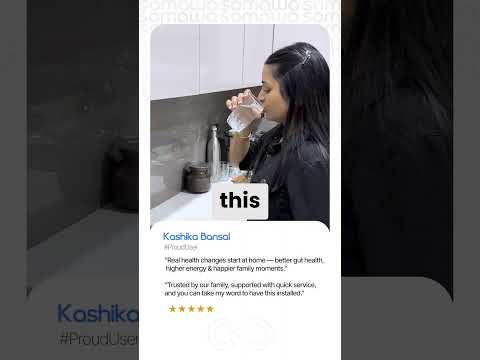
- Kashika Bansal, Delhi — Modish, since 2024. “Real health changes start at home — better gut health, higher energy and happier family moments.” Watch her story.
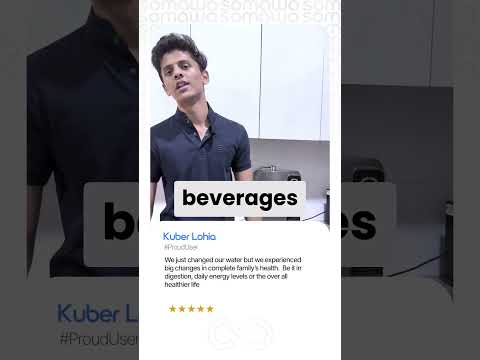
- Kuber Lohia, Delhi — Amara, since 2026. “Healthier parents, happier child, and a better lifestyle for our whole family.” Watch their story.
A necessary honesty about those stories
These are individual experiences, told voluntarily and published with consent. They are not medical claims, and we will not convert them into one. Outcomes vary by person, condition and lifestyle. Somawa products are wellness devices, not medical treatments.
Many of our customers have experienced changes in energy, digestion and general well-being after making SOMAWA water their daily drinking water. We document those accounts carefully — and we leave the interpretation to you and your doctor.
What the machine measurably does
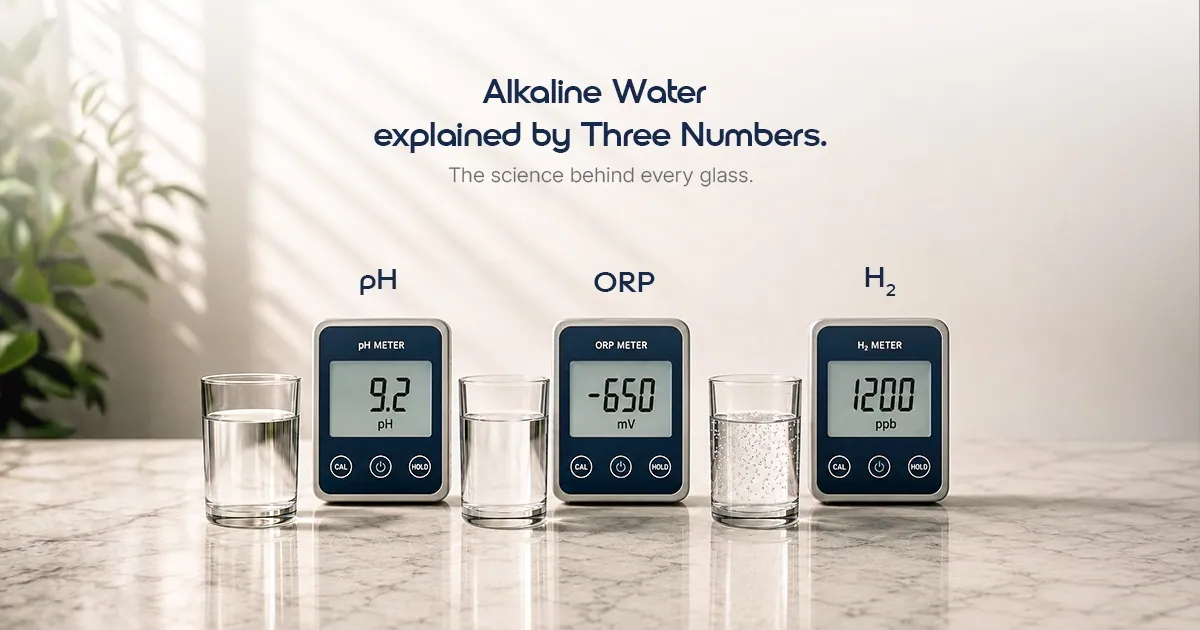
Strip away every adjective, and a water ionizer stands or falls on three numbers. Here are SOMAWA’s, and how to check them:
- ORP: tap and RO water in India typically read around +200 mV — oxidising. SOMAWA output reads down to −800 mV (the Modish, down to −1000 mV). We take this reading live in front of you: every SOMAWA demonstration and installation includes an ORP reading on a calibrated meter, on your counter, on your water.
- Molecular hydrogen: up to 1,500 ppb dissolved H₂ (Modish and Toya, up to 2,000 ppb). Molecular hydrogen has been the subject of 1,300+ peer-reviewed papers since 2007, indexed on PubMed.
- pH: selectable from 5.5 to 10.5 (Modish: 3.5 to 10.5, seven water types) — drinking water, cooking water, and gentle acidic water for skin and surfaces from one machine.
What SOMAWA costs — printed, not quoted
Prices are printed in our catalogue and on our website. They do not change with your negotiating skill:
| Model | Price | Best for |
|---|---|---|
| Amara | From ₹1,14,000 | Installs directly on the kitchen tap, for homes with input TDS under 200. |
| Amara NXT | From ₹1,16,400 | For homes with an RO; installs after it and adds back what purification removes. |
| Udaka | ₹1,36,000 | Built-in RO plus ionizer in one machine, for high-TDS water — which is most of India. |
| Modish | ₹2,40,000 | Nine plates, seven water types, the most powerful SOMAWA we make. |
| Toya | ₹25,000 | A portable hydrogen bottle, available to existing SOMAWA families. |
What happens after you pay
A direct SOMAWA technician installs the machine in a single white-glove visit and walks your family through four physical demonstrations, so you see and test the water yourself on day one. Filters change once a year or at 8,000 litres, whichever comes first. The service standard is a technician in your city within 24 hours — a standard we publish and expect to be held to.

White-glove installation by a direct SOMAWA technician
The machine itself is engineered to a 25-year operational standard. You are not buying an appliance with a two-year honeymoon; you are entering a long service relationship with the people who built it.
How to verify everything in this review
Do not take a brand’s review of itself at face value — including this one. Four checks, all independent of us:
ACCENT DIVIDER — replaces checklist image- Verify the NRDC incubation on the institutional side, not just ours. NRDC is a Government of India enterprise; the letter is published at somawa.com/nrdc.
- Watch the customer stories and note that they are named, placed and dated — then judge them as you would any testimony.
- Ask for a live water test. We test your current tap or RO water at home, free, on calibrated instruments — and then test SOMAWA output beside it. The gap between the two readings is the product.
- Ask about the AMC. SOMAWA includes a comprehensive Annual Maintenance Contract — direct technicians, filter changes, and a 24-hour service standard across 500+ cities. No third-party call centres, no dealer runaround.
Where SOMAWA falls short — the honest cons
No review is credible without this section, so here is ours, unprompted.
- The price is high, and financing does not make it low. If ₹1.14 to ₹2.4 lakh strains your household budget, this is not the right season for this purchase — the machine will still exist next year, and we would rather you wait than stretch.
- You cannot buy it online. We sell only through home consultations and demonstrations, because installation, water testing and the service relationship belong in the same hands. If you prefer marketplace shopping with doorstep returns, our model will frustrate you — that trade-off is deliberate, but it is a trade-off.
- Our online presence is younger than our customer base. For years we built machines and service before we built content, which is why your search for reviews may have felt thin. This page, our stories, and our published data are the correction — but if you searched last year and found little, that gap was real, and it was ours.
Who this machine is for — and who it is not for
Across five lakh drinkers, the pattern is consistent. SOMAWA families tend to be households that have already addressed food and air — organic groceries, a purifier in the bedroom — and arrive at water as the last unexamined variable. Many come after a health scare somewhere in the family; the wiser ones come before one.
If you want measurable water, institutional backing, and a service relationship built to outlast your car — that is the buyer this machine was engineered for.
It is not for everyone. If you want a miracle, we will keep disappointing you — our own materials tell you the machine makes no medical promises. If you want the cheapest possible alkaline label, a ₹8,000 pitcher will give you the word without the electrochemistry, and we would rather lose that sale honestly than win it vaguely.
FAQFrequently asked questions
SOMAWA is a real Indian brand: incubated under NRDC (Ministry of Science & Technology, Government of India), indigenously manufactured, with 5,00,000+ Indians drinking its water across 500+ cities. Every central claim — ORP, hydrogen, pH — is demonstrated live on calibrated instruments during a home consultation, on your own water.
We do not make medical claims. Many of our customers have experienced changes in energy, digestion and general well-being, and we publish their stories in their own words with disclaimers. For any medical condition, your doctor’s advice comes first.
Machines carry a one-year comprehensive warranty including the filter, are built to a 25-year operational standard, and are serviced by direct SOMAWA technicians in 500+ cities with a 24-hour response standard. Filters change annually or at 8,000 litres.
Directly from SOMAWA, through a home consultation and demonstration — not on e-commerce marketplaces. This keeps installation, water testing and the long-term service relationship in the same hands. Reserve a call at go.somawa.com.
A fair review should end by telling you what to do if you are unconvinced: wait. Test your water. Talk to your family. Most SOMAWA customers did not buy on demo day — they bought after doing exactly what you are doing right now.
And when you are ready for the conversation, it takes fifteen minutes. No pressure. No commitment.
Questions people actually ask
Is SOMAWA real or fake?
SOMAWA is a real Indian brand: incubated under NRDC (Ministry of Science & Technology, Government of India), indigenously manufactured, with 5,00,000+ Indians drinking its water across 500+ cities. Every central claim — ORP, hydrogen, pH — is demonstrated live on calibrated instruments during a home consultation, on your own water.
Is SOMAWA good for people with health conditions?
We do not make medical claims. Many of our customers have experienced changes in energy, digestion and general well-being, and we publish their stories in their own words with disclaimers. For any medical condition, your doctor's advice comes first.
What is SOMAWA's warranty and service like?
Machines carry a one-year comprehensive warranty including the filter, are built to a 25-year operational standard, and are serviced by direct SOMAWA technicians in 500+ cities with a 24-hour response standard. Filters change annually or at 8,000 litres.
Where can I buy SOMAWA?
Directly from SOMAWA, through a home consultation and demonstration — not on e-commerce marketplaces. This keeps installation, water testing and the long-term service relationship in the same hands. Reserve a call at go.somawa.com.
Sources
- NRDC, the National Research Development Corporation somawa.com
The SOMAWA range
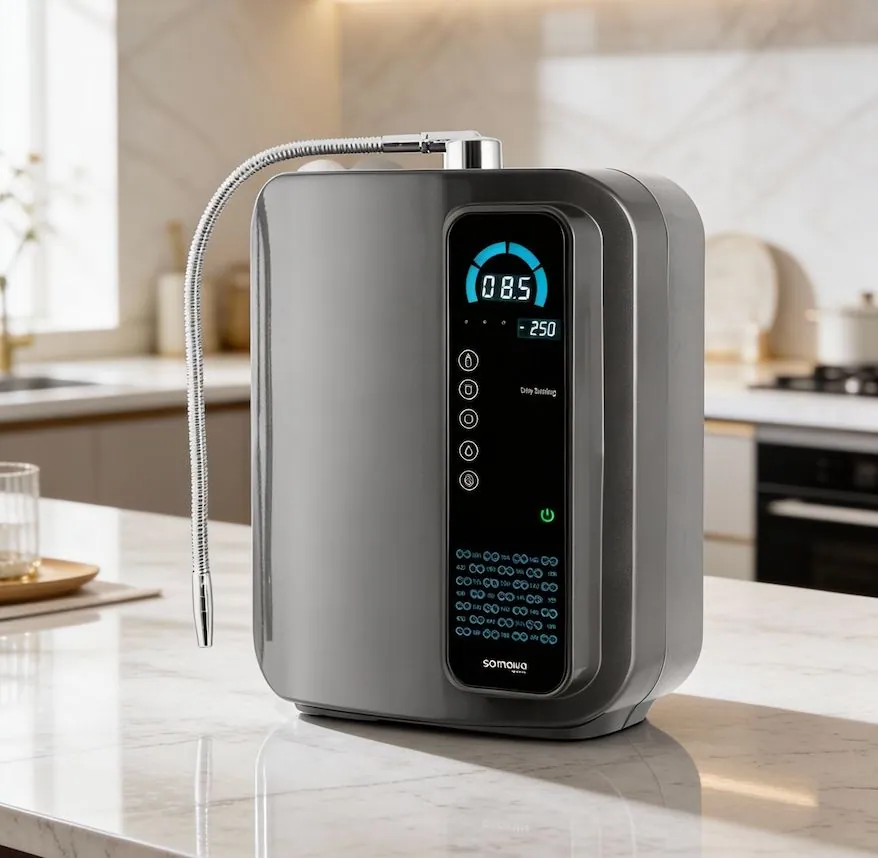 Amara
Amara
Pipeless AFS design. Think beyond health.
Learn more →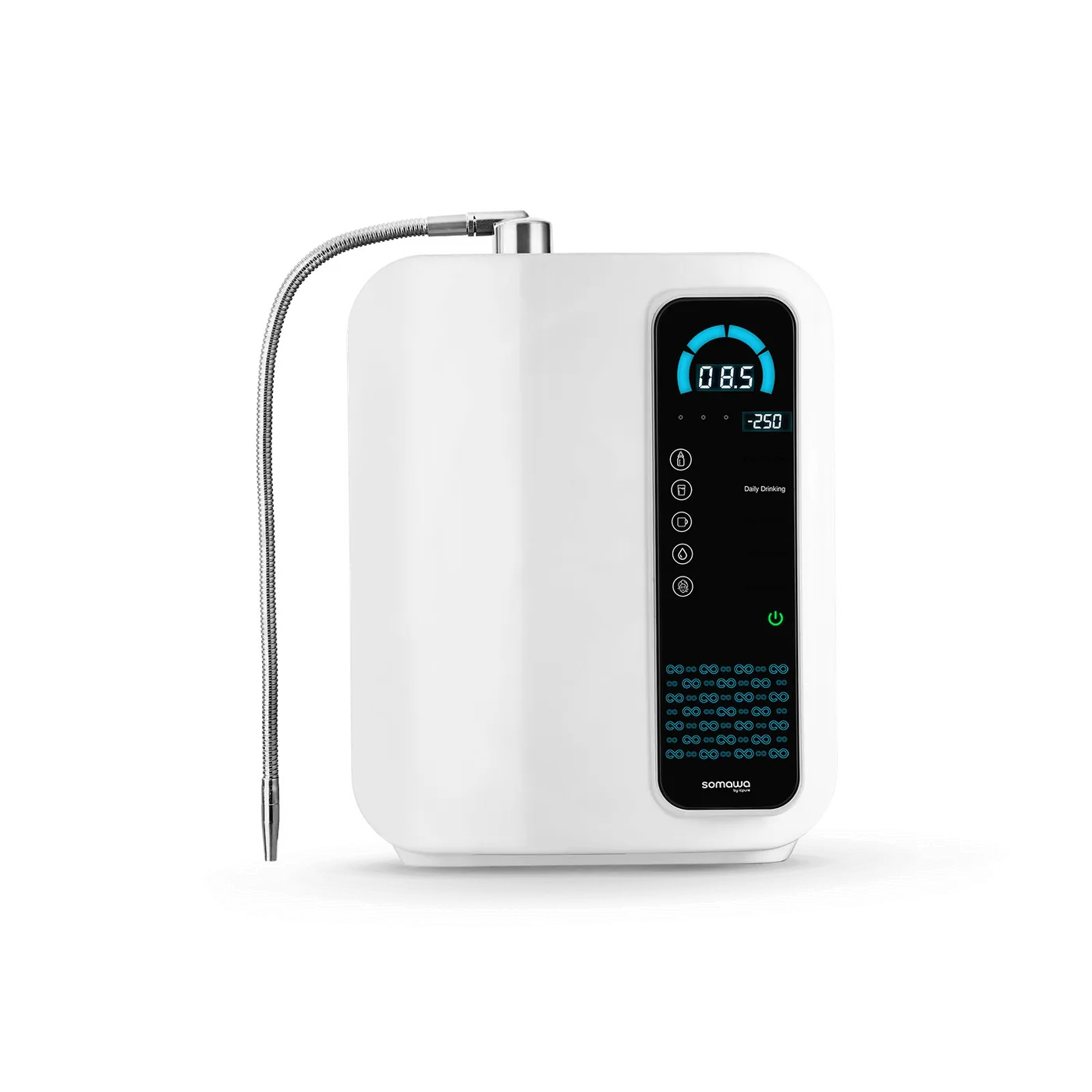 Amara NXT
The Amara platform, taken further.
Learn more →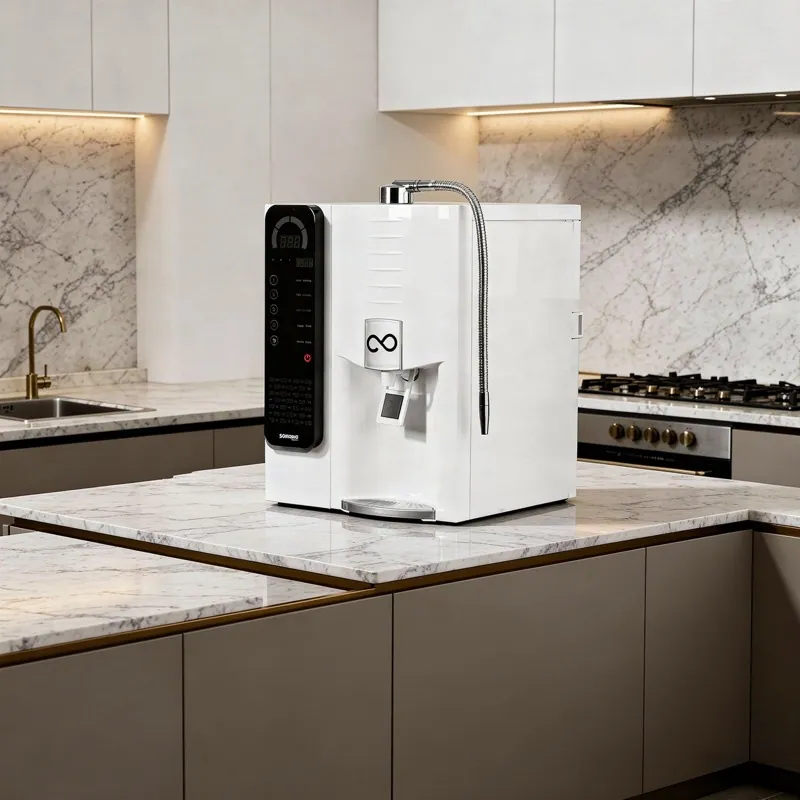 Udaka
Udaka
Built-in RO and ionisation in one unit.
Learn more →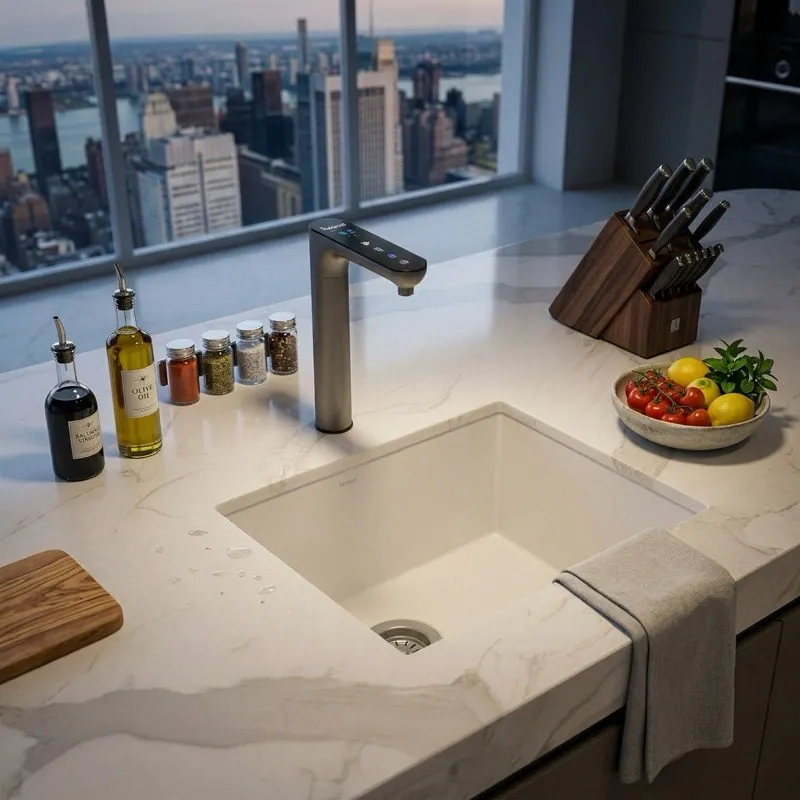 Modish
Nine plates. Designed to make a difference.
Learn more →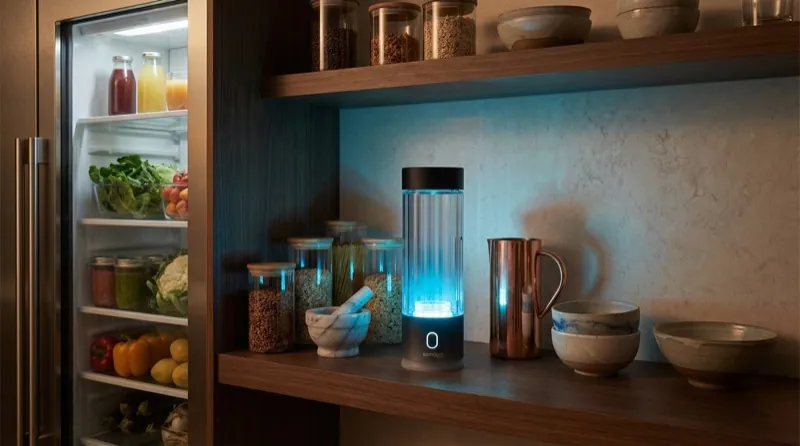 Toya
Toya
Experiential water. Infuses life in every drop.
Learn more →SOMAWA products are wellness devices, not medical treatments. Nothing on this page is medical advice. Customer experiences are individual and vary; they are shared as wellness outcomes, not clinical results. Research cited is indexed with DOIs where available. SOMAWA is incubated under NRDC, an enterprise of DSIR, Ministry of Science and Technology, Government of India.