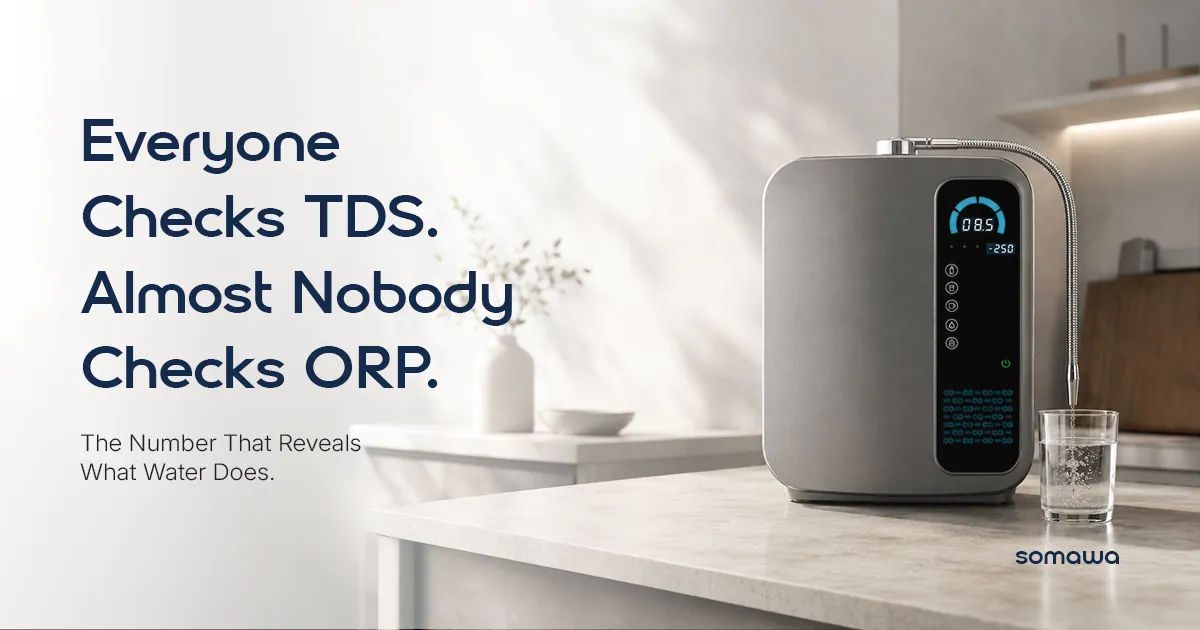
ORP (Oxidation Reduction Potential), measured in millivolts, tells you whether water takes electrons (positive, oxidising) or gives them (negative, antioxidant).
Cut an apple. Leave it on the counter.
In twenty minutes it turns brown. Leave an iron gate out in the monsoon and it rusts. Nobody is surprised by either.
What surprises people is this: the same force has a number. And that number is in your drinking water. Every day. Nobody has ever shown it to you.
The number is called ORP.

What is ORP in water?
ORP means Oxidation Reduction Potential. It is measured in millivolts — mV.
In plain language: it tells you whether water takes electrons or gives them.
Positive ORP water is an electron taker. It oxidises. Same force that browns the apple and rusts the gate.
Negative ORP water is an electron giver. That is what an antioxidant actually is. Not a marketing word. A chemical behaviour.
Three numbers describe your water. Most people know one.
- TDS tells you how much is dissolved in it.
- pH tells you if it is acidic or alkaline.
- ORP tells you what it does.
Why does everyone check TDS but nobody checks ORP?
Because TDS is the number India was taught.
When RO arrived, "low TDS" came to mean "safe water." A whole generation learned to judge water by that one figure. Fair enough. Safety had to come first.
But TDS describes what is in the water. It says nothing about what the water does once it is inside you.
Two glasses can show the same TDS and behave in opposite directions. One oxidising. One giving.
The number that catches that difference is the one nobody sells you a meter for.
What does a positive ORP mean?

It means the water pulls electrons from whatever it touches.

Higher number, stronger pull.
Here is the uncomfortable part. Almost every glass of water in India reads positive. Municipal tap. Borewell. The 20-litre jar. The RO under your counter.
Tap and RO water in India typically read around +200 mV.
Your RO did its job. It made the water safe. Safe and ORP are two different questions.
What is a good ORP for drinking water?
Negative.
Everything ordinarily available sits on one side of zero.
Water produced by electrolysis reads down to −800 mV. The Somawa Modish goes to −1000 mV.
Be precise about what that means. A negative ORP describes the water in the glass. It means the water arrives with electrons to give, not a deficit to fill. That is the mechanism. We describe it and let it stand.
Waters like the Hunza Valley's have been measured carrying a negative charge. Nature restructured that water. You just don't live on a mountain.
Typical ORP readings
| Water | ORP |
|---|---|
| Municipal tap | around +200 mV |
| RO purified | around +200 mV |
| 20-litre jar water | positive |
| Ionized water | down to −800 mV |
Read the table again.
It is not that some waters score a little better. Everything ordinary sits on one side of zero. Ionized water sits on the other.
Does negative ORP water stay negative?
No. And this matters.
A negative ORP is not stamped into water like a mineral. It is a state. States relax.
Water made at −800 mV drifts back towards positive over hours. Air. Light. Time.
So negative ORP is a property of fresh water. Not shelf water.
Water ionized in a factory, sealed in plastic, trucked across a state, stored for three months — that water is not delivering what it measured on day one. That is not an attack on anyone. That is chemistry. Chemistry does not read labels.
A machine at your tap is a different proposition from a bottle. One makes the water seconds before you drink it. The other asks time to do it no harm. Time never agrees.

Is ORP the same as pH?
No. People confuse these constantly.
pH is a position — where water sits between acidic and alkaline.
ORP is a direction — which way it pushes.
An ionizer moves both, because the same electrolysis does both. But they answer different questions.
pH tells you what the water is. ORP tells you what it does.
A home that measures only TDS knows neither.
How do you measure your water's ORP?
With an ORP meter. A handheld probe. Same family as the TDS pen you probably already own. Dip it in the glass. The number appears in seconds.

You can buy one for about ₹500.
Or you don't have to. A proper test reads TDS, pH and ORP together — at your tap, in fifteen minutes.
This matters because water is local. Your city's supply. Your building's tank. Your RO's age. Your neighbour's number is not your number.
At Somawa, we measure before we talk. Our ionizers are incubated under NRDC — Ministry of Science & Technology, Government of India. But the report doesn't argue for us. The numbers do.
You do not have to believe us. You can measure it.
So what do you do with the number?
Know it. That is all, for now.
Most people who ask for a test are not shopping for a machine. They want the truth about a glass they have been drinking for years. That is the right instinct. Measure first. Decide after.
If your reading comes back positive — and it will — you now know something about your own water that most of the country does not.
Where you go next is not urgent. Water has been shaping bodies for a long time. It can wait a week while you think.
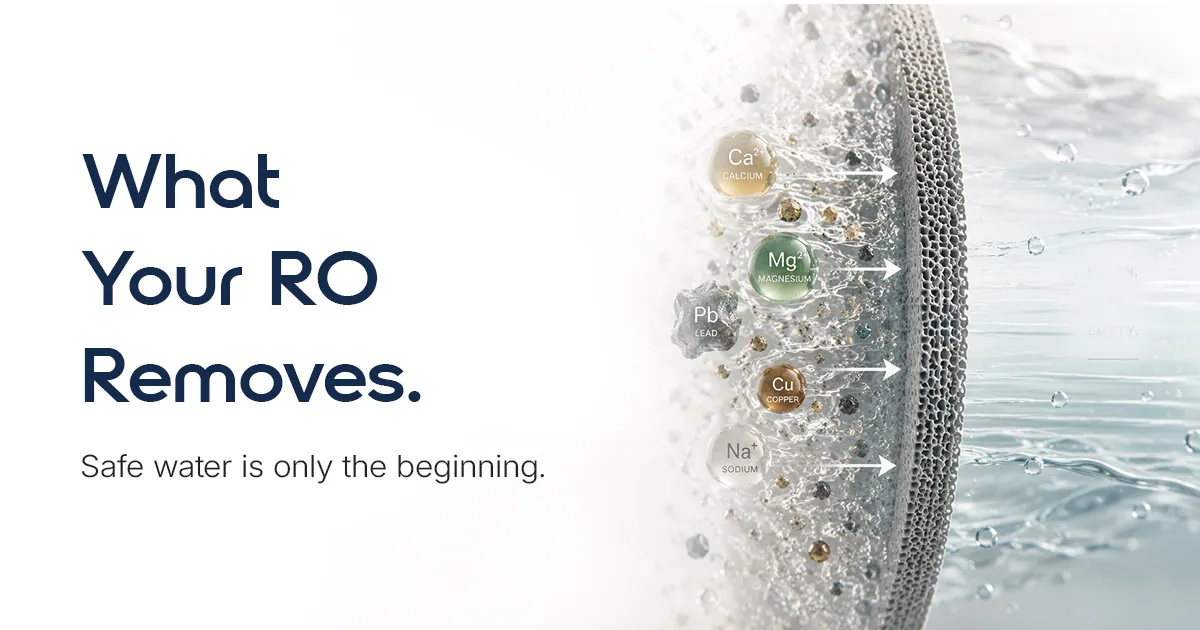
Want to know what your RO leaves out? Read: What Your RO Removes — Including What It Shouldn't. Want the engineering? The science behind your water.
It takes ten minutes at your kitchen tap. And you don't even have to buy the meter.
Questions people actually ask
What is the full form of ORP in water?
ORP stands for Oxidation-Reduction Potential, also called redox potential — “redox” being a contraction of reduction and oxidation. It is measured in millivolts (mV) using a meter with a platinum electrode, and the reading can be positive or negative.
What is negative ORP in water?
Negative ORP water has a reading below 0 mV, meaning it donates electrons rather than taking them — the same chemical behaviour as a dietary antioxidant. Freshly ionised water can measure −400 to −800 mV, while most water Indians drink daily sits in positive territory.
What is the normal ORP value of drinking water in mV?
Most drinking water in India — tap, borewell, bottled and RO — measures between +200 mV and +400 mV, firmly on the oxidising side, and chlorinated municipal water can run higher. Ionised water, by contrast, reaches −400 to −800 mV. There is no Indian regulatory limit on ORP, so it is almost never tested.
What is the ORP of RO water?
RO (reverse-osmosis) water typically measures a positive +150 to +350 mV and is often slightly acidic. RO removes dissolved solids and contaminants well, but it does nothing to lower ORP — the purified water still oxidises.
Positive vs negative ORP — what is the difference?
Positive-ORP water accepts electrons (it oxidises); negative-ORP water donates them (it reduces). Everyday tap, bottled and RO water is positive; reaching a reliably negative reading takes active electrolysis.
How can you lower the ORP of drinking water?
The only reliable way to reach and hold a strongly negative ORP is electrolysis, which infuses the water with dissolved molecular hydrogen. Home tricks like minerals, baking soda or lemon can shift pH but do little for ORP, and any small dip fades within minutes as the hydrogen escapes.
Is negative ORP water safe to drink?
Negative ORP simply reflects dissolved molecular hydrogen and an electron-rich state, and molecular hydrogen is recognised as Generally Recognised as Safe (GRAS) by the U.S. FDA. Many people drink ionised, negative-ORP water daily. Individual experience varies; if you have a specific medical condition, speak with your doctor.
Are ORP meters accurate for tap and RO water?
Consumer ORP meters are reasonably accurate for relative comparisons when calibrated and clean, though absolute readings drift with temperature, probe age and dissolved oxygen. For a home demonstration, the relative gap between two samples tested minutes apart is what matters — and the gap between positive tap or RO and negative ionised water is large enough that meter imprecision does not change the conclusion.
How much does an ORP meter cost in India?
A basic handheld ORP meter in India typically costs around ₹800 to ₹2,500, with lab-grade meters higher, and they are widely available online. If you are evaluating a water ioniser, a SOMAWA water consultant brings a calibrated meter to your home demonstration and tests your existing water against restructured water in front of you.
What ORP does a water ioniser produce?
A quality alkaline water ioniser produces a strongly negative ORP by electrolysis — SOMAWA machines deliver water in the −400 to −800 mV range, alongside a selectable alkaline pH and dissolved molecular hydrogen. Those three measurable properties together are what define restructured water, and all three can be verified on the spot.
ORP क्या है और पानी में इसका क्या मतलब है?
ORP यानी Oxidation-Reduction Potential — यह मापता है कि पानी electron देता है या लेता है, और इसे millivolts (mV) में मापा जाता है। Positive ORP का मतलब है पानी oxidise करता है; negative ORP का मतलब है पानी antioxidant की तरह काम करता है। भारत का ज़्यादातर नल, बोतल और RO का पानी +200 से +400 mV पर होता है।
Negative ORP वाले पानी से लोग क्या अनुभव करते हैं?
हमारे कई ग्राहक बताते हैं कि restructured, negative-ORP पानी अपनाने के बाद उन्हें hydration, energy और digestion में बेहतरी महसूस हुई। ये व्यक्तिगत अनुभव हैं और हर व्यक्ति में अलग हो सकते हैं। SOMAWA उत्पाद wellness devices हैं, कोई medical treatment नहीं।
पीने के पानी का ORP कितना होना चाहिए?
आम पीने के पानी का ORP +200 से +400 mV होता है, जबकि antioxidant (reducing) पानी 0 mV से नीचे यानी negative होता है। जितना negative, उतना ज़्यादा reducing। Ionised पानी −400 से −800 mV तक जा सकता है।
The SOMAWA range
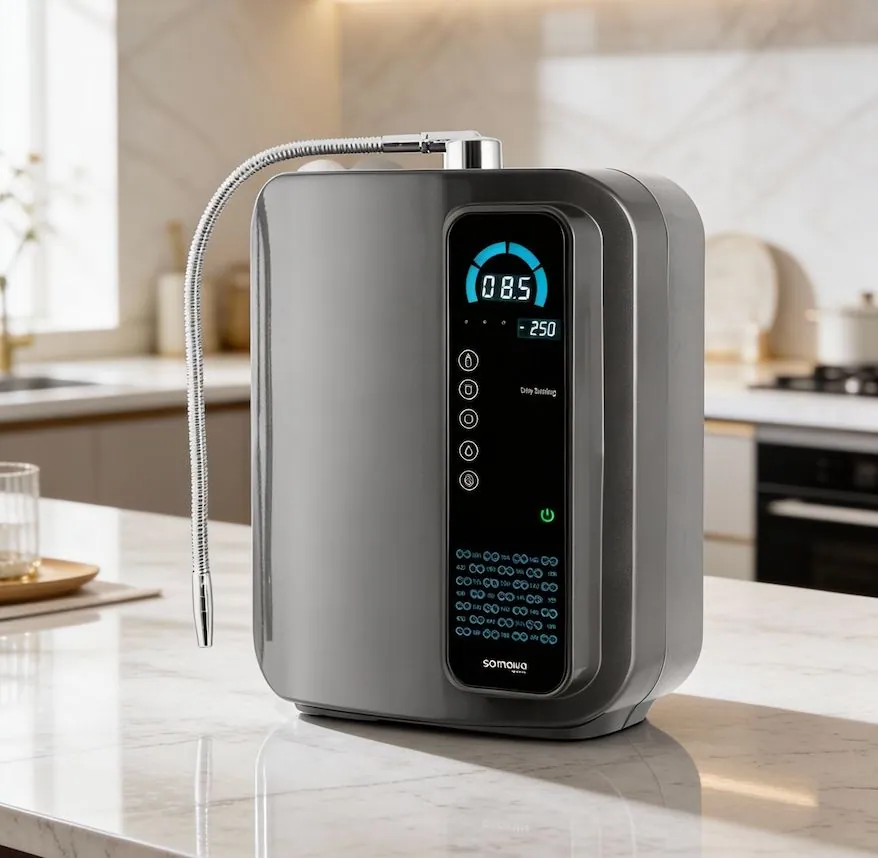 Amara
Amara
Pipeless AFS design. Think beyond health.
Learn more →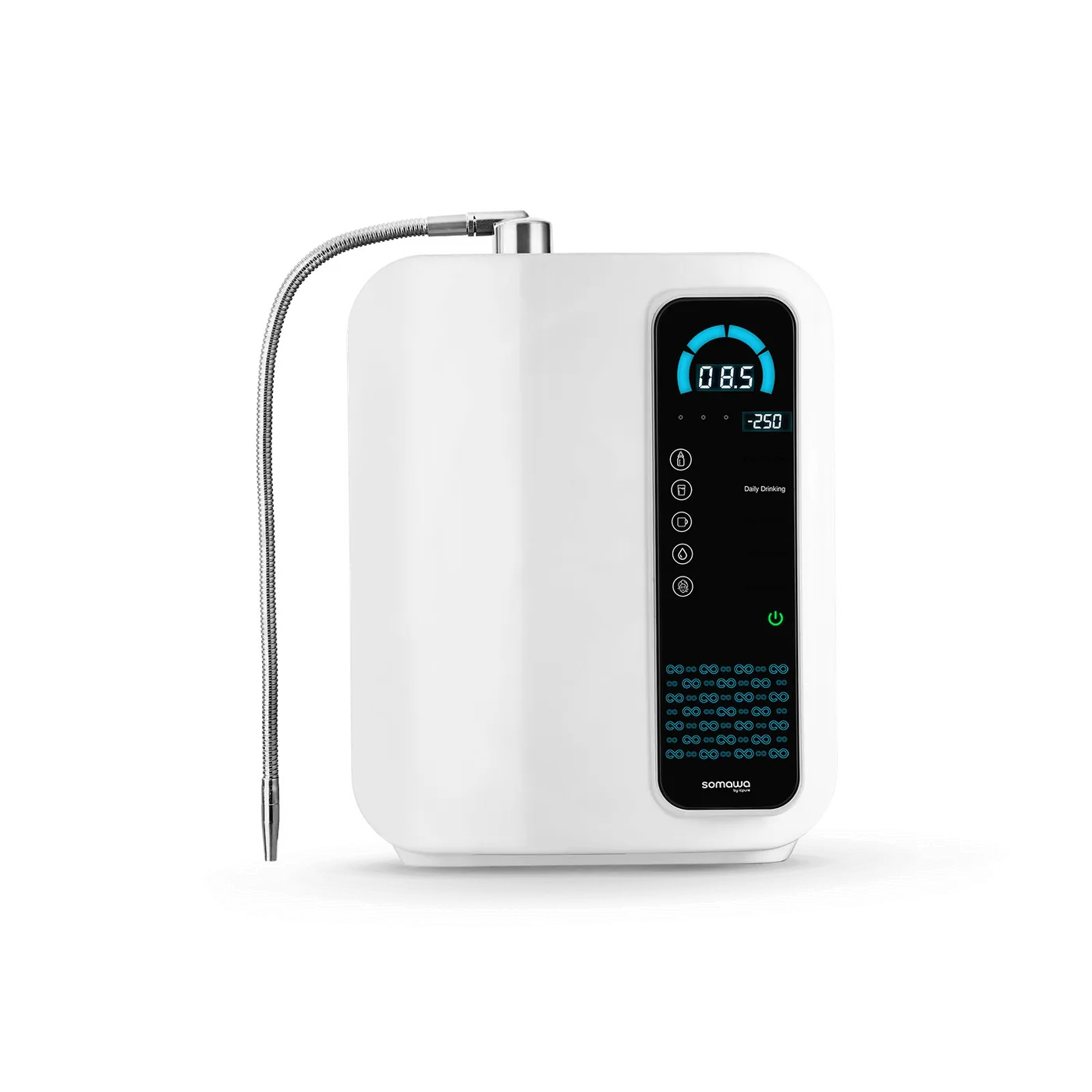 Amara NXT
The Amara platform, taken further.
Learn more →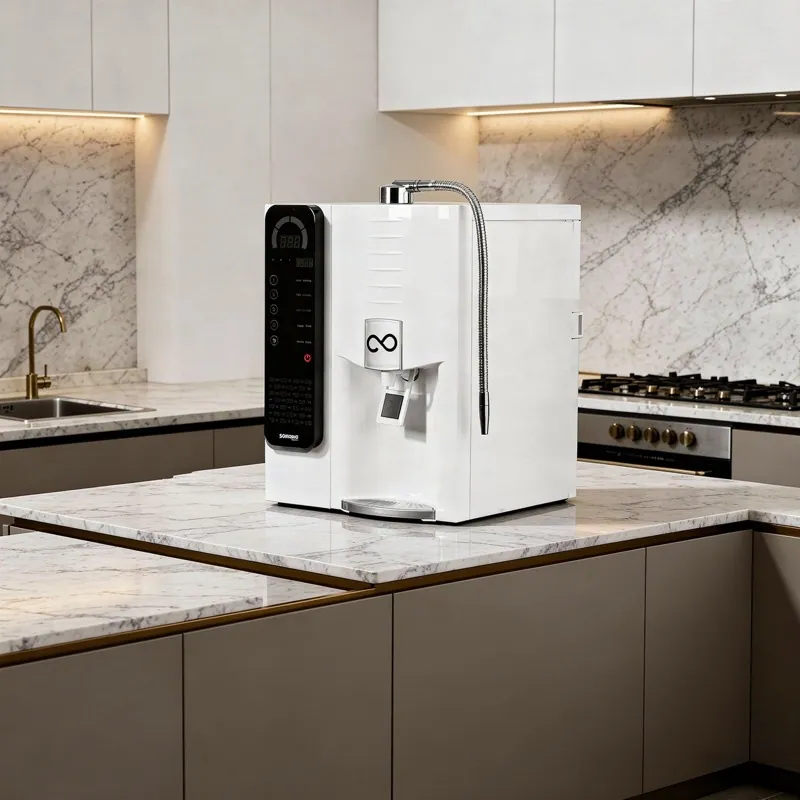 Udaka
Udaka
Built-in RO and ionisation in one unit.
Learn more →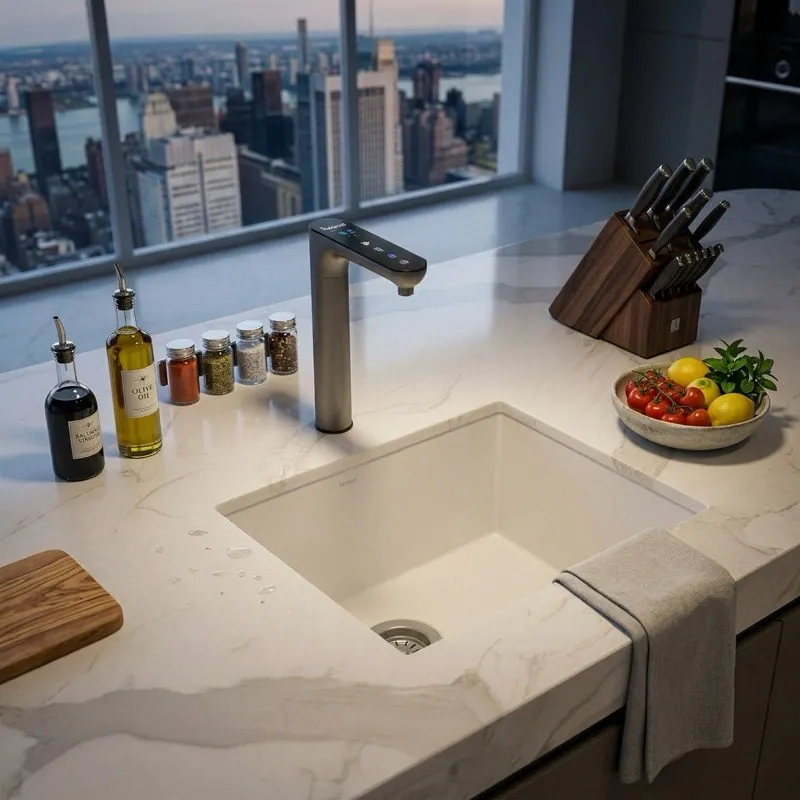 Modish
Nine plates. Designed to make a difference.
Learn more →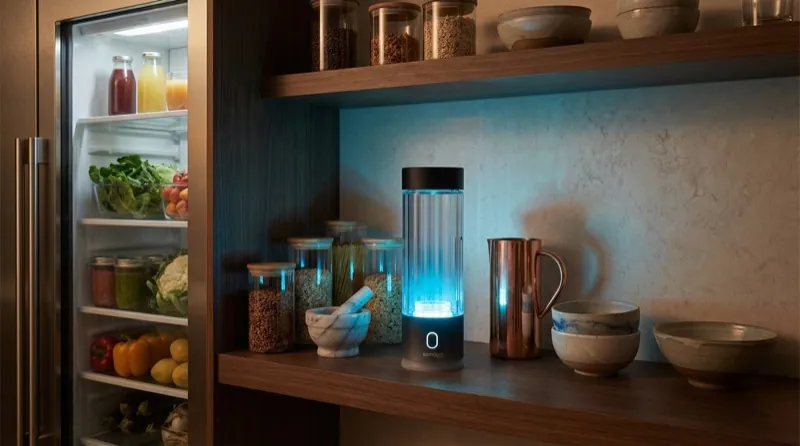 Toya
Toya
Experiential water. Infuses life in every drop.
Learn more →SOMAWA products are wellness devices, not medical treatments. Nothing on this page is medical advice. Customer experiences are individual and vary; they are shared as wellness outcomes, not clinical results. Research cited is indexed with DOIs where available. SOMAWA is incubated under NRDC, an enterprise of DSIR, Ministry of Science and Technology, Government of India.