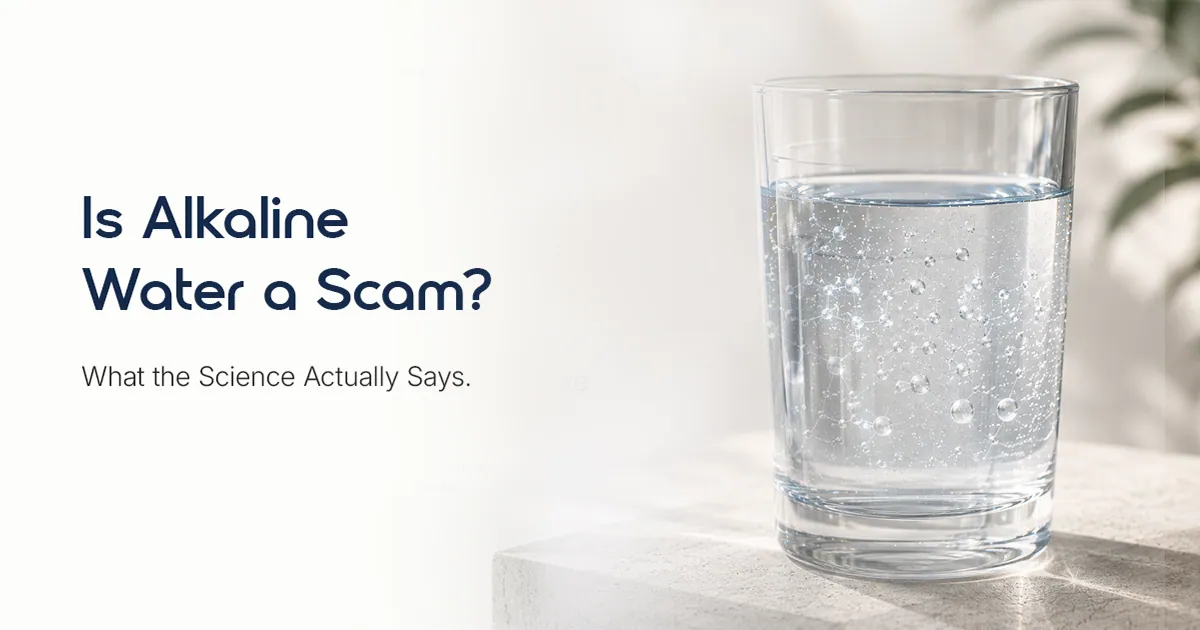
Some of what is sold as “alkaline water” deserves doubt — wild disease-cure claims and MLM selling gave the category a bad name.
You searched a tough question. Here is an honest answer: yes, some of what is sold as “alkaline water” deserves your doubt. Big promises, miracle words, machines sold on hope — this category has earned its bad name.
But first, a disclosure: this article is written by SOMAWA. We sell water ionizers. Keep that in mind as you read. We have tried to earn your attention — by showing you what the evidence says, being honest about what it does not, and giving you a simple test you can do yourself, without trusting us at all.
Why the doubt exists — and why it makes sense
Three things gave this category a bad name. All three are real problems.
If your idea of “alkaline water” comes from any of these three, your doubt is not wrong. It is common sense.
What the science actually says
Behind all the noise, there are three simple facts that nobody disputes.
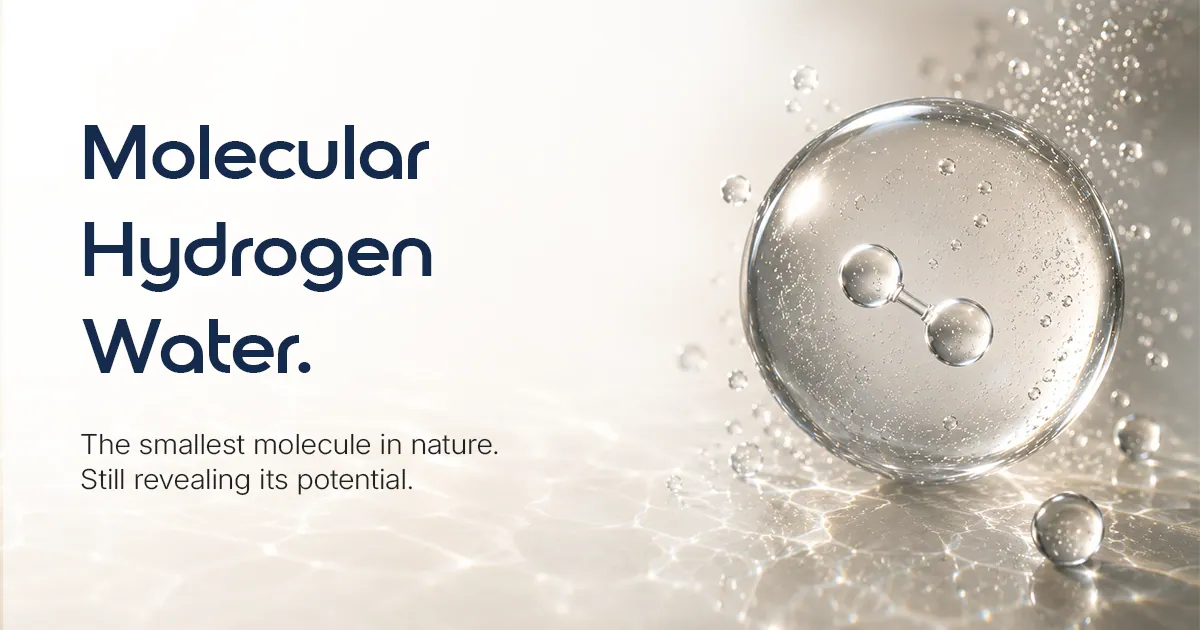
When electricity passes through water using metal plates, three things happen. The pH level changes. Hydrogen gas (H₂) dissolves into the water. And the ORP — a number that shows how antioxidant the water is — goes negative. None of this is debatable. You can measure it yourself, live, with a meter, right in front of you.
The real question is: what does this dissolved hydrogen do inside your body? Since 2007, over 1,300+ published research papers have studied this — looking at whether hydrogen acts as a powerful antioxidant that targets the most harmful free radicals. The research is real. It is growing. And it is far bigger than either the miracle-sellers or the “it is all fake” crowd will tell you.
Notice what we did not say: we did not say hydrogen water cures anything. The honest truth is — the science of making this water is proven. The research is serious. And the long-term health results are still being studied.
What is still not proven
Now the other side, with equal honesty. Long-term health results for specific conditions are still being studied. More research keeps coming in, but the final answer is not here yet. If someone tells you the science is settled, they are selling you something. If someone tells you there is zero science, they have not looked.
The idea that just raising pH changes your body’s pH is weak — your body controls its own pH very tightly on its own. This is exactly why cheap pH-only products deserve doubt, and why a real machine should be judged by its hydrogen level and ORP, not just pH.
Customer experiences — including ours — are personal stories, not clinical proof. We share them with real names and clear disclaimers. We call them exactly what they are.
How to spot a scam — five red flags
Where SOMAWA stands on these five tests
Judge us by the same five filters. We do not make medical claims. Our customer stories use real names, with clear disclaimers, in their own words. Our numbers are published — ORP down to −800 mV (Modish goes to −1000 mV), hydrogen up to 2,000 ppb — and we show you these numbers live, on a meter, at every consultation. We sell machines, not memberships — salaried team, printed prices. Our backing is institutional: incubated under NRDC, Ministry of Science & Technology, Government of India — you can verify this on their side. And our service network covers 500+ cities directly.
- No cure language. Real customer stories with disclaimers, in their own words.
- Numbers you can test. ORP to −800 mV, H₂ to 2,000 ppb, shown live on a meter.
- No MLM. Salaried team, printed catalogue prices.
- Government-backed. NRDC incubation — verify it on the institution’s own website.
- Direct service. 500+ cities. 24-hour response standard.
That does not make us right about everything. It makes us checkable — and that is all any fair person should ask for.
The one test that ends the debate
Here is the best part: you do not need anyone’s opinion to settle this.
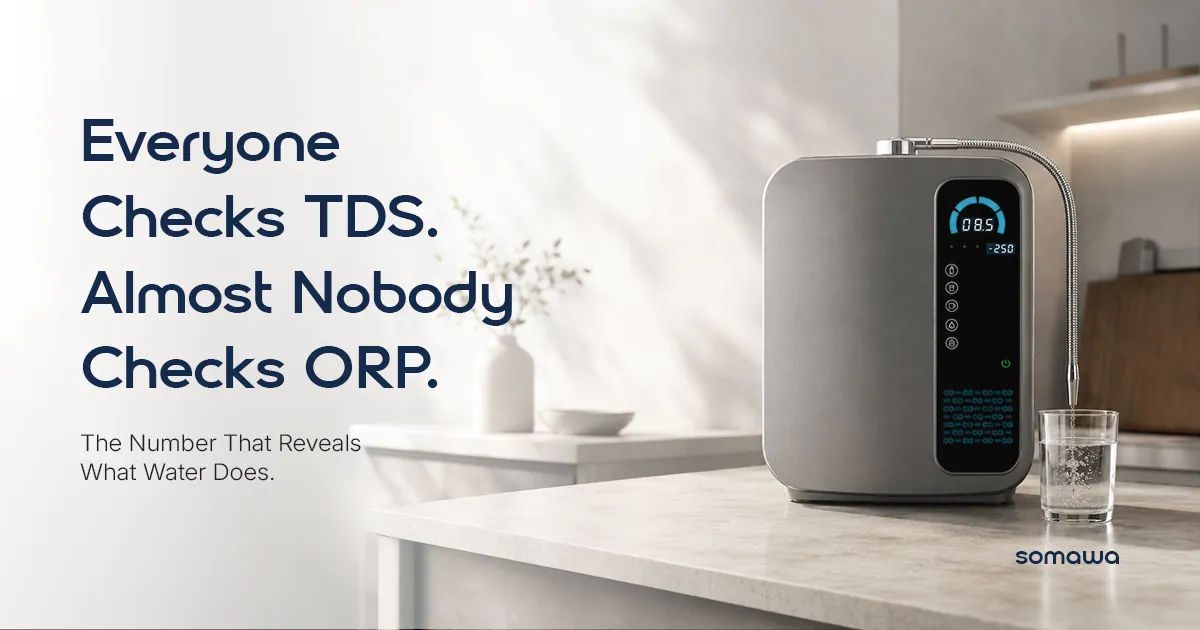
Ask for a live test. Any serious ionizer company — including us — should first test your tap or RO water on an ORP meter, right in front of you. In most Indian homes, it reads between +150 and +250 mV. Then test the machine’s output — same meter, same sitting. SOMAWA does this for free at every home consultation. If a seller hesitates when you ask for this, they have already answered your question. The meter does not lie.
Request a free live water test at your homeWhatever you decide after that, you will have done something most people in this debate never do — you will have measured.
Alkaline filter vs ionizer — the meetha soda question
One more thing you should know — it protects you from the cheapest trick in this market. The difference between an alkaline filter and a water ionizer. They share the word “alkaline.” They do not share the technology.
Most alkaline filters and cartridges raise pH by mixing minerals into the water — and the main ingredient is usually sodium bicarbonate. You know it from your kitchen: meetha soda. The same powder you add to chana or rajma when no one remembered to soak them overnight — one pinch in the cooker and they soften by the first whistle.
Great for cooking. But a different thing in every glass your family drinks, every day. A bicarbonate cartridge is basically adding a mild chemical to your drinking water — including extra sodium, which is the very thing many families are trying to cut down. Worth asking your doctor about, especially if anyone in the family watches their salt. And the cartridge runs out — the pH slowly drops as it finishes, and most people never even notice.
An ionizer adds nothing to the water. It uses electricity to separate the water itself — keeping the good minerals on the drinking side, dissolving hydrogen into it, and making the ORP negative. No powder. No chemical. Nothing that runs out. You can make water “alkaline” with meetha soda. You cannot fake what an ionizer does. A live ORP meter shows the difference in under a minute — filter water reads positive, ionized water reads strongly negative.
How this market got so messy — a short history
Some history explains the mess. Water ionization is not new — the technology grew in Japan over decades. There, ionizers became common household appliances. That is where most of the early research happened.
When these machines came to India, two things went wrong. First, they arrived as expensive imports — built for soft foreign water, not Indian water that can be ten times harder. Second, they came through MLM networks — which meant the loudest people explaining the science were salespeople paid to recruit you. Real science got explained by the worst possible messengers.
The result is what you see online today: real science, real technology, and a reputation damaged by its worst salespeople. Separating those three is exactly what this article — and a live meter reading — is for.
FAQ SECTIONFrequently asked questions
Some of it is. Brands that promise cures, MLM companies, and cheap pH filters — those are scams. But the core science is real. Electrolysis measurably changes pH, adds hydrogen, and creates negative ORP. Over 1,300 published papers have studied this since 2007. Judge any brand by one thing: can they show you their numbers and let you verify them?
It depends on what you mean by “work.” The water does measurably change — the pH, hydrogen level, and ORP are all different. That part is proven science. Long-term health effects are still being studied. No honest brand promises cures.
Ask for a live test. First, measure your current water (usually +150 to +250 mV). Then measure the machine’s water — same meter, same sitting, right in front of you. A real ionizer reads strongly negative. Before anything else, ask any seller to give you their ORP and hydrogen numbers in writing.
SOMAWA is incubated under NRDC, Ministry of Science & Technology, Government of India — you can verify this yourself. Our claims are in numbers you can test at home. Our customers are named with disclaimers. We sell through salaried staff, not memberships. Verify all of this on your own — that is what we recommend for every brand, including us.
Doubt is not the enemy of this market. It is the filter that will eventually clean it.
Keep yours. Just aim it at a live meter reading.
Questions people actually ask
Is alkaline water a scam?
The category contains scams — cure claims, MLM structures, pH-only products — and legitimate electrochemistry. Electrolysis measurably produces selectable pH, dissolved molecular hydrogen and negative ORP; 1,300+ peer-reviewed papers since 2007 study molecular hydrogen. Judge any brand by whether its numbers are stated and verifiable.
Does alkaline water really work?
It depends what 'work' means. The measurable changes — pH, hydrogen ppb, negative ORP — are settled electrochemistry. Long-term health outcomes are an active research area, not a finished one. No honest brand promises cures.
How can I verify a water ionizer's claims myself?
Insist on a live test: your current water first (typically +150 to +250 mV ORP), then the machine's output — same calibrated meter, same session, in front of you. A genuine ionizer reads strongly negative. Ask any seller for their ORP and hydrogen ppb numbers in writing before anything else.
Is SOMAWA a scam?
SOMAWA is incubated under NRDC, Ministry of Science & Technology, Government of India — verifiable institutionally. Its claims are numeric and testable at home, its customers are named with disclaimers, and it sells machines through salaried staff, not memberships. Verify all of this independently.
Is alkaline water a gimmick or is there real science behind it?
Both exist side by side. The gimmick is the marketing — cure-all promises, MLM pitches and cheap pH drops. The real science is narrow and measurable: electrolysis genuinely changes water's pH, adds dissolved molecular hydrogen and drives ORP negative, and all three can be tested with a meter. Separate the measurable machine from the health storytelling, and judge the machine on its numbers.
What does research actually say about alkaline and hydrogen water?
The honest summary: the measurable properties — pH, ORP and dissolved hydrogen — are real and easy to verify, while the human health claims are early, mixed and mostly small studies, interesting rather than settled. Most serious research interest is in molecular hydrogen rather than pH by itself. Anyone citing it as proven medicine is overstating it; anyone calling it all fake is ignoring the chemistry.
Can alkaline water cure or treat diseases?
No — and no honest brand should claim it does. Drinking-water pH does not cure, treat or prevent any medical condition, and a seller who promises that is the clearest scam signal there is. What is defensible is descriptive: the water's measurable pH, ORP and hydrogen. Some of our customers simply share that they feel better hydrated, but that is personal experience, not a medical outcome — SOMAWA machines are wellness devices, not treatments.
Why do some doctors call alkaline water a scam?
Usually because they are reacting to the overblown health claims — the 'alkalise your body', 'cure disease' and 'detox' pitches, which do not hold up. That skepticism is fair and healthy, and it is aimed at the marketing, not at the underlying chemistry, which is measurable and uncontroversial. The reasonable position is to drop the medical claims and evaluate the device on verifiable specs.
Is an alkaline water ionizer worth ₹1 lakh or more in India?
Only if you buy it for the right reason. It is not worth it as medicine — the evidence does not support that. It can be worth it if your water is already clean, you specifically want the alkaline, ORP and hydrogen properties, and you value a durable daily appliance. At that price you are paying for plate quality, electronics, certification and — critically in India — real after-sales service, which is exactly where cheap units cut corners.
What is the difference between a water ionizer and an alkaline filter or pitcher?
An ionizer uses electrolysis to actively produce a high pH, negative ORP and dissolved hydrogen, and holds those readings consistently. An alkaline filter, pitcher or 'meetha soda' trick just adds minerals to raise pH — it does little for ORP or hydrogen and fades quickly. On an ORP meter the difference is obvious and immediate.
Is bottled 'alkaline water' the same as an ionizer's water?
Not really. Most bottled alkaline water is made alkaline by adding minerals, and it typically sits at a positive, oxidising ORP with no meaningful dissolved hydrogen — and hydrogen escapes fast once bottled. Ionised water is generated fresh at the tap with a negative ORP. If the hydrogen and negative ORP matter to you, a bottle cannot reliably deliver them.
How can I tell if a water ionizer brand is legitimate?
Ask for numbers and proof, not adjectives. A legitimate brand will show you live pH, ORP and hydrogen readings, let you verify them on your own or a neutral meter, name real certifications, and back it with a service network and spare parts in India. Institutional backing from a recognised research or government body is a stronger trust signal than testimonials or 'as seen in' logos. If the pitch is mostly miracle-health language and thin on specs and service, that tells you what kind of company it is.
Does the government back any alkaline water ionizer in India?
SOMAWA is incubated by the NRDC — the National Research Development Corporation, an enterprise under the Government of India's Ministry of Science & Technology that supports and commercialises indigenous technology. That is a credibility signal about the technology and institutional vetting, not a health-outcome guarantee. As with any such claim, it is fair to ask a brand to point you to the specifics so you can confirm the backing is real.
What questions should I ask before buying a water ionizer?
Five that cut through the noise: what pH, ORP and hydrogen does it actually produce, and can I see it live; is it certified, and who stands behind it; where is it made and serviced, and are spare parts available in India; what does the plate warranty and lifespan look like; and does the seller make any medical claims — if so, walk away. Weight the verifiable specs over the health storytelling.
क्या alkaline water एक scam है?
कुछ हद तक — जो brands बीमारी ठीक करने के दावे करती हैं, MLM वाले, और सस्ते pH filters, वो scam हैं। लेकिन असली science सच है: electrolysis पानी का pH, hydrogen और negative ORP मापने लायक तरीके से बदलता है। किसी भी brand को एक ही कसौटी पर परखें — क्या वो अपने numbers दिखाकर आपसे verify करवा सकते हैं?
क्या alkaline water सच में काम करता है?
इसके measurable गुण — pH, ORP और dissolved hydrogen — असली और verify करने लायक हैं। लेकिन health से जुड़े दावे अभी शुरुआती और mixed research पर हैं, कोई साबित इलाज नहीं। हमारे कई ग्राहक बेहतर hydration महसूस करने की बात कहते हैं, पर ये व्यक्तिगत अनुभव हैं। SOMAWA उत्पाद wellness devices हैं, कोई medical treatment नहीं।
Sources
- NRDC, Ministry of Science & Technology, Government of India somawa.com
The SOMAWA range
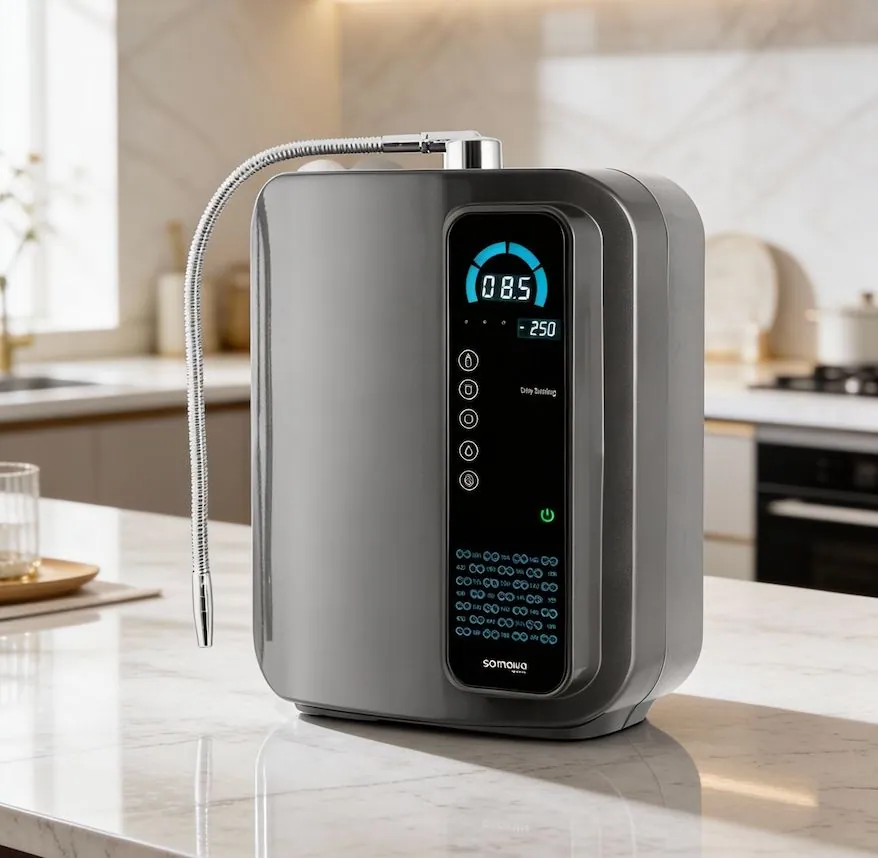 Amara
Amara
Pipeless AFS design. Think beyond health.
Learn more →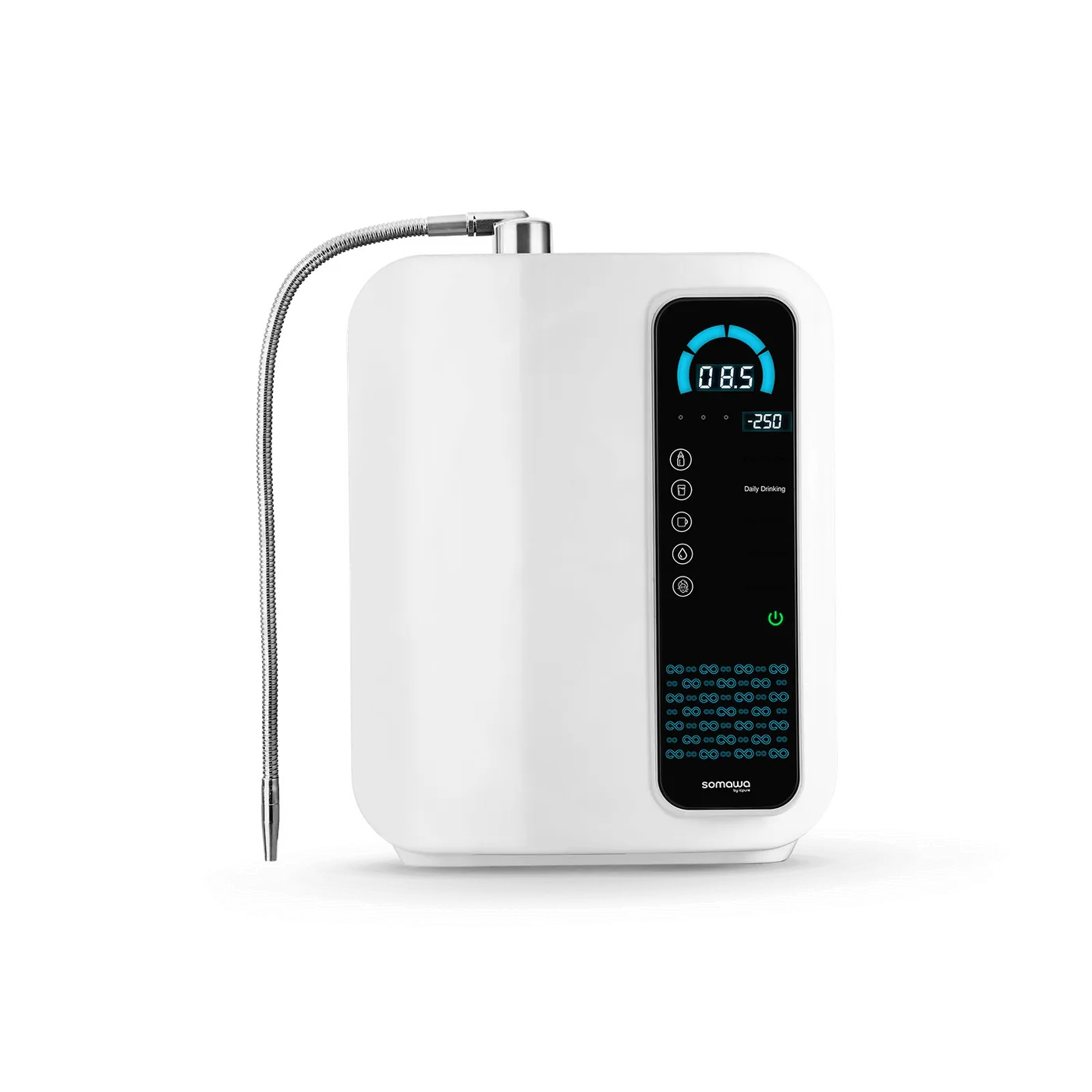 Amara NXT
The Amara platform, taken further.
Learn more →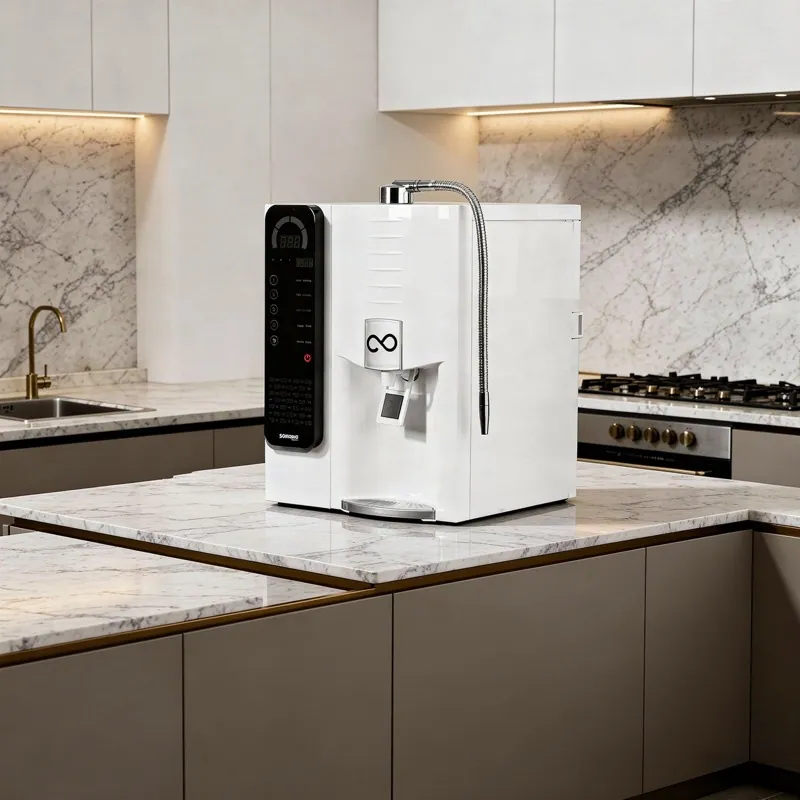 Udaka
Udaka
Built-in RO and ionisation in one unit.
Learn more →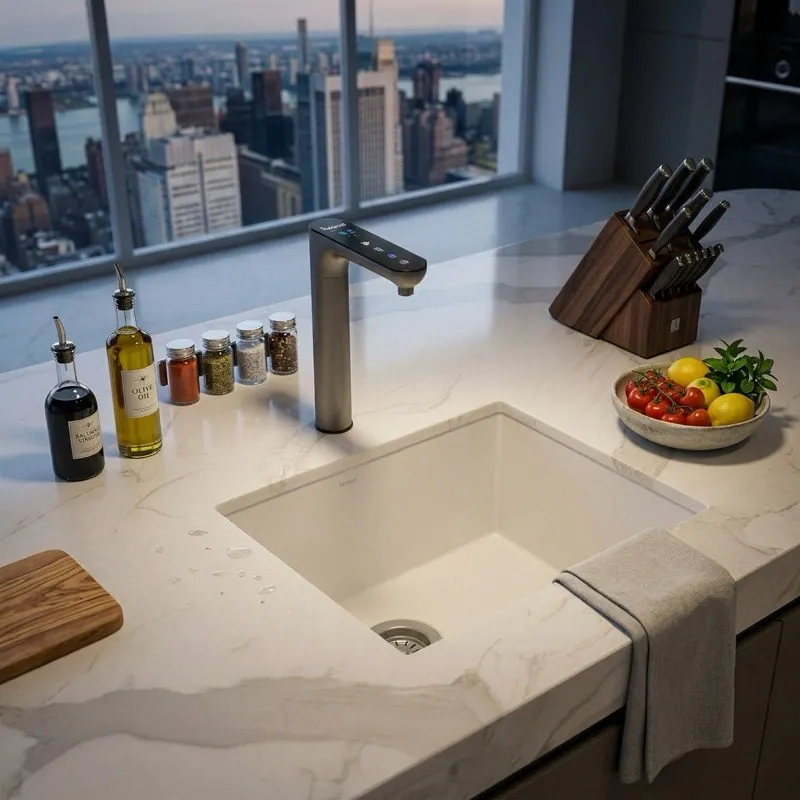 Modish
Nine plates. Designed to make a difference.
Learn more →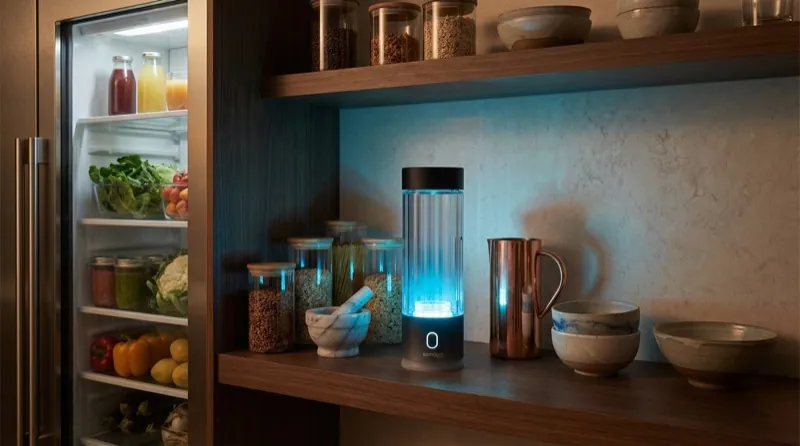 Toya
Toya
Experiential water. Infuses life in every drop.
Learn more →SOMAWA products are wellness devices, not medical treatments. Nothing on this page is medical advice. Customer experiences are individual and vary; they are shared as wellness outcomes, not clinical results. Research cited is indexed with DOIs where available. SOMAWA is incubated under NRDC, an enterprise of DSIR, Ministry of Science and Technology, Government of India.