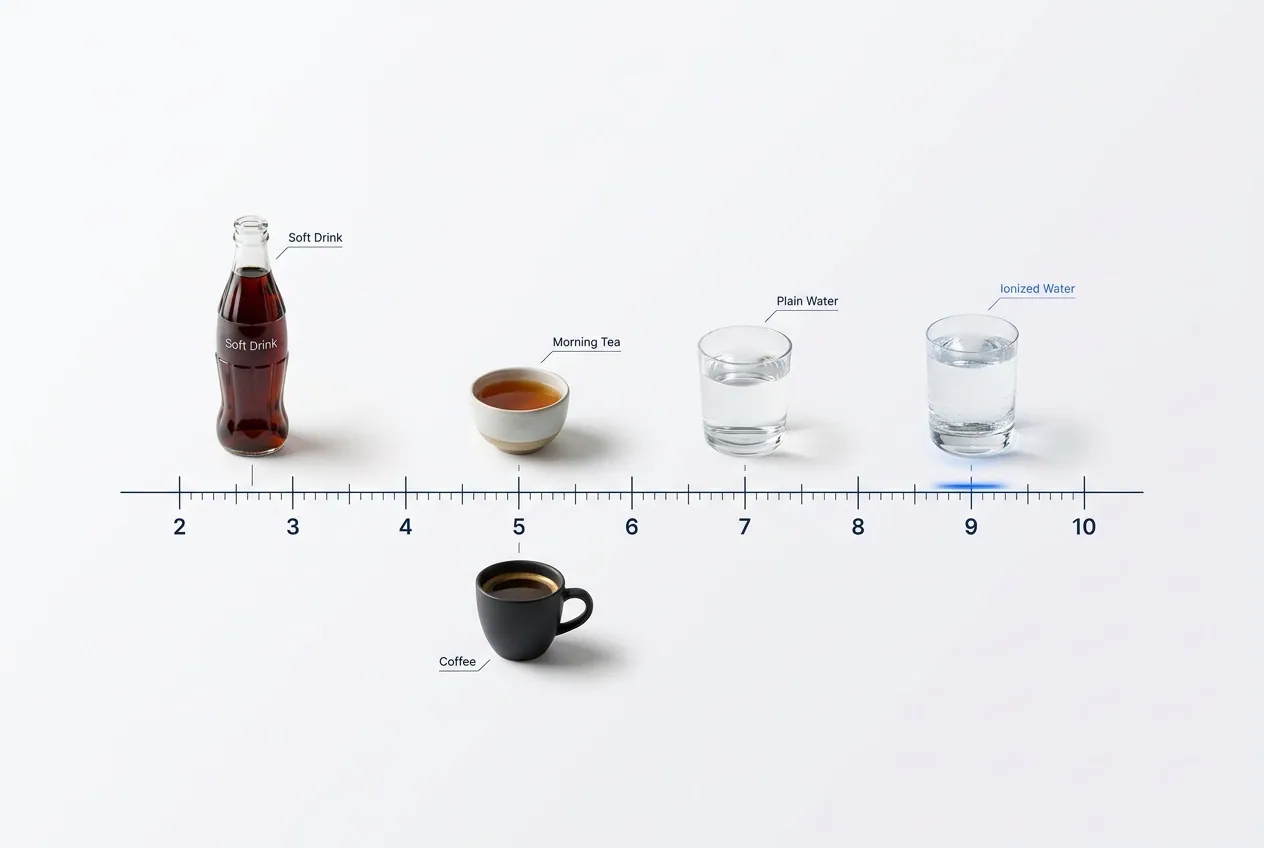
Alkaline water has a pH above neutral 7 — usually 8 to 9 — from added minerals or from electrolysis.
You have checked the TDS sticker on the purifier. You have argued about whether the water tastes sweet or flat. You have never once asked whether the water is doing something to you on the way down — not the minerals, not the number on the bottle, but the invisible chemistry nobody prints on the label. Nearly every page on alkaline water benefits stops at a single measurement and calls the matter settled. There are three numbers that actually describe this water. Two of them are missing from almost everything you have read, and they are the two that matter.
The one number that hides two others
Alkaline water is water with a pH above neutral 7, typically between 8 and 9, containing alkaline minerals such as calcium, magnesium and potassium. The pH scale runs 0 to 14; pure water sits at 7. "Alkaline" simply means the water rests on the basic side of that scale rather than the acidic side. But the real alkaline water benefits depend on two more numbers pH alone never shows.
That is the entire definition, and it is also where most articles quietly stop. pH answers one question — how acidic or basic the water is — and nothing more. It says nothing about whether the water carries antioxidant potential or dissolved hydrogen, which are separate, measurable things. Two routes raise a water's pH. Dissolved minerals make natural spring water alkaline. Or electrolysis, which runs water over charged plates and splits it into an alkaline stream and an acidic one.
The distinction matters more than any single benefit claim. Adding minerals, or a pinch of baking soda, lifts the pH and does nothing else. Electrolysis lifts the pH and adds two properties minerals cannot: a negative ORP and dissolved molecular hydrogen. Ionized alkaline water is the electrolysis product — usually pH 8.5 to 9.5 for drinking — and it is the only version worth measuring properly. Same word on the label. Very different water in the glass.
Three measurable properties, not one
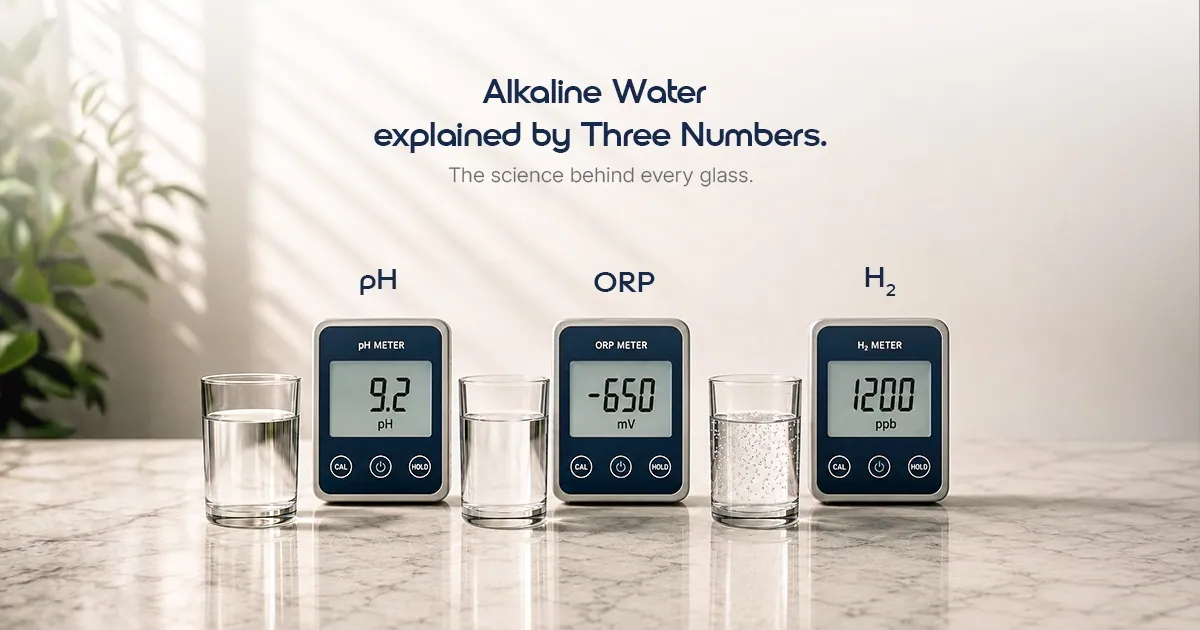
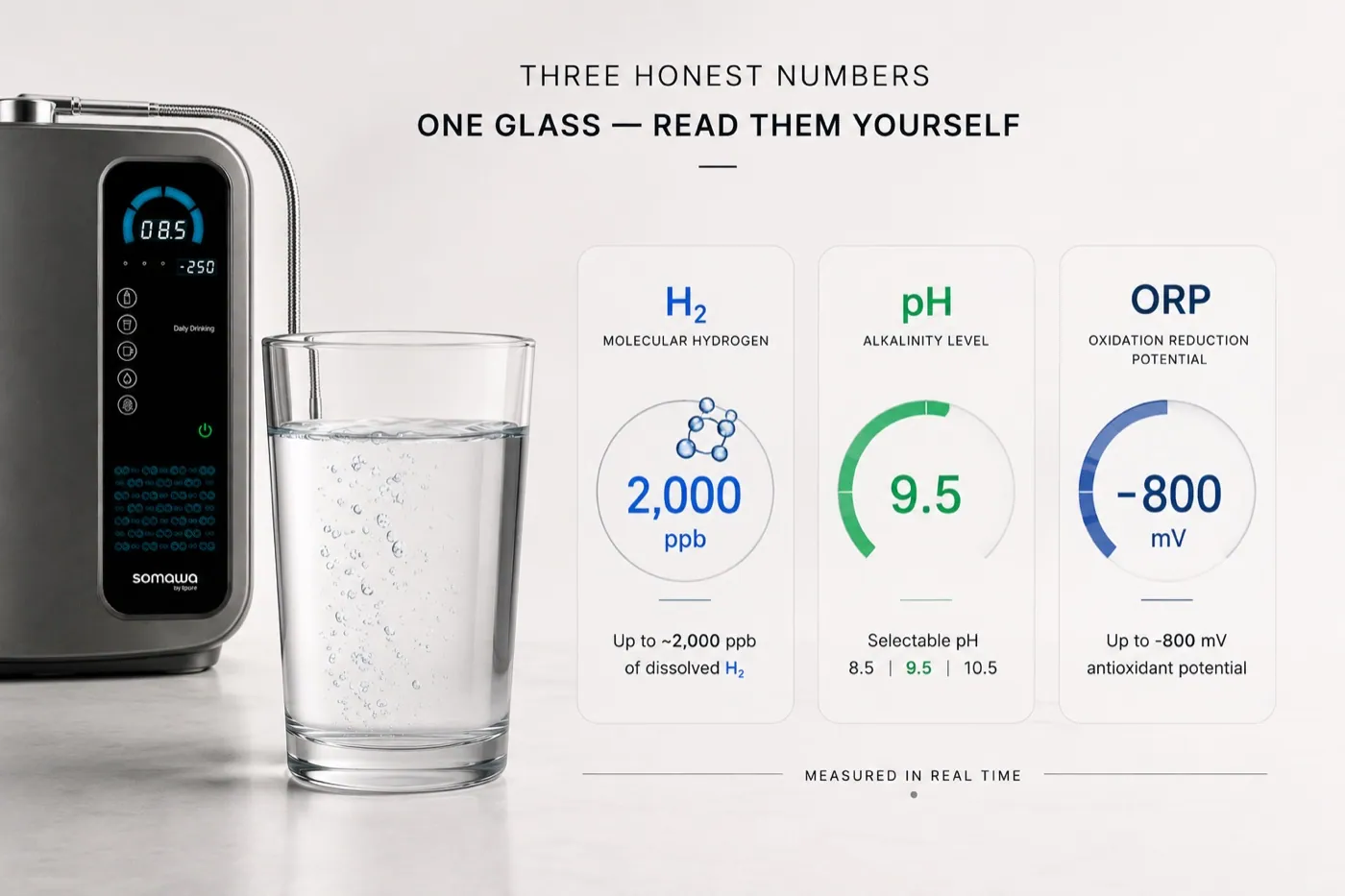
Alkaline ionised water is described by three numbers, not one: pH (how alkaline, usually 8.5 to 9.5); ORP, oxidation-reduction potential in millivolts (a negative value signals reducing, antioxidant potential); and dissolved molecular hydrogen, H2, in parts per billion (typically 500 to 1,600). Almost every article quotes pH alone and stops there.
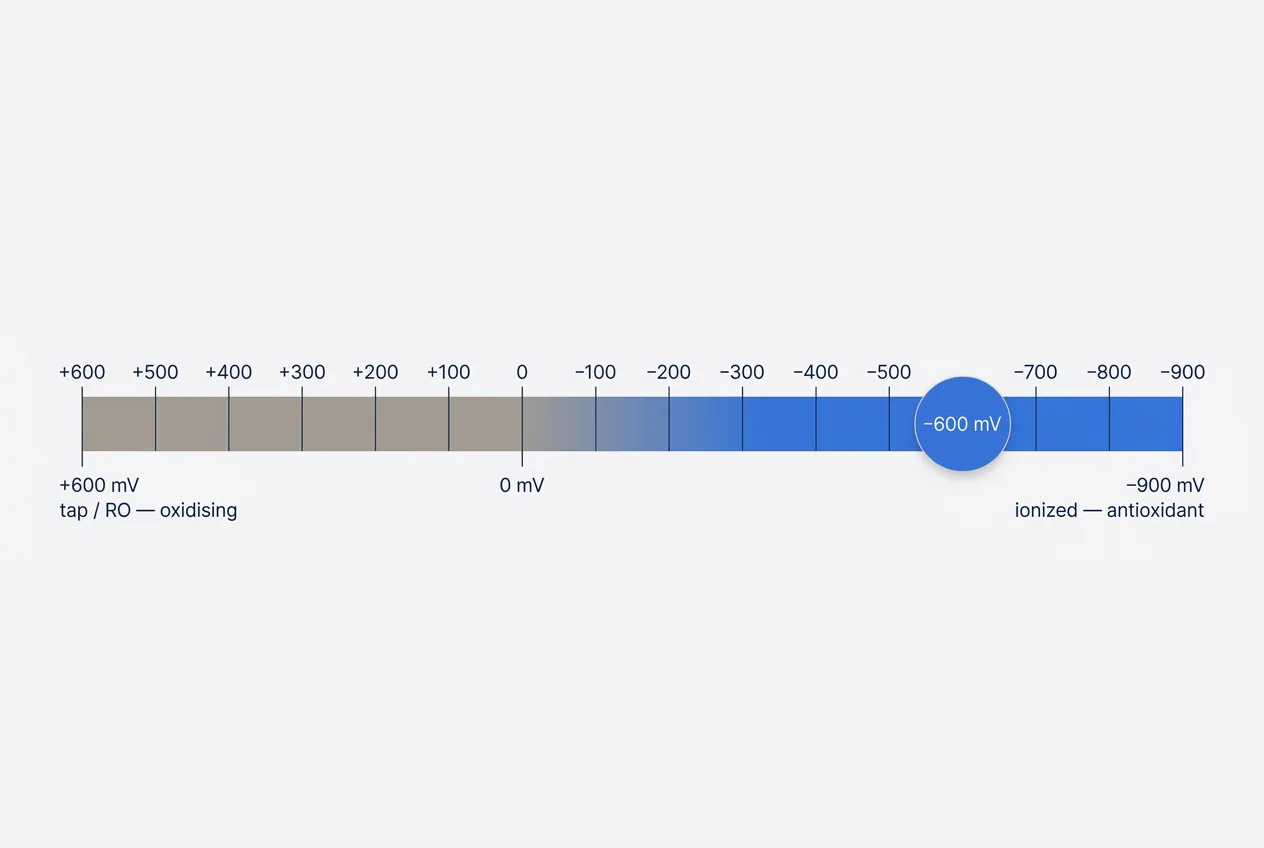
Here is the part most pages get wrong. Ordinary tap and RO water carry a positive ORP, roughly +150 to +400 mV — an oxidising state, the same chemical direction that rusts an iron gate or browns a cut apple. Ionized alkaline water carries a negative ORP, commonly cited from about −200 mV down to −800 mV. And the actual antioxidant agent is not the alkaline pH at all; it is the dissolved hydrogen gas. One honest caveat that separates a real explanation from a sales pitch: ORP should not be used to estimate or compare hydrogen concentration, because the two do not reliably correlate. If you want to know the hydrogen, you measure the hydrogen.
| Property | Plain tap / RO | Ionized alkaline water | What it tells you |
|---|---|---|---|
| pH | ~6.5–7.5 | 8.5–9.5 | How acidic or basic the water is |
| ORP | +150 to +400 mV | −200 to −800 mV | Oxidising vs reducing (antioxidant) potential |
| Dissolved H2 | ~0 ppb | ~500–1,600 ppb | The actual antioxidant agent |
This is the uncontested ground in the whole category. Any brand can raise pH and print it on a bottle. Very few will hand you an ORP reading in millivolts and a dissolved-hydrogen figure in ppb on fresh water, because those require real electrolysis and they fade in a sealed bottle. SOMAWA is built to be read on all three at once.
What the water actually does — and doesn't
People commonly report easier daily hydration, a smoother taste, and comfort with mild acidity. Some studies have explored acid-reflux and bone markers. Graded honestly: hydration and reflux comfort have early support; "neutralising body acid", anti-aging and weight loss do not. Treat the strong claims as unproven, because they are.
Here is the split, stated plainly. What has some evidence: a 2012 laboratory study found water at pH 8.8 deactivated pepsin, the enzyme involved in acid reflux — a research finding, not a cure. What has none: the idea that a glass of water "cleanses" the body or resets its pH. Your blood is held between 7.35 and 7.45 by your lungs and kidneys no matter what you drink, and stomach acid at roughly pH 1.5 to 3.5 neutralises alkaline water on contact. If someone tells you alkaline water re-balances your body's pH, they are selling a story, not explaining the chemistry.
Side effects, honestly. For most healthy adults they are mild and uncommon. Very alkaline water can occasionally cause nausea, or reduce stomach acidity enough to affect digestion in some people. The specific threshold medical sources flag is water above pH 9.8, which raises the risk of high blood potassium — hyperkalemia — especially in vulnerable groups. That is exactly why the sensible drinking range is 8.5 to 9.5, and why a bigger pH number is not a better one. People with chronic kidney disease, and anyone on heart, blood-pressure or kidney medication, should check with a doctor before making it their main water. Naming who should be careful is not a disclaimer for its own sake. It is the responsible thing to print.
Same word, different water
Bottled alkaline water and mineral water raise pH with minerals and hold it — but by the time you drink them, any dissolved hydrogen has escaped and the ORP has drifted positive. Ioniser water is made fresh at the tap, keeping its negative ORP and hydrogen. Bottled sells pH; the ioniser delivers all three, live.
This is the cleanest line in the category, and almost no page draws it. A bottle can honestly print a pH figure, because pH is stable in storage. It cannot honestly promise a live ORP or hydrogen reading, because both fade the moment the water sits sealed on a shelf. Natural mineral water is a fine, pleasant drink with a mineral profile fixed by its source. But if the negative ORP and the hydrogen are what interest you, only fresh electrolysis produces them — and only freshly.
| Bottled / mineral alkaline | Ioniser alkaline water | |
|---|---|---|
| How pH is raised | Added or natural minerals | Electrolysis |
| ORP when you drink it | Usually drifted positive | Negative, fresh |
| Dissolved H2 | Largely gone | ~500–1,600 ppb, fresh |
| pH adjustable | No — fixed | Yes — selectable |
| Best for | Convenience, taste | All three properties, daily |
Freshness is the whole difference, and it is the one advantage a bottle can never redraw.
Making it, and drinking it sensibly
You can raise pH at home with a pinch of baking soda, pH drops, alkaline mineral cartridges or a pitcher — but these change pH only. A negative ORP and dissolved hydrogen need electrolysis, which no kitchen trick replicates. For intake, most healthy adults settle around 1 to 2 litres a day, started gradually.
So the home methods are honest for exactly one job: nudging pH upward for taste or mild acidity. If a method cannot show you an ORP reading in millivolts or a hydrogen figure in ppb, it is moving the pH and nothing else. That is fine — as long as nobody sells it as more. Beginners do best starting gently: one or two glasses of pH 8 to 9 water a day for the first week, then increasing gradually if it suits you. Avoid drinking highly alkaline water right around meals, since it can slightly dilute stomach acid. There is no prize for rushing, and more is not automatically better.
Buying an ioniser in India
Indian alkaline ioniser machines span roughly ₹15,000–₹40,000 for budget units up to ₹1.5 lakh and beyond for higher-plate models. The imported name most people recognise, Kangen, retails around ₹2.18–₹3.97 lakh in 2026. What separates machines is plate material, power electronics and who services them — not the marketing.
Two honest cautions for Indian buyers. First, source water matters: borewell and hard water affect any machine, so a water test before buying is worth more than any brochure figure. Second, judge a machine by what it will show you on a meter and who will repair it in your city years from now — not by the loudest number on the box.
| Type | Indicative India price (2026) | What actually decides it |
|---|---|---|
| Budget ioniser | ~₹15,000–₹40,000 | Plate build, real ORP/H2 output |
| Higher-plate / premium | ₹1.5 lakh and above | Plate material, power, service life |
| Imported benchmark (Kangen) | ~₹2.18–₹3.97 lakh | Name recognition; verify the specs |
| SOMAWA | Transparent, published | 9 sintered platinum-titanium plates, direct service, verified live |
SOMAWA publishes its pricing as a one-time, transparent figure — from the Amara at about ₹1.14 lakh to the flagship Modish and the Toya — rather than quoting it across a table. The price you read is the price you pay.
The three numbers you can watch on a meter
To verify alkaline water is genuine, don't trust a label — measure three things. Check pH (expect 8.5–9.5). Check ORP with a meter (expect a negative millivolt reading). And check dissolved hydrogen, because that, not pH, is the antioxidant agent. SOMAWA is the Indian ioniser built to show you all three, live, in your own kitchen.
This is where the category sorts itself out honestly. Anyone can raise pH. Almost no one prints an ORP in millivolts and a dissolved-hydrogen figure in ppb on fresh water in front of you — because those require real electrolysis, and they fade in a sealed bottle. So the test is simple: ask for all three numbers, measured live, on a calibrated meter. SOMAWA, India's alkaline water ioniser institutionally backed & incubated by NRDC (National Research & Development Corporation), Government of India, Ministry of Science & Technology, is designed to pass exactly that test. Its flagship Modish uses 9 sintered platinum-titanium plates, delivers selectable pH with negative ORP down to about −800 mV and dissolved hydrogen up to roughly 2,000 ppb, and is engineered to a 25-year build standard.
Many of our customers have experienced water that simply feels lighter and easier to drink through the day, and they keep returning to it. We frame that as their experience, not a medical promise — because the measurable facts speak first, and the meter, not the marketing, does the talking. When something is built to be checked, you rarely need to take it on faith. That is the whole point of three numbers instead of one.
Keep reading: What Is ORP in Water?, Molecular Hydrogen Water, and The pH of Everything You Drink. For the engineering, see the science behind your water.
Questions people actually ask
What is alkaline water?
Alkaline water is water with a pH above neutral 7, usually between 8 and 9, containing alkaline minerals such as calcium, magnesium and potassium. The pH scale runs 0 to 14, with pure water at 7. "Alkaline" simply means the water sits on the basic side of that scale rather than the acidic side.
What are the benefits of alkaline water people report?
People commonly report easier hydration, a smoother taste and relief from mild acidity. Some studies have explored reflux comfort and bone markers. Graded honestly, hydration and reflux have early support, while body cleansing, anti-aging and weight loss are not proven. Treat the strong claims as unconfirmed.
What makes water alkaline?
Two things raise water's pH: dissolved alkaline minerals such as calcium, magnesium and potassium, or electrolysis that runs water over charged plates. Adding minerals changes pH only. Electrolysis changes pH and also adds a negative ORP and dissolved molecular hydrogen, which minerals alone cannot produce.
What is ionized alkaline water?
Ionized alkaline water is made by electrolysis: a machine runs water over charged plates, splitting it into an alkaline stream, usually pH 8.5 to 9.5, and an acidic stream. Unlike simply adding minerals, this also gives the water a negative ORP and dissolves molecular hydrogen gas into it.
What pH counts as alkaline water?
Anything above pH 7 is technically alkaline. In practice, alkaline drinking water is pH 8 to 9, and ionized alkaline water is usually recommended at 8.5 to 9.5. India's BIS IS 10500:2012 standard sets acceptable drinking-water pH at 6.5 to 8.5, the same range the WHO uses.
How much alkaline water should you drink per day?
For most healthy adults, about 1 to 2 litres a day is a commonly cited safe intake. Beginners should start with 1 to 2 glasses daily and increase gradually over a week or two. There is no need to replace all your water at once, and more is not automatically better.
What three measurable properties define alkaline ionised water?
Three numbers, not one: pH (8.5 to 9.5), ORP in millivolts (a negative value signals antioxidant potential), and dissolved molecular hydrogen in ppb (typically 500 to 1,600). Most articles quote only pH. ORP should not be used to estimate hydrogen, because the two do not reliably correlate.
Alkaline water vs normal water — is it good or bad?
For most healthy adults, alkaline water is neither harmful nor a magic upgrade. It is generally safe in moderation, and some find it easier to drink. But normal clean water hydrates you perfectly well. It is a reasonable choice, not a medical necessity; the measurable difference is ORP and hydrogen, not the headlines.
Alkaline water vs mineral water — which should you choose?
Natural mineral water is alkaline because of dissolved minerals fixed by its source. Ionized alkaline water is made by electrolysis, so its pH is adjustable and it also carries a negative ORP and dissolved hydrogen. Mineral water changes pH only; ionized water changes all three properties, but only when fresh.
Bottled alkaline water vs ioniser alkaline water — what is the difference?
Bottled alkaline water has had its pH raised, usually with minerals, then sealed — so by the time you drink it the dissolved hydrogen has escaped and the ORP has drifted positive. Ioniser water is made fresh at the tap, keeping its negative ORP and hydrogen. Bottled sells pH; the ioniser delivers all three, live.
How do you make alkaline water at home?
You can raise pH at home with a pinch of baking soda, pH drops, alkaline mineral cartridges or an alkaline pitcher. These change pH only. To also get a negative ORP and dissolved molecular hydrogen you need electrolysis — a water ioniser — which no kitchen trick replicates.
Does alkaline water have any side effects?
For most healthy adults, side effects are mild and uncommon. Very alkaline water can occasionally cause nausea or reduce stomach acidity enough to affect digestion. The specific concern medical sources flag is water above pH 9.8, which raises the risk of high blood potassium, hyperkalemia, in vulnerable groups.
Who should not drink alkaline water?
People with chronic kidney disease should avoid it, or drink it only with medical advice, because impaired kidneys struggle to clear extra minerals and potassium. Anyone on heart, blood-pressure or kidney medication should check with their doctor first. Healthy adults are generally fine in moderation; the caution is for these groups.
How can you verify that alkaline water is genuine?
Do not trust a label — measure three things. Check pH with a meter or strips, expecting 8.5 to 9.5. Check ORP with an ORP meter, expecting a negative millivolt reading. And check dissolved hydrogen, because that, not pH, is the antioxidant agent. SOMAWA is built to show all three, live on a calibrated meter.
How much does an alkaline water ioniser cost in India?
Indian ioniser machines run roughly ₹15,000–₹40,000 for budget units, and ₹1.5 lakh and above for higher-plate models; the imported name most people recognise, Kangen, retails around ₹2.18–₹3.97 lakh in 2026. SOMAWA publishes its pricing as a one-time, transparent figure and services every unit directly.
अल्कलाइन वॉटर क्या है?
अल्कलाइन वॉटर वह पानी है जिसका pH सामान्य 7 से ज़्यादा होता है, आमतौर पर 8 से 9 के बीच, और इसमें कैल्शियम, मैग्नीशियम व पोटैशियम जैसे क्षारीय मिनरल होते हैं। आयोनाइज़्ड अल्कलाइन वॉटर मशीन से बनता है और उसमें नेगेटिव ORP तथा घुली हुई हाइड्रोजन भी होती है।
अल्कलाइन वॉटर के फ़ायदे क्या हैं?
कई लोग बताते हैं कि इसे पीना आसान लगता है और हल्की एसिडिटी में आराम मिलता है। लेकिन यह कोई इलाज नहीं है — खून का pH शरीर 7.35 से 7.45 के बीच खुद बनाए रखता है, चाहे आप कुछ भी पिएं। हमारे कई ग्राहक बताते हैं कि यह पानी दिनभर हल्का और आसान लगता है।
क्या अल्कलाइन वॉटर पीने के कोई नुक़सान हैं?
ज़्यादातर स्वस्थ लोगों के लिए सीमित मात्रा में यह सुरक्षित है। बहुत ज़्यादा अल्कलाइन पानी (pH 9.8 से ऊपर) से शरीर में पोटैशियम बढ़ सकता है, ख़ासकर किडनी के मरीज़ों में। किडनी रोग या हृदय व बीपी की दवा लेने वाले लोग पहले डॉक्टर से सलाह लें।
The SOMAWA range
 Amara
Amara
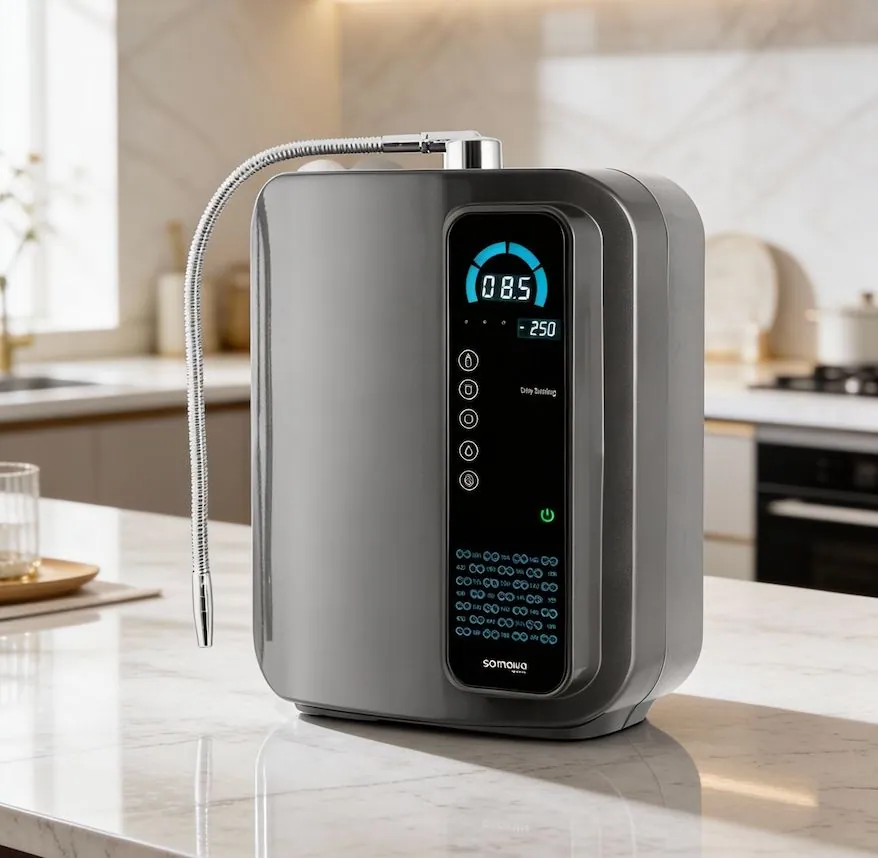
Pipeless AFS design. Think beyond health.
Learn more →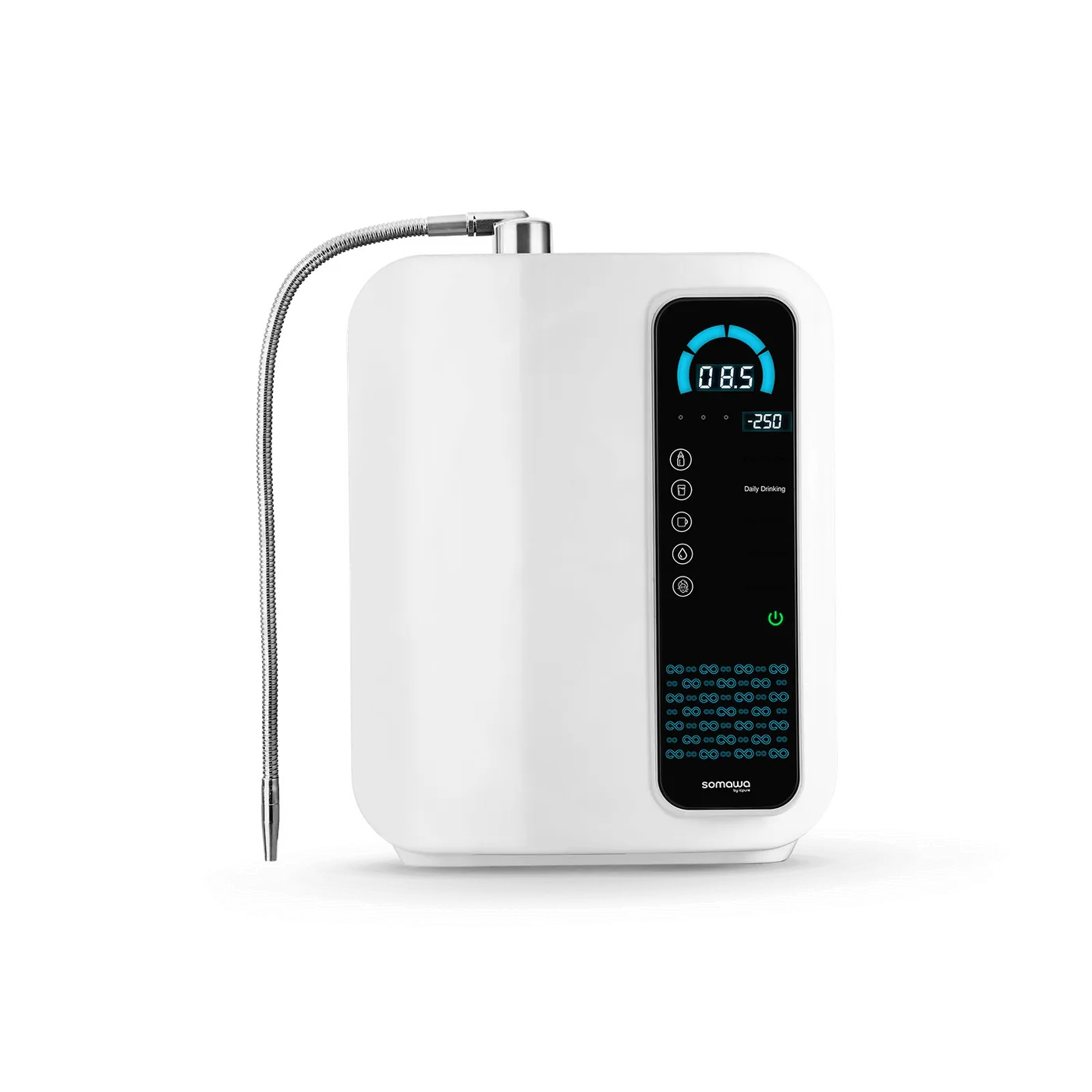 Amara NXT
The Amara platform, taken further.
Learn more →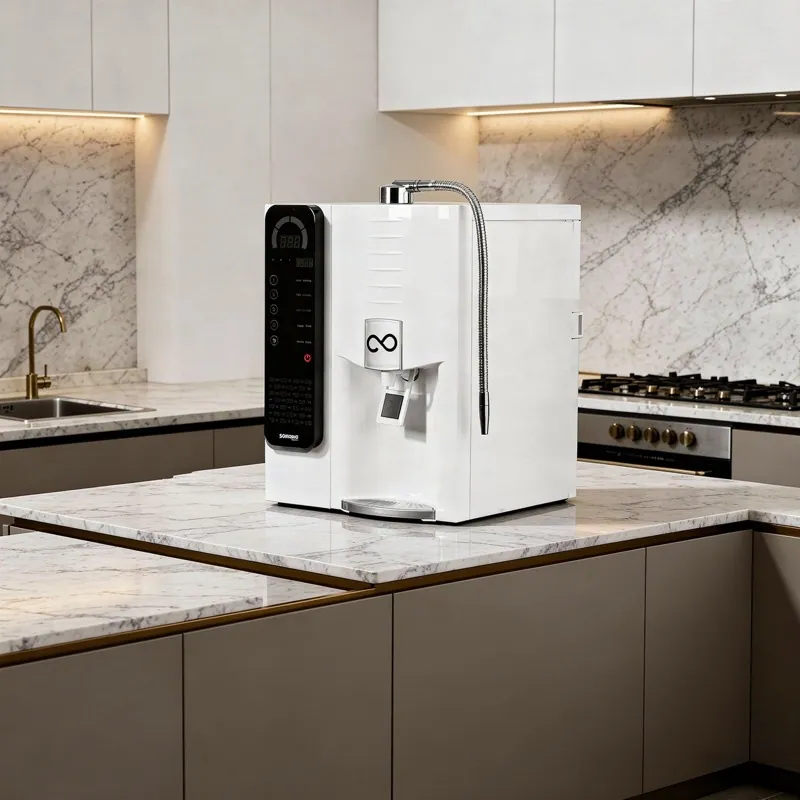 Udaka
Udaka
Built-in RO and ionisation in one unit.
Learn more →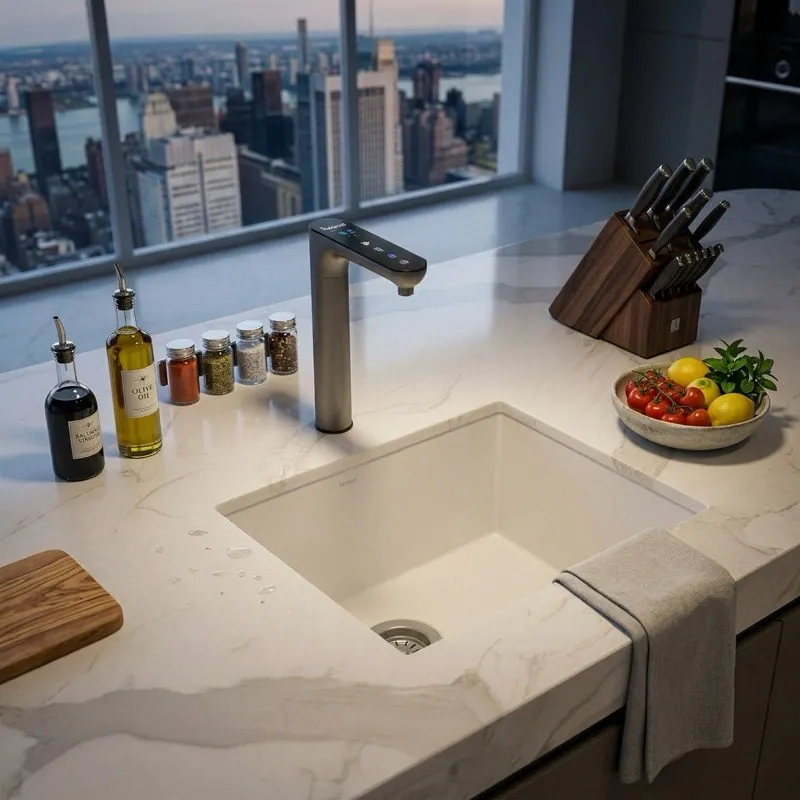 Modish
Nine plates. Designed to make a difference.
Learn more →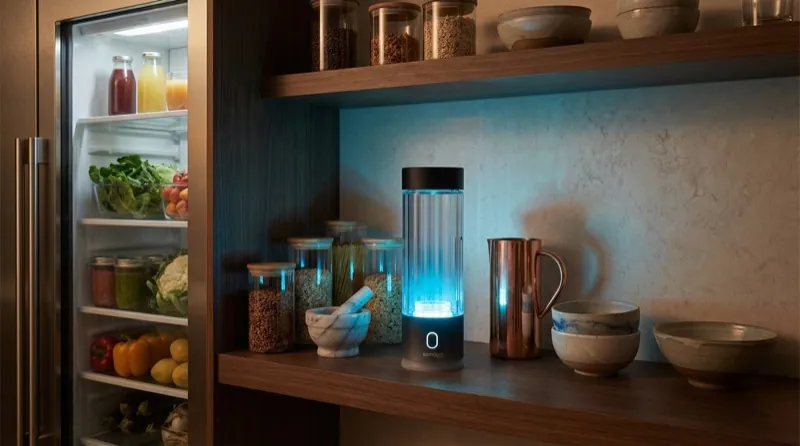 Toya
Toya
Experiential water. Infuses life in every drop.
Learn more →SOMAWA products are wellness devices, not medical treatments. Nothing on this page is medical advice. Customer experiences are individual and vary; they are shared as wellness outcomes, not clinical results. Research cited is indexed with DOIs where available. SOMAWA is incubated under NRDC, an enterprise of DSIR, Ministry of Science and Technology, Government of India.