You’ve been told “drink more water” your entire life. And you do. So why isn’t it working the way everyone promised? Because not all water is the same. Lemon water is acidic at the moment you drink it. Hot water’s benefit fades in 30 minutes. Detox water has no real antioxidant ability. SOMAWA water is different — it carries dissolved hydrogen gas, a negative charge that fights internal damage, and a structure that your cells absorb faster. Six published studies explain what that actually means for your weight.
Does Drinking Water Help You Lose Weight? Yes — But Here’s What Most People Miss
Yes, water genuinely helps you lose weight — and science backs this up completely. A 2003 study by Boschmann et al., published in the Journal of Clinical Endocrinology & Metabolism, found that drinking just 500ml of water raises your body’s calorie-burning speed by 30% within 10 minutes — and the effect lasts 30 to 40 minutes.[1] But that study used ordinary water. The question nobody asked then is the question that changes everything: what if your water could do far more?
Water helps with weight loss in three ways most people already know: it fills the stomach so you eat less, it speeds up the body’s internal engine (metabolism), and it helps the liver and kidneys flush out fat waste. All of this is true. All of this is real.
What most people have never thought about is whether all water does this equally. Your RO water and SOMAWA water look identical in the glass. Same colour, same smell. But at the molecular level — the level your body actually operates at — they are completely different. One carries extra electrons that neutralise internal damage on contact. The other quietly takes electrons away from the body. The number that measures this is called ORP (Oxidation-Reduction Potential — think of it as your water’s self-healing score). What is ORP and why it matters →
Drinking water first thing in the morning, consistently through the day, has been part of Indian wellness for generations. Modern science has now confirmed exactly why that works. What SOMAWA water does is give that same ancient habit a significantly more powerful instrument to work with.
Most Indians drink RO water that reads +250 to +400 mV — mildly oxidising. Fresh mountain spring water reads −50 to −100 mV. SOMAWA water reads −800 to −1,000 mV.
How to Lose Water Retention: Why the Body Holds Fluid — and How to Stop It
Puffy face every morning? Legs that feel heavy and swollen by evening? That is not fat. That is water retention — and it is a completely different problem. It happens when fluid gets trapped in the gaps between your cells, caused by too much salt, internal inflammation, hormonal shifts, or poor cellular hydration. The most common mistake people make: drink less water to feel less bloated. That actually makes it worse. The body panics when it senses water shortage and holds on to every drop it has.
Here is what is happening inside. When the body is dealing with internal damage — from processed food, Delhi’s air pollution, disturbed sleep, or sitting too long — the walls of tiny blood vessels become leaky. Fluid escapes from the blood into the surrounding tissue (the spaces between your cells). The result: puffy eyes in the morning, heavy ankles by evening, that bloated feeling even on days when you have not overeaten.
SOMAWA water has a negative ORP — meaning it carries extra electrons that it donates to neutralise the internal damage causing those leaky vessel walls. When that internal damage (called oxidative stress) reduces, the vessel walls seal up. Less fluid leaks into the tissue. The puffiness goes down. This is fundamentally different from herbal diuretics that simply force the kidneys to push more fluid out — without fixing what caused the leak in the first place.
Understanding the difference between water weight and fat also matters for expectations. Losing water weight can happen in 24 to 48 hours. Losing fat takes weeks. Conflating the two leads to frustration in both directions — believing too quickly that something is working, or too quickly that it is not.
| How to Tell the Difference | Water Weight | Body Fat |
|---|---|---|
| Changes within 24 hours? | Yes — daily fluctuation is normal | No — fat changes slowly over weeks |
| Worse after salty food? | Yes — sodium drives fluid retention | No direct effect |
| Responds to better hydration? | Often reduces with consistent water intake | No change from hydration alone |
| Where it collects | Face, ankles, abdomen, hands | Belly, thighs, upper arms |
| Morning vs. evening pattern | Lighter in morning, heavier by evening | Consistent throughout the day |
Lemon Water for Weight Loss: The Truth About India’s Most Popular Fat-Loss Drink
Warm lemon water — sometimes with a drop of honey — first thing every morning. Half of India swears by it. And honestly? It genuinely helps. The problem is not that lemon water is bad. The problem is the claim that it “makes the body alkaline.” Lemon juice is pH 2 to 3 — as acidic as vinegar — at the moment you drink it. It only becomes alkaline-forming in the body after passing through your stomach and intestines. SOMAWA water is alkaline the moment it hits your tongue — no waiting, no neutralisation journey.
Lemon water’s real benefits are worth naming honestly. The citric acid reduces kidney stone risk. The vitamin C (which your body cannot make on its own) supports fat transport, immune function, and skin health. The flavour makes plain water more enjoyable, so people end up drinking more — and that volume alone improves metabolism. None of this is wrong.
Where the confusion creeps in is the word “alkaline.” Yes, lemon leaves an alkaline trace in the urine after digestion. But in the few minutes between swallowing it and it reaching your blood, it travels through your food pipe, stomach, and intestines at a strongly acidic pH. Doing this every day slowly softens your tooth enamel. And the alkaline trace it leaves behind is not the same as drinking water that is already alkaline, already carrying dissolved hydrogen, and already with a negative ORP (antioxidant charge) before it even enters your body.
If lemon water is part of your morning ritual, keep it. But understand what it is doing and what it cannot do. The molecular hydrogen, the negative ORP, and the microclustered structure that SOMAWA water carries — those require a completely different process.
| Property at Consumption | Warm Lemon Water | SOMAWA Water |
|---|---|---|
| pH | 2–3 (strongly acidic) | 8.5–9.5 (directly alkaline) |
| ORP | +200 to +350 mV (oxidising) | −800 to −1,000 mV (reducing) |
| Molecular hydrogen | <0.01 ppb | 1,500 ppb |
| Alkalinity in body | Indirect — citrate residue post-digestion | Direct — alkaline at point of consumption |
| Effect on tooth enamel | Softens enamel with regular daily use | Neutral to protective |
| Antioxidant electron activity | None measurable | Yes — negative ORP = electron surplus |
Hot Water and Warm Water for Weight Loss: What the Temperature Effect Actually Does
Do you drink warm water at home? Good — there is real science behind that habit. Drinking hot water (40–60°C) forces your body to work to cool itself back down, burning 4 to 8 extra calories per glass in the process. That is not a myth. If you drank nothing but hot water for an entire year, the extra calorie burn would add up to about 2 to 2.5 kg of fat lost. Real. Just not enough on its own.
Hot water also genuinely helps digestion. It gets the intestines moving (think of it as a gentle internal massage), relaxes cramping, and helps food move through faster. This is why Indian homes, ancient wellness traditions, and modern stomach doctors all agree on this one. It works.
The limitation is time. The heat benefit disappears in 20 to 30 minutes. The digestive benefit stays in the stomach and intestines. Neither benefit reaches the deep cellular level — the fat cells, the energy factories inside cells (mitochondria), or the tiny blood vessel walls where water retention begins. For those deeper effects, temperature is completely irrelevant. What matters is what the water is made of at the molecular level. And that is where SOMAWA water does something hot water simply cannot.
| Mechanism | Hot / Warm Water | SOMAWA Water |
|---|---|---|
| Metabolic boost | 4–8 extra calories, 20–30 min thermal effect | Molecular hydrogen activates FGF21 metabolism (Kamimura et al., 2011)[3] |
| Anti-inflammatory | Mild — heat relaxes smooth muscle | Negative ORP reduces oxidative load at cellular level |
| Fat accumulation | No direct effect | Reduced in controlled animal studies (Ignacio et al., 2013)[4] |
| Effect duration | 20–30 minutes | Ongoing — absorbed by cells throughout the day |
| Digestive support | Yes — stimulates GI motility | Yes — microclustered structure improves cellular hydration |
Detox Water, Fat Burning Water, and What Science Actually Calls a Real Detox
Cucumber mint water, sabja seeds, honey with cinnamon — detox drinks look clean and feel intentional. They make water more enjoyable, and that matters. But they do not measurably shift what is happening inside your body at the cellular level. The ORP (antioxidant charge) of typical infused water is still positive — meaning it is still mildly taking electrons from the body rather than giving them. Real detoxification — where your liver converts harmful substances into forms the kidneys can flush out — runs on the liver’s own antioxidant capacity. Flavoured water does not change that.
The word “detox” has been used so loosely it has almost lost its meaning. In the body, detoxification is a two-stage filtering process that happens continuously in the liver. Its speed depends on how much antioxidant protection the liver has, how well-hydrated the cells are, and the availability of a master antioxidant called glutathione (your liver’s internal cleaner). A few slices of cucumber in RO water does not meaningfully improve any of these factors. You are mostly getting flavoured water.
Even fresh green tea — genuinely antioxidant-rich — reads −20 to −60 mV on the ORP scale. Detox water sits at +100 to +200 mV. SOMAWA water reads −800 to −1,000 mV. The gap between detox water and SOMAWA water is not a small upgrade — it is a fundamentally different category of liquid. The image below shows exactly where each drink sits.
How All Four Compare — Side by Side
| Property | Lemon Water | Detox Water | Warm Water | SOMAWA Water |
|---|---|---|---|---|
| pH when you drink it | 2–3 (strongly acidic) | ~6–7 (neutral) | Same as source water | 8.5–9.5 (alkaline) |
| ORP — antioxidant charge | +200 to +350 mV (oxidising) | +100 to +200 mV (oxidising) | +200 to +400 mV (oxidising) | −800 to −1,000 mV (reducing) |
| Dissolved hydrogen | None | None | None | 1,500 ppb |
| How long the benefit lasts | During digestion only | During digestion only | 20–30 min (thermal effect) | Ongoing — absorbed at cell level |
| Fights internal damage | No | No | Mildly (heat only) | Yes — negative ORP donates electrons |
| Cellular absorption | Standard | Standard | Standard | Enhanced — microclustered structure |
| Effect on teeth | Softens enamel over time | Neutral | Neutral | Neutral to protective |
| Primary weight-loss role | Hydration volume + Vitamin C | Hydration volume only | Thermal metabolism boost | Hydrogen + ORP + structure — cellular level |
Why SOMAWA Water Works at a Level That Lemon Water and Detox Drinks Simply Cannot Reach
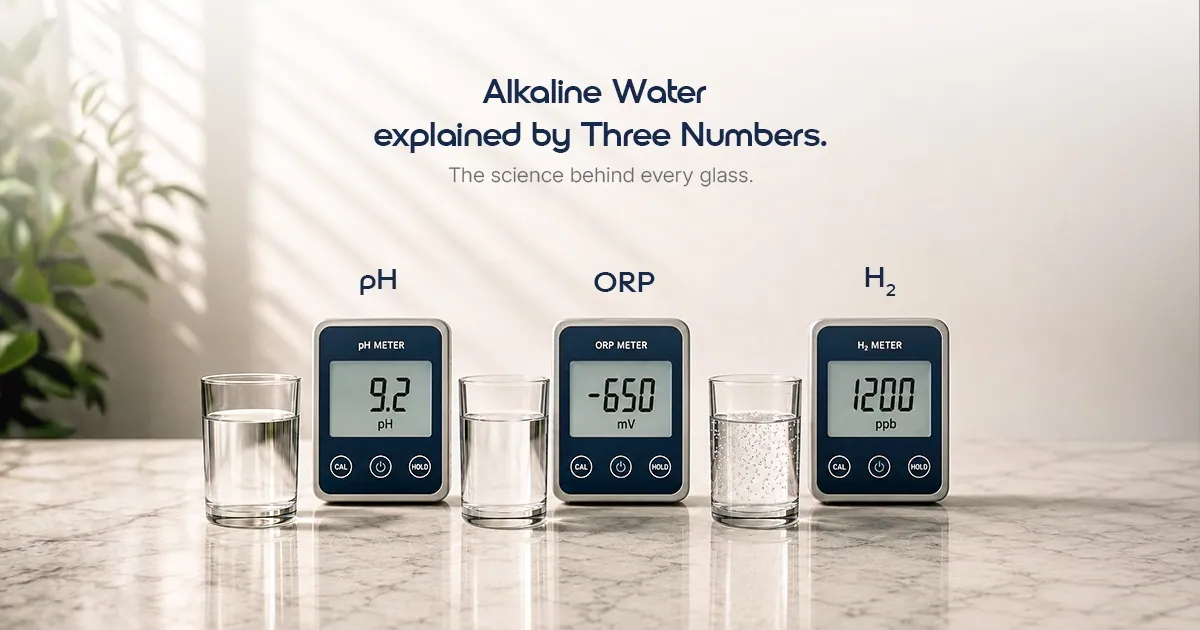
When water passes through SOMAWA’s ionizer plates using a process called electrolysis (running an electric current through water), three measurable things happen to it. It gains dissolved hydrogen gas. It acquires a negative antioxidant charge (ORP). And its molecular structure becomes smaller and easier for cells to absorb. Six peer-reviewed studies published between 2003 and 2022 connect these three properties to real, measurable changes in the body — from reduced fat in animal studies to better blood sugar and cholesterol in a human trial.
Dissolved Molecular Hydrogen (H₂)
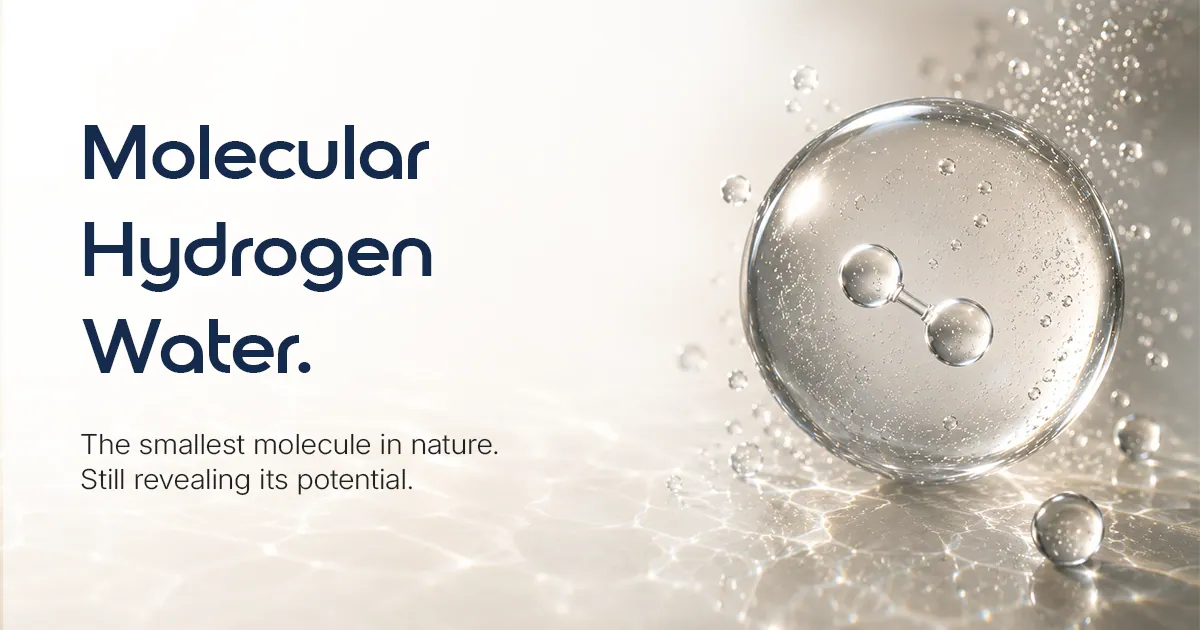
Molecular hydrogen (H₂) is the tiniest molecule in existence — about 88 times smaller than Vitamin C. Because of that size, it passes straight through cell walls and reaches the mitochondria — the tiny energy factories inside each cell that are responsible for burning fat.
In a 2011 study published in Obesity (Wiley), Kamimura et al. found that hydrogen-rich water activated a fat-burning hormone in the liver called FGF21, and significantly reduced liver fat in test subjects.[3] Long-term consumption controlled body weight without any change in food intake. SOMAWA water delivers 1,500 ppb of dissolved hydrogen — a concentration most tap, RO, or bottled water does not carry at all.
Negative ORP (Oxidation-Reduction Potential)
ORP measures the water’s electron-donating capacity. Tap water and bottled water read +200 to +400 mV — oxidising. SOMAWA water reads as low as −800 mV (Amara) and −1,000 mV (Modish) — strongly reducing. A negative ORP means the water carries surplus electrons it donates to free radicals on contact.
A study in Biological and Pharmaceutical Bulletin by Ignacio et al. (2013) found that alkaline reduced water with negative ORP significantly reduced body weight gain and epididymal fat accumulation in high-fat-diet mice versus controls.[4]
Microclustered Water Structure
During electrolysis, SOMAWA’s platinum-titanium plates break water into smaller molecular groups. Your cells have tiny water gates called aquaporin channels — discovered by Nobel Prize-winning scientist Dr. Peter Agre in 2003 — and these smaller water clusters slip through those gates with far less resistance.
The practical result: water and the hydrogen it carries reach your cells faster and more completely. A well-hydrated cell works the way it is meant to — including the internal processes that decide whether energy is stored as fat or burned as fuel. This is not a beauty claim. It is a functional difference in how your cells operate.
| Study | Year | Journal | Key Finding |
|---|---|---|---|
| Boschmann et al.[1] | 2003 | J Clin Endocrinol Metab | 500ml water raises metabolic rate 30% within 10 min; effect lasts 30–40 min. Foundational evidence for water-induced thermogenesis. |
| Ohsawa et al.[2] | 2007 | Nature Medicine | Molecular hydrogen selectively reduces cytotoxic hydroxyl radicals without affecting beneficial reactive oxygen species. Established H₂ as a therapeutic antioxidant. |
| Kamimura et al.[3] | 2011 | Obesity (Wiley) | H₂-rich water stimulated hepatic FGF21, activated PGC-1α, and significantly reduced liver fat. Long-term consumption controlled body weight without altering food intake. |
| Ignacio et al.[4] | 2013 | Biol. Pharm. Bull. | Alkaline reduced water reduced body weight gain, epididymal fat, and liver fat in high-fat-diet mice. Anti-obesity effect under controlled conditions. |
| LeBaron et al.[5] | 2020 | Diabetes Metab. Syndr. Obes. | Randomised, double-blinded, placebo-controlled trial in 60 humans. 24 weeks of H₂-rich water reduced blood cholesterol, glucose, HbA1c, and inflammation versus placebo. |
| Chan et al.[6] | 2022 | PLOS ONE | Cross-sectional study of 304 postmenopausal women. Regular alkaline water drinkers showed lower fasting glucose, lower triglycerides, and significantly lower metabolic syndrome prevalence (p < 0.05). |
Animal studies show strong fat-reduction signals. A properly controlled human trial (60 people, 24 weeks, double-blinded) shows real improvements in cholesterol, blood sugar, and inflammation. Is this a closed case? No. Is there enough published, named, verifiable research to say this is worth paying attention to? Absolutely. SOMAWA does not ask you to take our word for it — every study cited here has a DOI link you can open in 10 seconds.
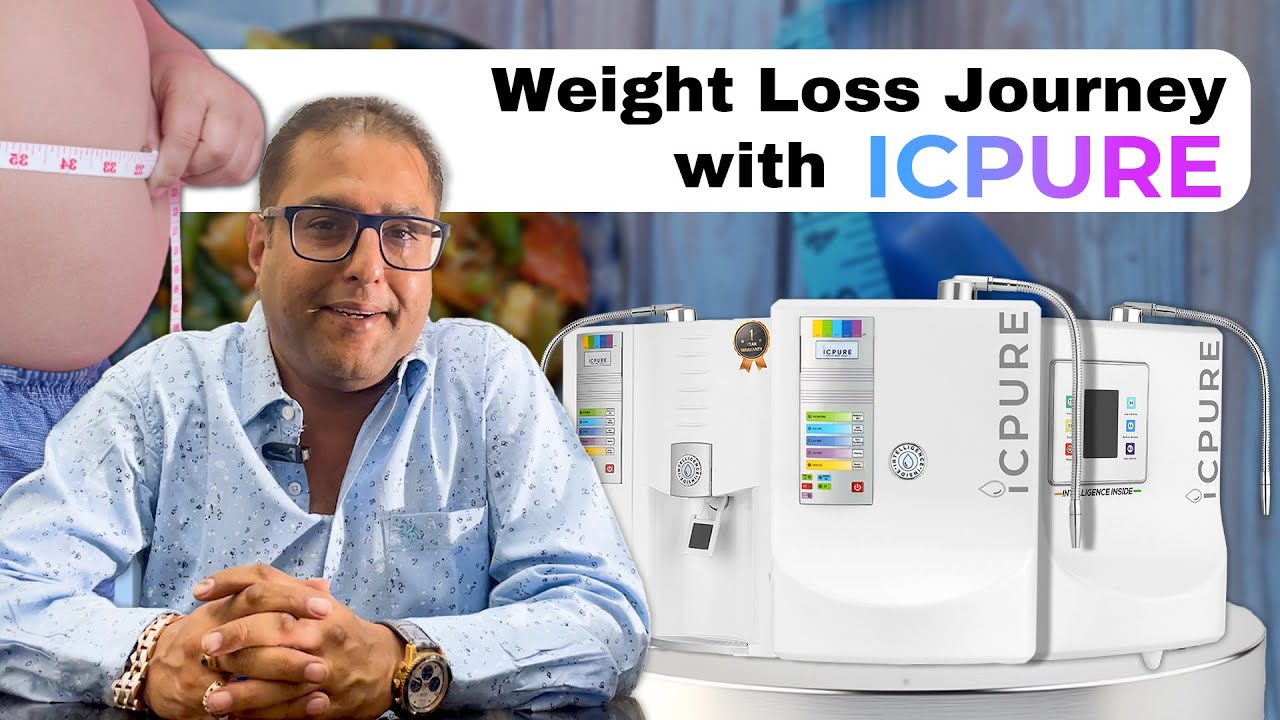
Ankit Seth, SOMAWA customer, Delhi. His experience, in his own words. Individual wellness experience — not a medical claim.
“I did not go on a diet. I did not start a gym. I changed my water. And that was enough.”
Ankit Seth, a customer from Delhi, reports losing approximately fourteen kilograms over several months after making SOMAWA water his primary daily water. He did not change his diet. He did not begin a new exercise programme. He changed the water on his kitchen counter and drank it consistently, every day.
One person’s experience is not a clinical trial. But when a customer’s report aligns with the direction of published research — reduced oxidative stress, improved metabolic signalling, enhanced cellular hydration — the pattern is worth noting, and worth investigating further.
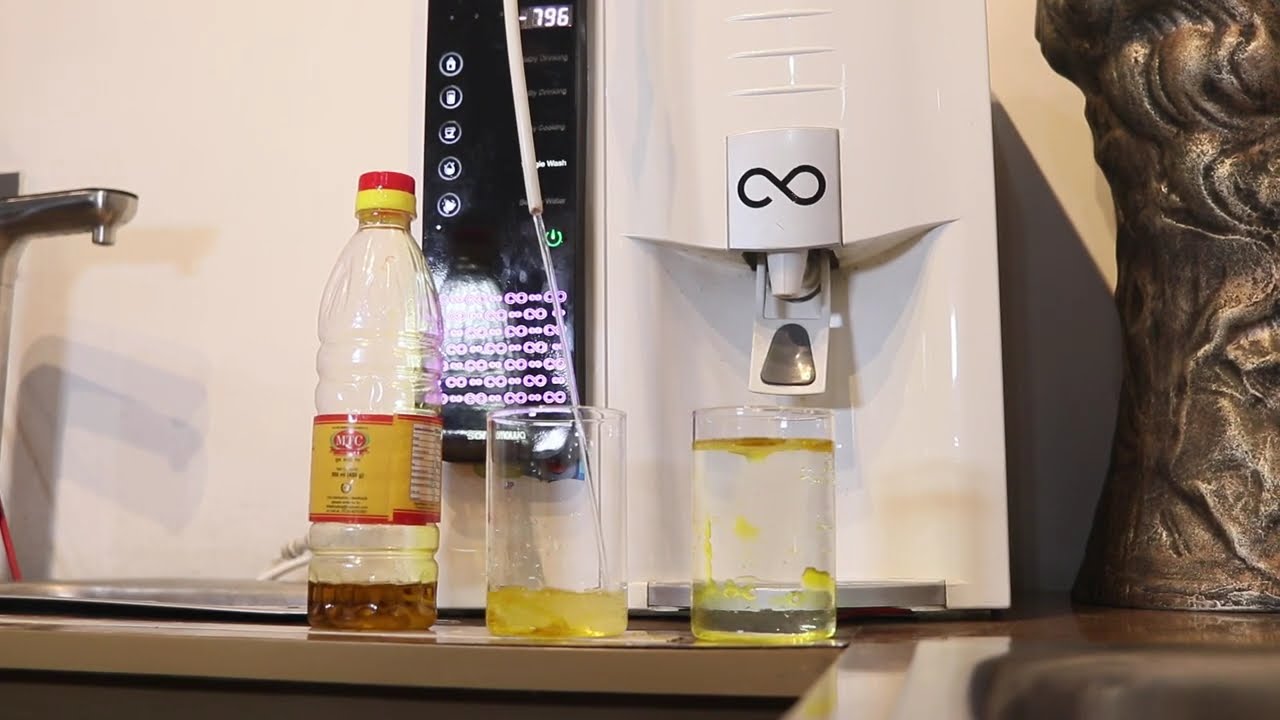
The oil test: a simple kitchen demonstration of the difference between regular water and SOMAWA water at the molecular level.
Water Intake for Weight Loss: How Much, When, and at What pH
The standard recommendation is 35ml of water per kg of body weight daily. A 65kg person needs approximately 2,275ml — about 8 to 9 large glasses. With SOMAWA water, begin at pH 8.5 in week one and calibrate upward with HealthPack guidance.
| Body Weight | Regular Water | SOMAWA Water |
|---|---|---|
| 50 kg | 1,750 ml (~7 glasses) | 1,250–1,400 ml (~5–6 glasses) |
| 60 kg | 2,100 ml (~8–9 glasses) | 1,500–1,700 ml (~6–7 glasses) |
| 70 kg | 2,450 ml (~10 glasses) | 1,750–2,000 ml (~7–8 glasses) |
| 80 kg | 2,800 ml (~11–12 glasses) | 2,000–2,250 ml (~8–9 glasses) |
| 90+ kg | 3,150 ml+ (12+ glasses) | 2,250–2,500 ml (~9–10 glasses) |
Why less? Electrolysis breaks water into smaller molecular clusters (nano-clusters) that pass through aquaporin channels — the body’s cellular water gates — with greater efficiency. Combined with 1,500 ppb dissolved molecular hydrogen, which reduces oxidative stress at the mitochondrial level, cellular hydration is achieved at lower volume. Chan et al. (2022) observed improved hydration biomarkers in athletes consuming hydrogen-rich water versus the same volume of plain water.[6]
The protocol for SOMAWA water is deliberate simplicity. Week one: start at pH 8.5, two glasses daily, let the body adjust. Week two: increase to four to six glasses. Week three onwards: reach your full daily target and calibrate pH upward based on individual response, guided by SOMAWA’s HealthPack programme.
The one practice that compounds everything: two glasses on waking, before food or tea. In India, this is called Ushapan — one of the five ancient water practices described below. Modern research on fasting-state hydration confirms what that tradition has always described.
Questions people actually ask
Does drinking water help you lose weight?
Yes. Water boosts the metabolic rate by approximately 30% for 30 to 40 minutes after consumption (Boschmann et al., 2003). It creates volumetric fullness that reduces appetite before meals and supports the kidneys and liver — the organs that process fat waste. Ionized water with negative ORP adds molecular hydrogen and antioxidant activity that plain water does not provide.
How do you lose water weight fast?
Reduce sodium intake, increase consistent hydration, and address the underlying inflammation causing fluid to leak into tissue. Drinking less water makes water retention worse — the body stores more when it senses scarcity. Negative ORP water supports vascular integrity, reducing the permeability that allows fluid to accumulate. Losing water weight is possible in 24 to 48 hours with the right approach.
Does lemon water help you lose weight?
Lemon water supports weight loss primarily by improving hydration habits and providing vitamin C, which supports carnitine synthesis — a molecule needed for fat transport. However, lemon juice is pH 2 to 3 at consumption. Its alkalising effect on the body is indirect, via citrate metabolism after digestion. Ionized water starts alkaline (pH 8.5–10) and carries molecular hydrogen and negative ORP that lemon water cannot provide.
Does drinking hot water help lose weight?
Hot water raises the metabolic rate slightly — approximately 4 to 8 extra calories per glass through a thermal effect lasting 20 to 30 minutes. It also stimulates digestive motility. Ionized water at any temperature adds molecular hydrogen (activates FGF21 per Kamimura et al., 2011) and negative ORP, which reduces the oxidative stress that impairs fat release. Temperature is a transient property. Molecular structure is not.
What is the best detox water for weight loss?
Detox water — infused with cucumber, mint, or lemon — has positive ORP (+100 to +200 mV) and no measurable antioxidant capacity. True cellular detoxification depends on antioxidant status at the cellular level. Water with the lowest ORP — ionized water at −800 to −1,000 mV — provides the strongest support for the body’s actual detox mechanisms (the liver and kidneys).
Does alkaline water help with weight loss?
Plain alkaline water with elevated pH alone does not demonstrate significant fat-loss effects. SOMAWA water is different: dissolved molecular hydrogen (1,500 ppb), negative ORP (down to −1,000 mV), and microclustered structure. Kamimura et al. (2011) and Ignacio et al. (2013) found hydrogen-rich alkaline water reduced fat accumulation in animal models. LeBaron et al. (2020) found improved metabolic markers in a human randomised controlled trial.
What is “fat burning water” and does it exist?
No water burns fat directly. Fat burning is a metabolic state requiring caloric deficit, low insulin, and functioning mitochondria. Water’s role is supportive — it carries nutrients, removes waste, and in the case of ionized water, reduces the oxidative stress that impairs the enzymes responsible for releasing stored fat. The closest evidence for “fat-supportive water” is hydrogen-rich water with negative ORP.
How much water should I drink to lose weight?
The standard recommendation is 35ml per kg of body weight daily. A 70kg person needs approximately 2,450ml — about 10 standard glasses. For weight management, drink one glass 30 minutes before each meal. With SOMAWA water, begin at pH 8.5 and increase to your full daily target over two to three weeks, calibrated through the HealthPack programme.
Is ice water better for weight loss than warm water?
Cold water creates a slight metabolic advantage because the body expends energy warming it to body temperature — approximately 7 to 8 extra calories per glass. Warm water stimulates digestive motility. Neither effect is large. For SOMAWA water, temperature does not affect molecular hydrogen content or ORP — those properties are determined during ionization, not at serving temperature.
Can drinking more water help lose belly fat?
Consistent hydration supports abdominal fat reduction indirectly: it reduces water retention in the abdomen, improves the metabolic environment for lipolysis, and reduces appetite before meals. What appears as “belly fat” is often a combination of visceral fat, intestinal gas, and water retention. Negative ORP water addresses the water retention and oxidative stress components. Diet and activity address the caloric component.
क्या गर्म पानी पीने से वजन कम होता है?
हाँ, गर्म पानी पीने से मेटाबॉलिज्म थोड़ा बढ़ता है — लगभग 20–30 मिनट के लिए। यह पाचन क्रिया को भी बेहतर करता है। लेकिन यह असर अस्थायी है। SOMAWA का आयनीकृत पानी किसी भी तापमान पर मॉलिक्युलर हाइड्रोजन और नेगेटिव ORP प्रदान करता है — जो शरीर के सेलुलर वातावरण को गहराई से बेहतर बनाते हैं। यह वेलनेस मार्गदर्शन है, चिकित्सा सलाह नहीं।
क्या नींबू पानी से वजन कम होता है?
नींबू पानी हाइड्रेशन की आदत बेहतर बनाता है और थोड़ी मात्रा में विटामिन C देता है। लेकिन नींबू का रस pH 2–3 होता है — यानी यह एसिडिक है। इसका “अल्कलाइन” असर पाचन के बाद होता है, पीते समय नहीं। SOMAWA का पानी सीधे pH 8.5–10 पर होता है और मॉलिक्युलर हाइड्रोजन तथा नेगेटिव ORP के साथ आता है, जो नींबू पानी कभी नहीं दे सकता।
क्या अल्कलाइन पानी से वजन कम होता है?
सिर्फ pH बढ़ाया हुआ अल्कलाइन पानी वजन पर बड़ा असर नहीं दिखाता। SOMAWA का आयनीकृत पानी अलग है — इसमें मॉलिक्युलर हाइड्रोजन (2,000 ppb तक), नेगेटिव ORP (−1,000 mV तक), और माइक्रोक्लस्टर्ड संरचना होती है। Kamimura et al. (2011) और Ignacio et al. (2013) के शोध में पाया गया कि हाइड्रोजन-युक्त अल्कलाइन पानी से वसा संचय कम हुआ। यह वेलनेस अनुभव है, मेडिकल दावा नहीं।
Sources
- Boschmann, M. et al. “Water-induced thermogenesis.” Journal of Clinical Endocrinology & Metabolism 88(12), 6015–6019 (2003). DOI: 10.1210/jc.2003-030780
- Ohsawa, I. et al. “Hydrogen acts as a therapeutic antioxidant by selectively reducing cytotoxic oxygen radicals.” Nature Medicine 13, 688–694 (2007). DOI: 10.1038/nm1577
- Kamimura, N. et al. “Molecular hydrogen improves obesity and diabetes by inducing hepatic FGF21 and stimulating energy metabolism in db/db mice.” Obesity 19(7), 1396–1403 (2011). DOI: 10.1038/oby.2011.6
- Ignacio, R.M.C. et al. “Anti-obesity effect of alkaline reduced water in high fat-fed obese mice.” Biological & Pharmaceutical Bulletin 36(7), 1052–1059 (2013). DOI: 10.1248/bpb.b12-00781
- LeBaron, T.W. et al. “The effects of 24-week, high-concentration hydrogen-rich water on body composition, blood lipid profiles and inflammation biomarkers in men and women with metabolic syndrome: a randomized controlled trial.” Diabetes, Metabolic Syndrome and Obesity: Targets and Therapy 13, 889–896 (2020). DOI: 10.2147/DMSO.S240122
- Chan, K.L. et al. “Alkaline water consumption is associated with lower prevalence of metabolic syndrome in postmenopausal women.” PLOS ONE 17(10), e0275640 (2022). DOI: 10.1371/journal.pone.0275640
The SOMAWA range
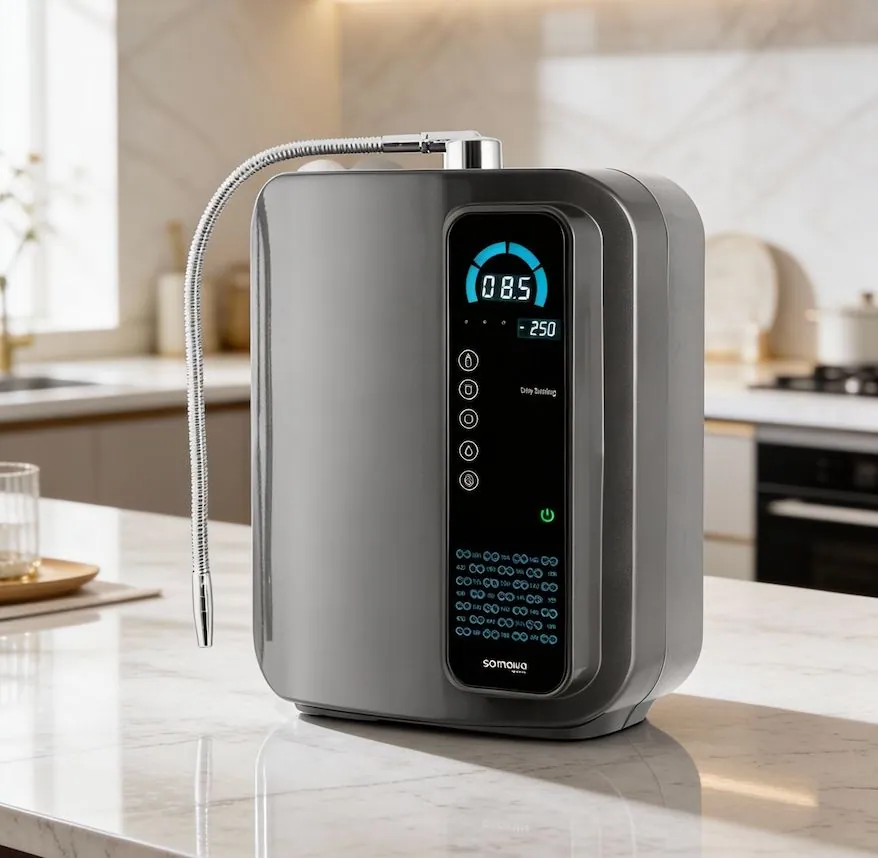 Amara
Amara
Pipeless AFS design. Think beyond health.
Learn more →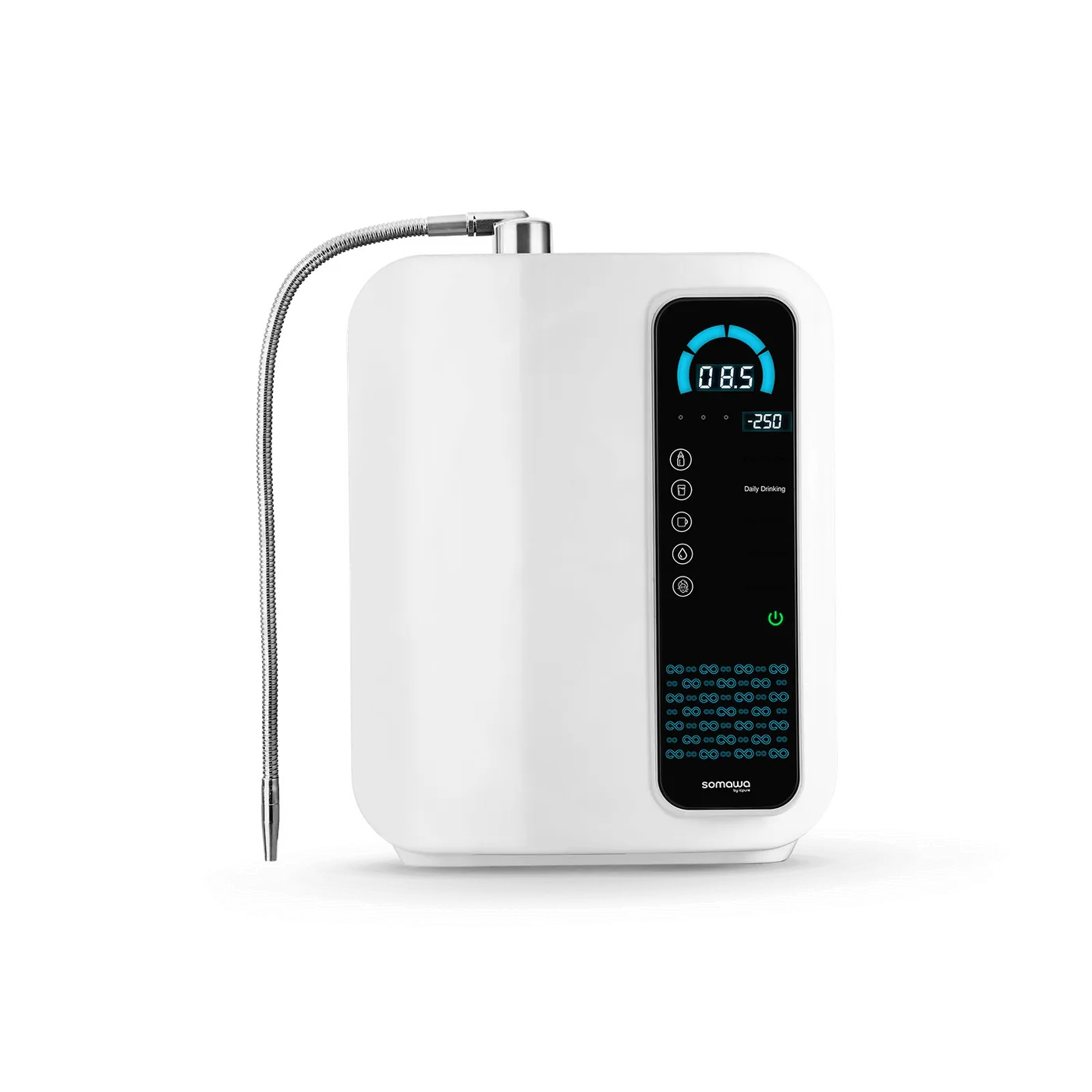 Amara NXT
The Amara platform, taken further.
Learn more →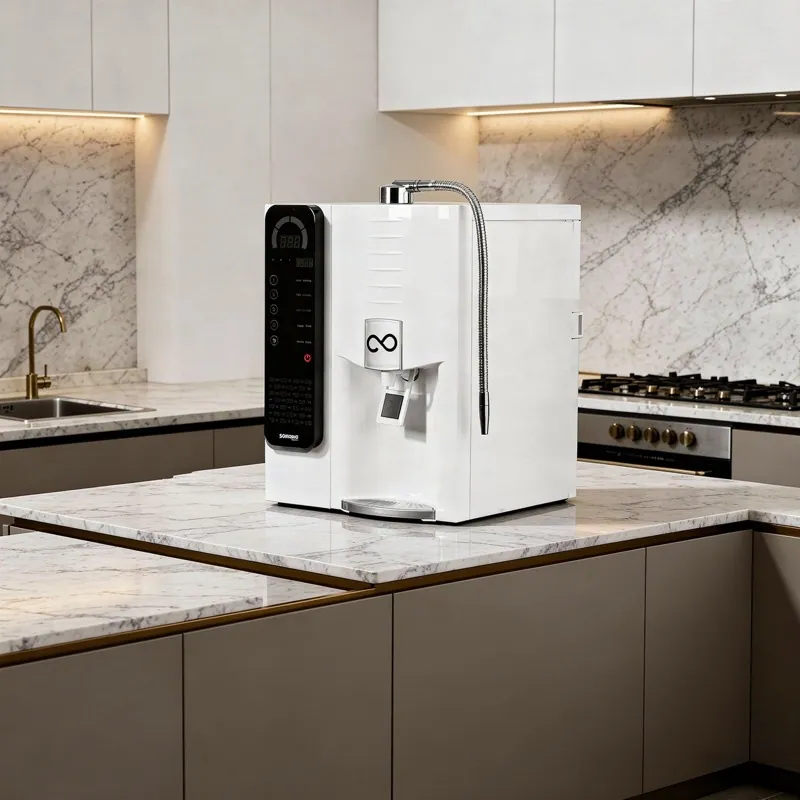 Udaka
Udaka
Built-in RO and ionisation in one unit.
Learn more →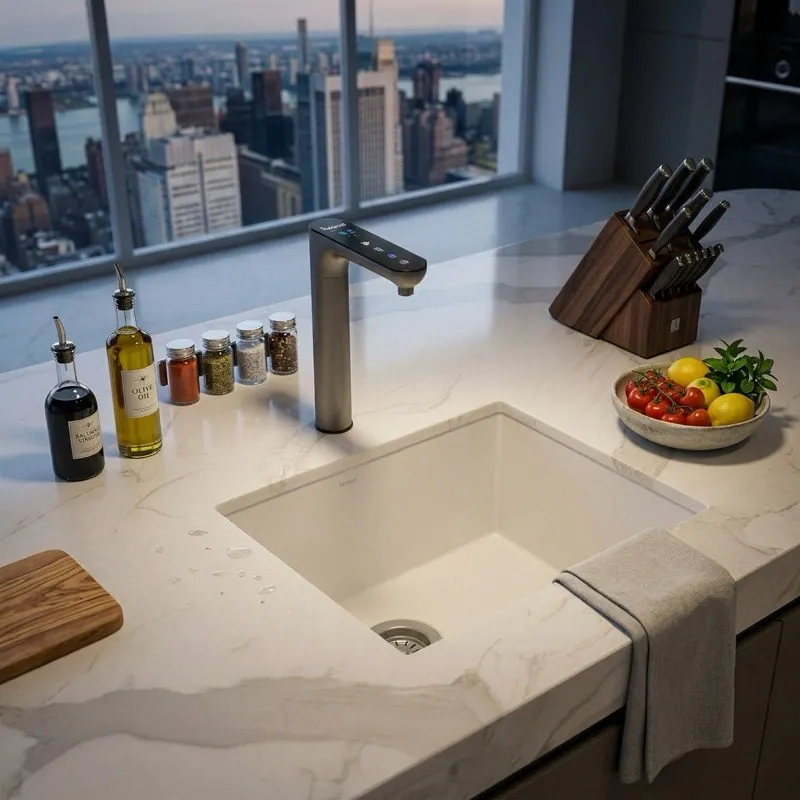 Modish
Nine plates. Designed to make a difference.
Learn more →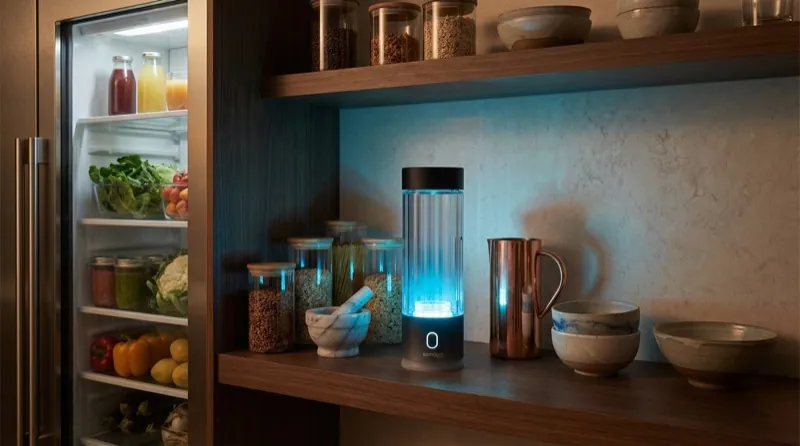 Toya
Toya
Experiential water. Infuses life in every drop.
Learn more →SOMAWA products are wellness devices, not medical treatments. Nothing on this page is medical advice. Customer experiences are individual and vary; they are shared as wellness outcomes, not clinical results. Research cited is indexed with DOIs where available. SOMAWA is incubated under NRDC, an enterprise of DSIR, Ministry of Science and Technology, Government of India.