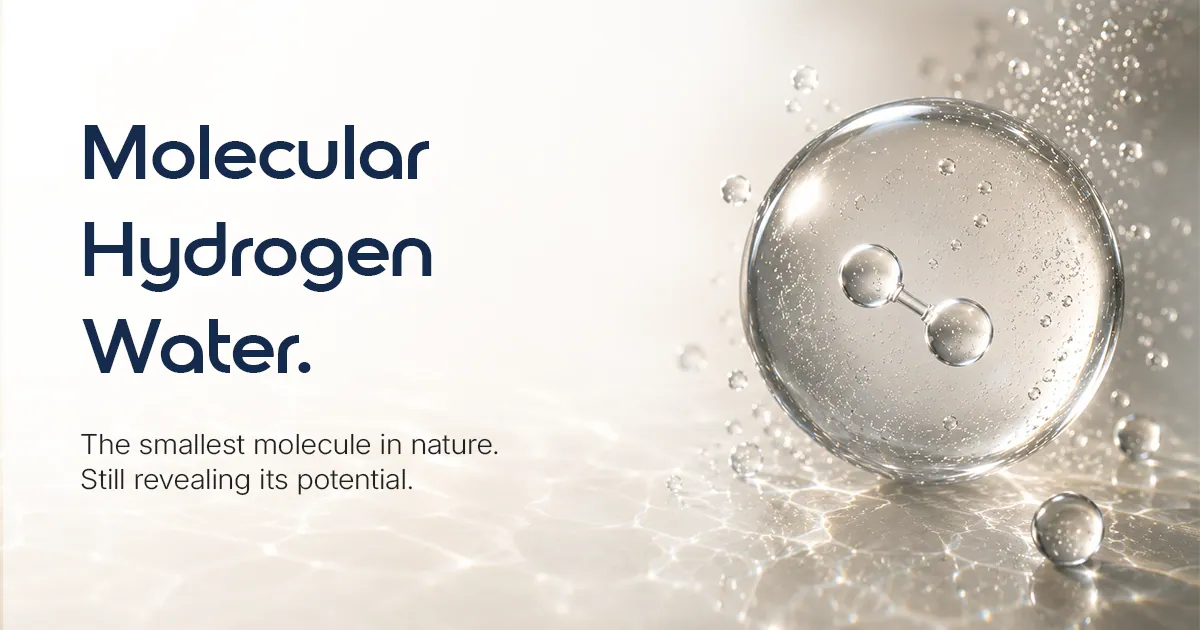
Molecular hydrogen (H₂) is the smallest molecule in existence; its size lets it reach places larger antioxidants cannot.
Most antioxidants are things you can see. A bowl of blueberries. A cup of green tea. A turmeric-coloured capsule.
This one you cannot see, taste or feel.
Its entire significance comes down to one property. It is the smallest molecule that exists.
Molecular hydrogen. The story is size. And size turns out to be everything.
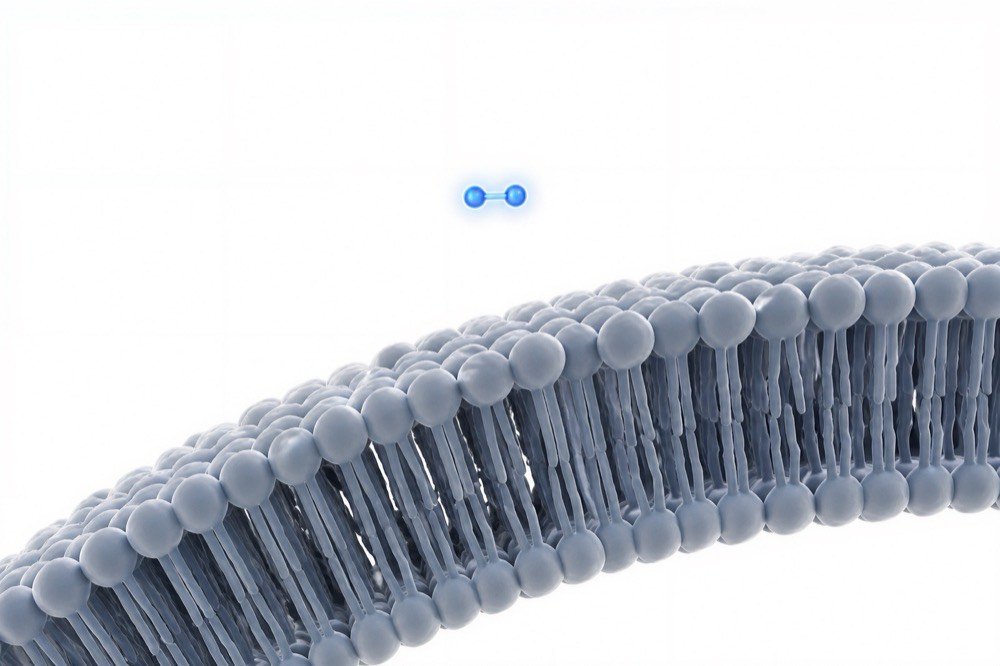
What is molecular hydrogen water?
It is ordinary water carrying dissolved hydrogen gas — H₂. Two hydrogen atoms, bound together, held in the water instead of escaping into the air.
Nothing in the universe is smaller. That is not trivia. That is the reason anyone studies it.
And it is not the same thing as alkaline water.
Alkaline describes the water's pH — a property of the water itself.
Molecular hydrogen is a gas dissolved in the water. A passenger, not the vehicle.
A water can be alkaline and carry almost no hydrogen. So "alkaline" on a label tells you nothing about H₂.
Why does the size of hydrogen matter?
Because size decides access.
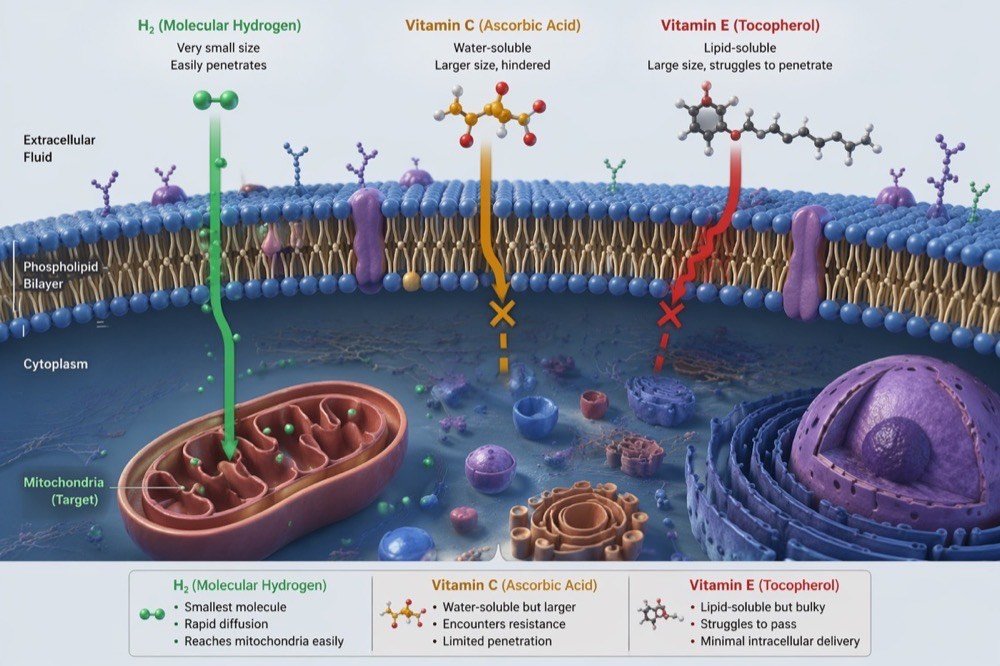
Not stronger. Smaller. A key that fits the lock beats a bigger key that doesn't.
Larger antioxidant molecules — the ones in food, the ones in most supplements — are useful. But they are big. Biology is full of tight spaces they cannot enter. Their reach is limited by their bulk.
Molecular hydrogen has almost no bulk.
Being the smallest molecule there is, it can diffuse where larger molecules cannot follow.
That is what researchers find interesting. Not that hydrogen is stronger than other antioxidants. That it is small enough to go where they can't.
A key that fits the lock beats a bigger key that doesn't.
What does the research on hydrogen water actually say?
Here, honesty is the whole point. So let us be exact.

Since 2007, researchers have published more than 1,300 peer-reviewed papers exploring molecular hydrogen. They are indexed on PubMed. Anyone can read them. The scientific interest is real and it is sustained.
Now the equally important half.
That body of work is exploration, not conclusion.
These are studies examining possibilities. Many in laboratory and animal models. A growing number in humans. Scientists are still weighing the results and arguing about them. That is how science looks while it is still happening.
"Studies have explored" is the honest verb.
Anyone who tells you hydrogen water is proven to do something specific for your health has walked past the science and into salesmanship. Trust them less for it.
What can be said cleanly:
- Molecular hydrogen behaves as an antioxidant in the chemical sense.
- The research community is investigating it seriously.
- The questions are open.
That is a more interesting place to stand than false certainty. And it respects you enough to let you read the papers yourself.
Hydrogen, alkaline, peroxide — three names people confuse
Thirty seconds to untangle.
Molecular hydrogen (H₂) — a gas dissolved in water. Antioxidant behaviour. What this article is about.
Alkaline water — a pH position. Says nothing about hydrogen.
Hydrogen peroxide (H₂O₂) — a completely different molecule that shares two letters and nothing else. It is an oxidiser. The chemical opposite. It has no place in a drinking glass.
If a conversation about hydrogen water drifts toward peroxide, the person talking has lost the thread.
How does hydrogen get into water?
Electrolysis.
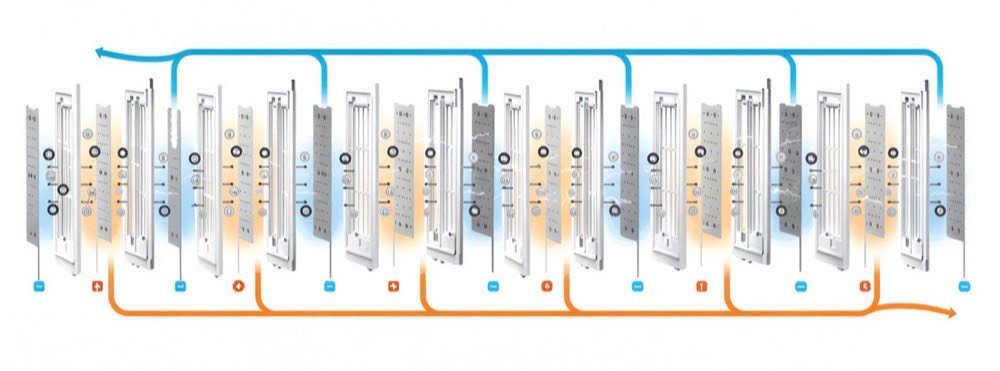
Water passes over charged plates. The process splits some water molecules and releases hydrogen gas into the water — at the moment you pour it.
The hard part is not making hydrogen. It is dissolving enough of it and holding it there.
Because the smallest molecule in existence is also the fastest to escape. Poured water loses its hydrogen to the air within minutes.
Which makes hydrogen a drink it now property. Never a store it one.
This is why the machine matters more than the marketing. Plate count. Plate surface. Chamber design. These decide how much hydrogen actually reaches your glass.
Somawa ionizers deliver up to 1,500 ppb — up to 2,000 ppb in the Modish, across nine sintered platinum-titanium plates. Incubated under NRDC — Ministry of Science & Technology, Government of India. The plate engineering is here.
What number should you ask for?
ppb. Parts per billion of dissolved hydrogen.
This is the one figure that separates a real product from a word on a label.
Ask it the way you'd ask an engine's horsepower or a camera's resolution. Not "does it have hydrogen" — everyone claims that. But: how much, measured, in the glass I actually drink.
A product proud of its number will tell you the number.
Then ask the second question. Measured when?
Because hydrogen escapes. A bottle filled in a factory has been losing hydrogen every day since — through the plastic, into the air. Quietly. Continuously.
Whatever the label says was true once.
The number that matters is the one at the tap. Not the one on the packaging.
Where to start
Not with a purchase. With a measurement.
If ppb is the hydrogen question, ORP is its companion — the number that says whether your water gives electrons or takes them: What Is ORP — and Why Your Water's Number Is Probably Positive.
You do not have to believe us. You can measure it.
Questions people actually ask
What is molecular hydrogen water?
It is ordinary water carrying dissolved hydrogen gas — H₂. Two hydrogen atoms, bound together, held in the water instead of escaping into the air. Nothing in the universe is smaller. That is not trivia. That is the reason anyone studies it. And it is not the same thing as alkaline water. Alkaline describes the water's pH — a property of the water itself.
Why does the size of hydrogen matter?
Because size decides access. Larger antioxidant molecules — the ones in food, the ones in most supplements — are useful. But they are big. Biology is full of tight spaces they cannot enter. Their reach is limited by their bulk. Molecular hydrogen has almost no bulk. Being the smallest molecule there is, it can diffuse where larger molecules cannot follow.
What does the research on hydrogen water actually say?
Here, honesty is the whole point. So let us be exact. Since 2007, researchers have published more than 1,300 peer-reviewed papers exploring molecular hydrogen. They are indexed on PubMed. Anyone can read them. The scientific interest is real and it is sustained. Now the equally important half. That body of work is exploration, not conclusion. Molecular hydrogen behaves as an antioxidant in the chemical sense. The research community is investigating it seriously. The questions are open.
How does hydrogen get into water?
Electrolysis. Water passes over charged plates. The process splits some water molecules and releases hydrogen gas into the water — at the moment you pour it. The hard part is not making hydrogen. It is dissolving enough of it and holding it there. Because the smallest molecule in existence is also the fastest to escape. Poured water loses its hydrogen to the air within minutes.
What number should you ask for?
ppb. Parts per billion of dissolved hydrogen. This is the one figure that separates a real product from a word on a label. Ask it the way you'd ask an engine's horsepower or a camera's resolution. Not "does it have hydrogen" — everyone claims that. But: how much, measured, in the glass I actually drink. A product proud of its number will tell you the number.
The SOMAWA range
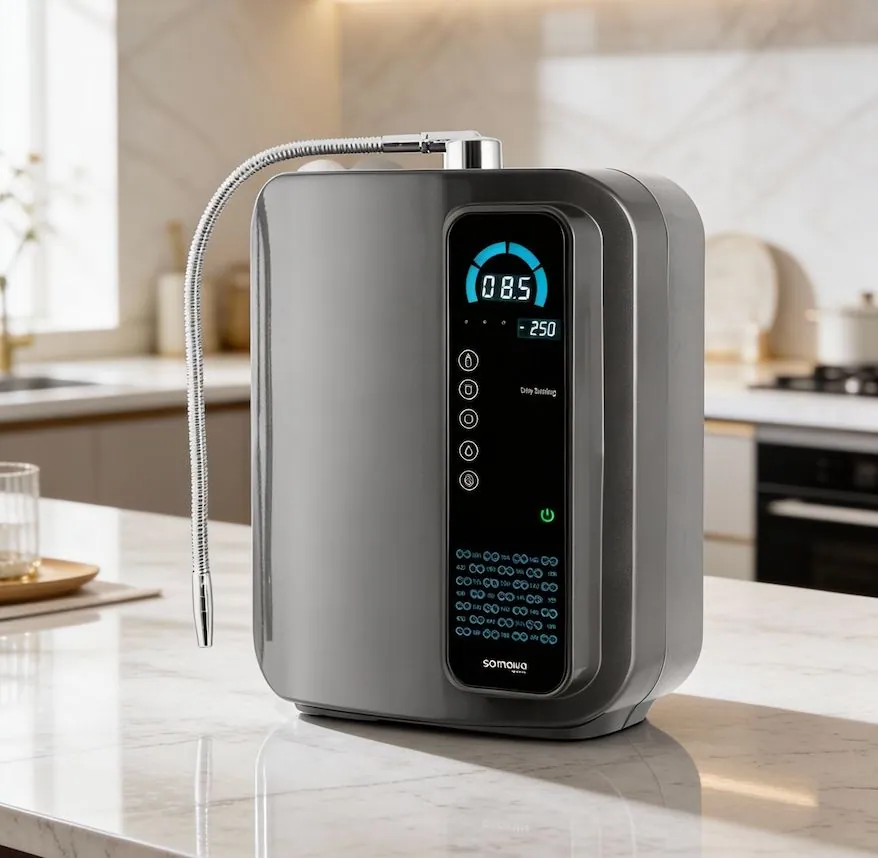 Amara
Amara
Pipeless AFS design. Think beyond health.
Learn more →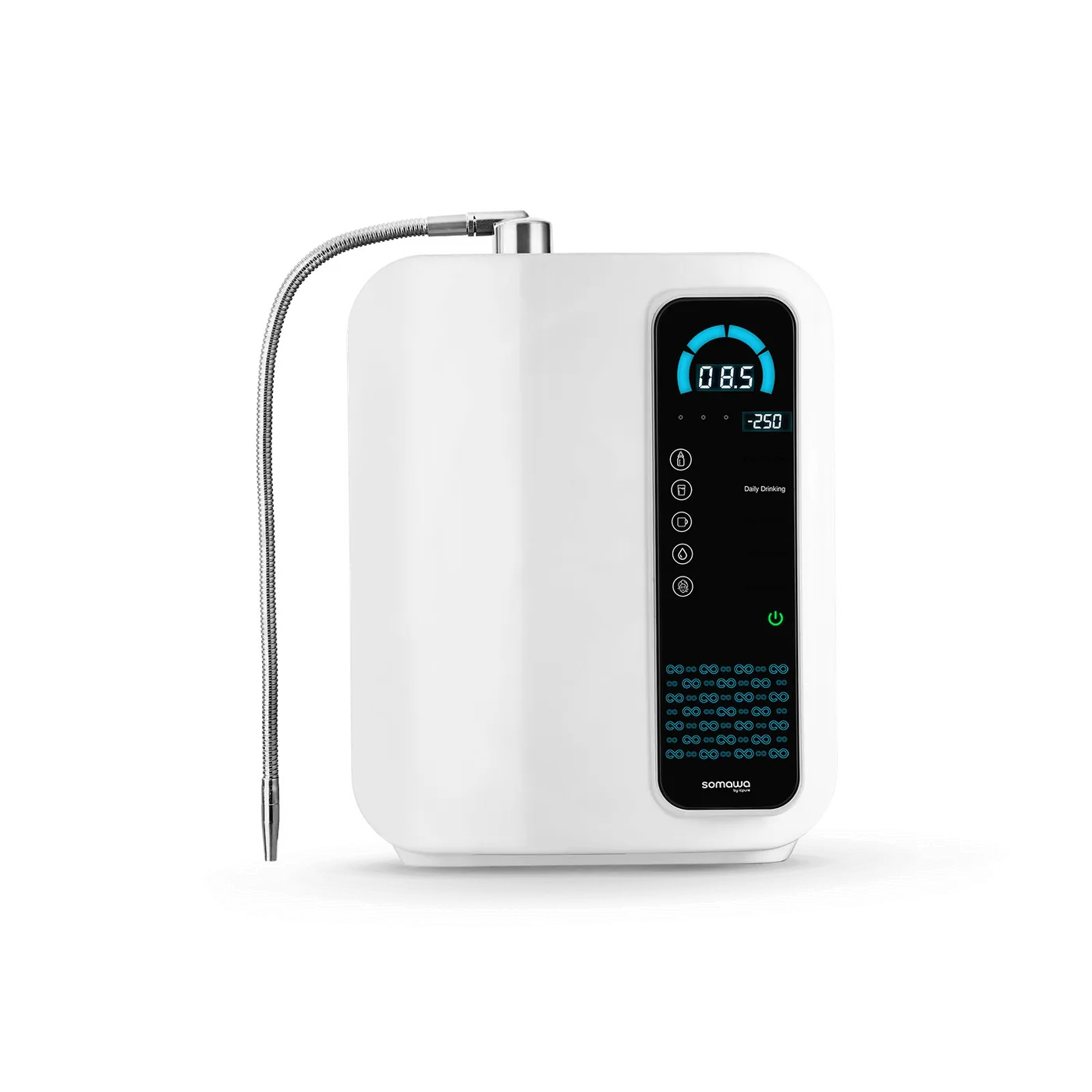 Amara NXT
The Amara platform, taken further.
Learn more →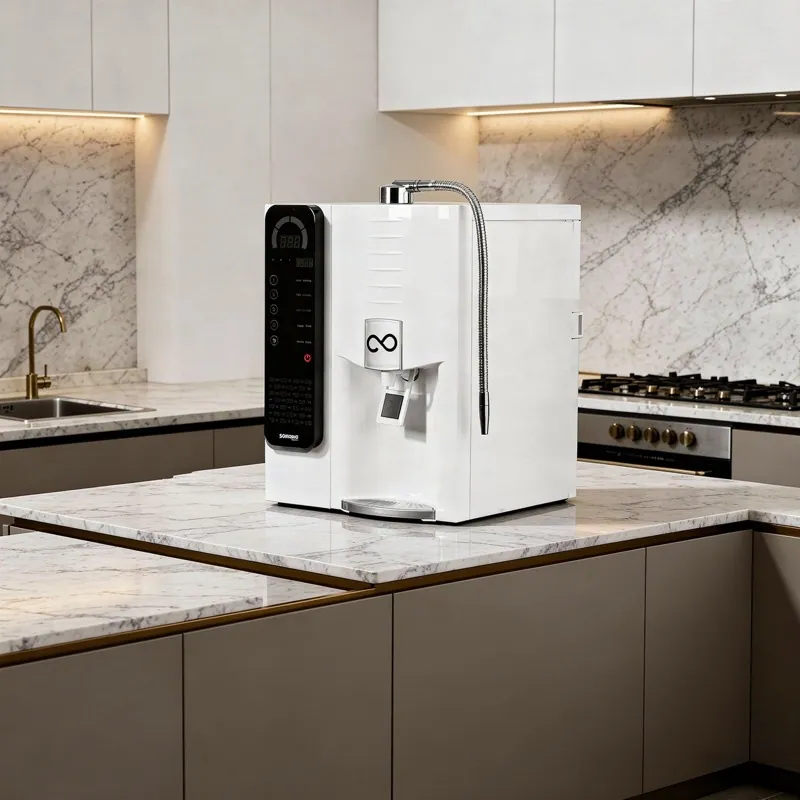 Udaka
Udaka
Built-in RO and ionisation in one unit.
Learn more →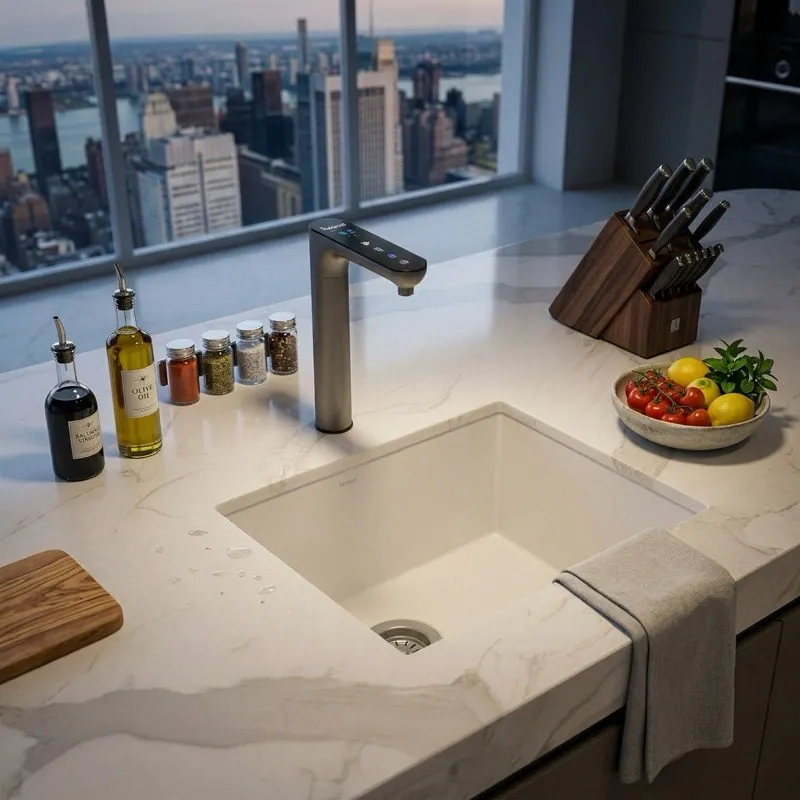 Modish
Nine plates. Designed to make a difference.
Learn more →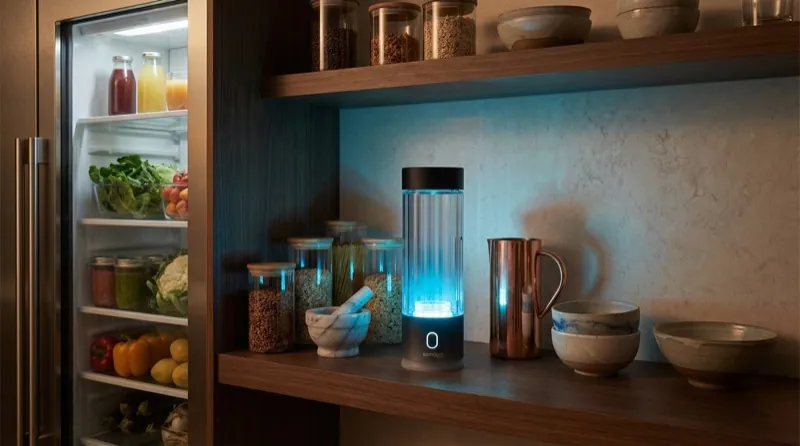 Toya
Toya
Experiential water. Infuses life in every drop.
Learn more →SOMAWA products are wellness devices, not medical treatments. Nothing on this page is medical advice. Customer experiences are individual and vary; they are shared as wellness outcomes, not clinical results. Research cited is indexed with DOIs where available. SOMAWA is incubated under NRDC, an enterprise of DSIR, Ministry of Science and Technology, Government of India.