RO solved India’s biggest water problem — safety. It is not the problem; it is just not the finish line.
First, give the RO its due.
It solved the largest water problem India has ever had.
For a generation, the question in an Indian kitchen was not what the water contained. It was whether it would make the family ill. Boiling. Straining through cloth. Waiting for the tanker.
Then reverse osmosis arrived. And a household could stop worrying.
That is not a small thing. If you own an RO, you made a good decision. This article is not going to pretend otherwise.
Your RO is not the problem. It is just not the finish line.

Is RO water good for health?
RO water is safe. Safety was the first question, and RO answered it.
The honest complication is what RO does beyond safety.
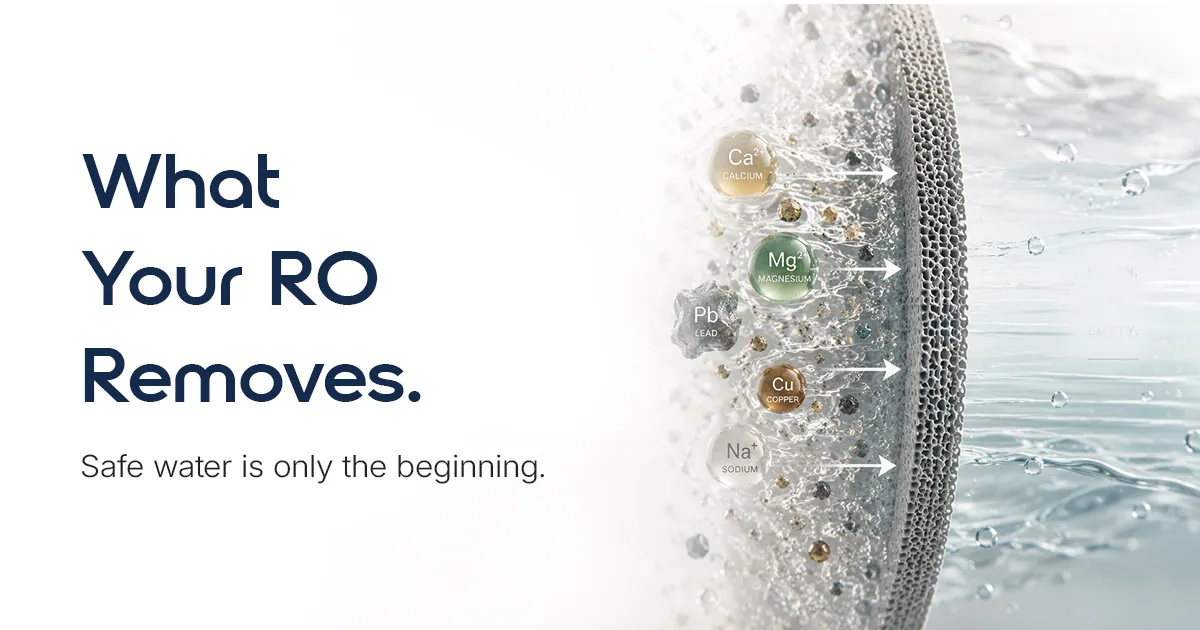
An RO membrane removes essentially everything dissolved in the water. Not just contaminants and heavy metals. Also calcium. Also magnesium. Minerals that were doing no harm at all.
The membrane cannot tell arsenic from calcium. So it strips everything.
What is left is clean. Safe. And empty.
Which was fine — when emptiness was the goal.
What does RO remove that it shouldn't?
Calcium and magnesium, mainly.
The membrane cannot tell arsenic from calcium. So it strips everything.
These are the minerals that make water "hard." India learned to treat hardness as a defect — the scale on the geyser, the white crust on the tap.
But dissolved calcium and magnesium in your drinking water are not the same thing as scale on a tap. They are minerals your body uses.
RO removes them almost completely. Along with everything else.
Your TDS meter shows a low number. You feel reassured.
But that low number counted the good and the bad together. It cannot tell you which one it removed.
Here is the twist nobody mentions.
Zero TDS is not the goal. The right TDS is.
What your TDS meter is actually telling you
| Reading | What you think | What it means |
|---|---|---|
| High (400+) | "Dirty water" | A lot is dissolved. Could be contaminants. Could be calcium and magnesium. Could be both. |
| Low (under 50) | "Purest water" | Almost nothing is dissolved. Including the minerals. |
| Zero | "Perfect" | Empty water. |
The meter measures quantity. Never quality.
It is an honest instrument being asked a question it cannot answer. And a whole country has been reading its answer as a grade.
What does the WHO say about demineralised water?
The World Health Organization has looked at this directly.

Its technical work on nutrients in drinking water — including the widely cited chapter on the health risks of drinking demineralised water — examined long-term consumption of water produced by processes like reverse osmosis.
WHO guidance points to keeping a minimum mineral content in drinking water. On the order of at least 30 mg/L calcium and 10 mg/L magnesium.
Now the careful part. Because careful is the only honest way to say it.
These are population-level technical findings about water composition and mineral intake. They are not a claim about you, or your RO, or any product.
They are simply the reason serious water scientists treat "how much did we remove?" as a real question rather than a marketing one.
And the reason it is worth knowing what your own water contains.
What is the pH of RO water?
Usually below 7. Commonly 5.5 to 6.5.
Water stripped of minerals drifts acidic.
This is quiet and unmeasured. Two or three litres a day, in a diet where nearly everything else you drink is acidic already. (The full day in drinks is here.)
Not a crisis. A characteristic.
But one nobody mentioned when the machine was installed. And one your TDS pen was never going to show you.
Does a mineral cartridge fix it?
Partly. The honest answer is more interesting than yes or no.
Many RO units now add a post-filter that puts a little mineral content back after the membrane has stripped it out.
That is a real improvement over bare RO. And notice why it exists: the industry already agrees with the second chapter of this story. Otherwise there would be nothing to add back.
But look at the shape of it.
Strip the water completely. Then partially rebuild it from a cartridge — whose output falls as it exhausts, and which almost nobody ever measures.
It is a correction applied to a design that removed too much. Corrections drift.
And the water's ORP — its electron behaviour — is not addressed by mineral cartridges at all.
So: better than nothing. Not a complete answer.
Remove-then-restore is a different philosophy from balance-by-design. Philosophies show up in the numbers at your tap.

So what does complete water look like?
The question has changed. That is the real point of this article.
For twenty years, India's water question was: is it safe?
RO answered that. Decisively.
Which means the next question — the one that only becomes askable because safety is settled — is this:
What should be left in?
Complete water is safe and mineral-appropriate. Free of what harms. Holding what serves. On the right side of the pH scale instead of drifting acidic by default.
That is a harder engineering problem than removal. Subtraction is easy. Balance is not.
It is the problem Somawa was built to solve. Our ionizers are incubated under NRDC — Ministry of Science & Technology, Government of India. Not a purer machine. A complete one. The engineering is here.
Do you have to remove your RO?
Often, no. Say it plainly, because people assume this ends with a demolition.
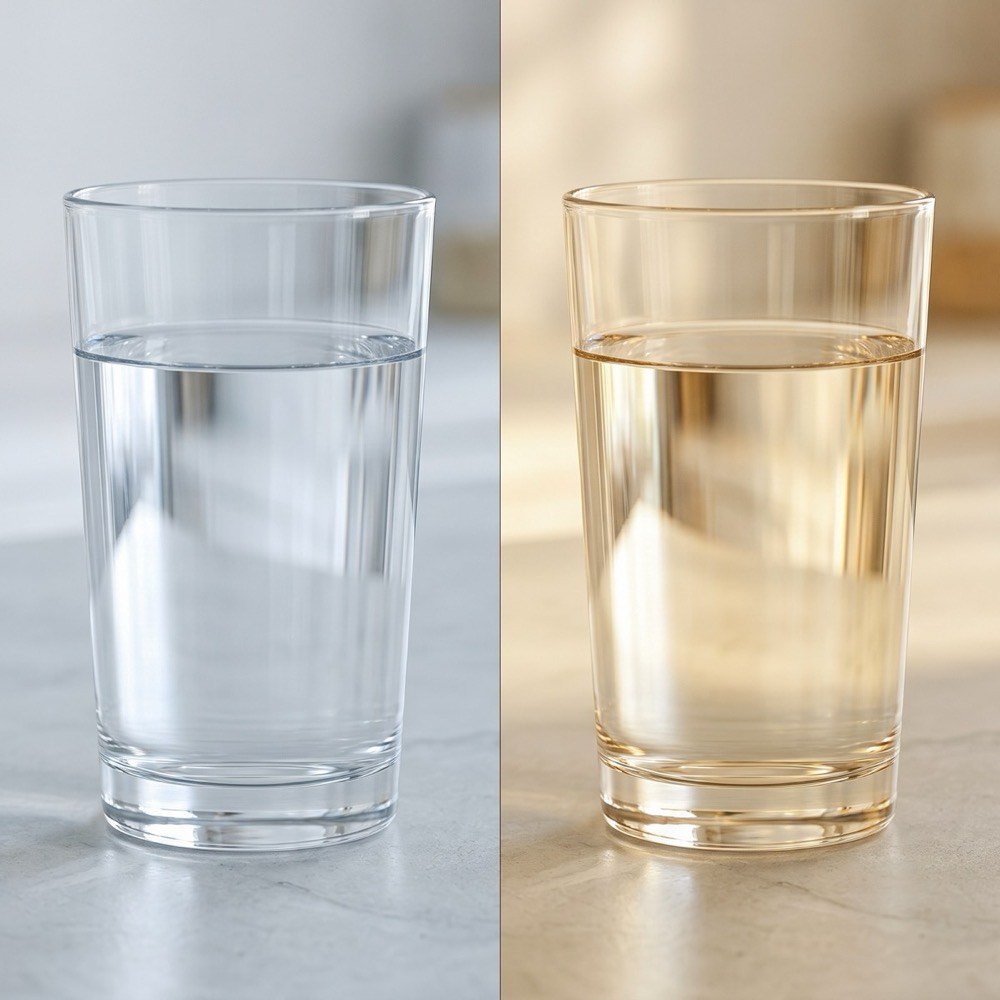
In many Indian homes — hard borewell water, an unreliable municipal line — the RO is doing necessary work. It should stay.
Keep your RO. Finish the job.
What changes is what happens after it. Whether the water leaves your kitchen empty and mildly acidic. Or balanced.
Whether your home needs the RO kept, adjusted, or built in — that depends on your source water. Which is another way of saying it depends on numbers nobody has measured at your tap yet.
That is why the test comes before the conversation. And why the report is yours even if you never buy anything.
Your RO was the right answer to the old question.
It is worth hearing what the new question sounds like.
Questions people actually ask
Is RO water good for health?
RO water is safe. Safety was the first question, and RO answered it. The honest complication is what RO does beyond safety. An RO membrane removes essentially everything dissolved in the water. Not just contaminants and heavy metals. Also calcium. Also magnesium. Minerals that were doing no harm at all. The membrane cannot tell arsenic from calcium. So it strips everything.
What does RO remove that it shouldn't?
Calcium and magnesium, mainly. These are the minerals that make water "hard." India learned to treat hardness as a defect — the scale on the geyser, the white crust on the tap. But dissolved calcium and magnesium in your drinking water are not the same thing as scale on a tap. They are minerals your body uses. RO removes them almost completely. Along with everything else.
What does the WHO say about demineralised water?
The World Health Organization has looked at this directly. Its technical work on nutrients in drinking water — including the widely cited chapter on the health risks of drinking demineralised water — examined long-term consumption of water produced by processes like reverse osmosis. WHO guidance points to keeping a minimum mineral content in drinking water. On the order of at least 30 mg/L calcium and 10 mg/L magnesium.
What is the pH of RO water?
Usually below 7. Commonly 5.5 to 6.5. Water stripped of minerals drifts acidic. This is quiet and unmeasured. Two or three litres a day, in a diet where nearly everything else you drink is acidic already. (The full day in drinks is here.) Not a crisis. A characteristic. But one nobody mentioned when the machine was installed. And one your TDS pen was never going to show you.
Does a mineral cartridge fix it?
Partly. The honest answer is more interesting than yes or no. Many RO units now add a post-filter that puts a little mineral content back after the membrane has stripped it out. That is a real improvement over bare RO. And notice why it exists: the industry already agrees with the second chapter of this story. Otherwise there would be nothing to add back.
So what does complete water look like?
The question has changed. That is the real point of this article. For twenty years, India's water question was: is it safe? RO answered that. Decisively. Which means the next question — the one that only becomes askable because safety is settled — is this: What should be left in? Complete water is safe and mineral-appropriate. Free of what harms. Holding what serves. On the right side of the pH scale instead of drifting acidic by default.
Do you have to remove your RO?
Often, no. Say it plainly, because people assume this ends with a demolition. In many Indian homes — hard borewell water, an unreliable municipal line — the RO is doing necessary work. It should stay. Keep your RO. Finish the job. What changes is what happens after it. Whether the water leaves your kitchen empty and mildly acidic. Or balanced.
The SOMAWA range
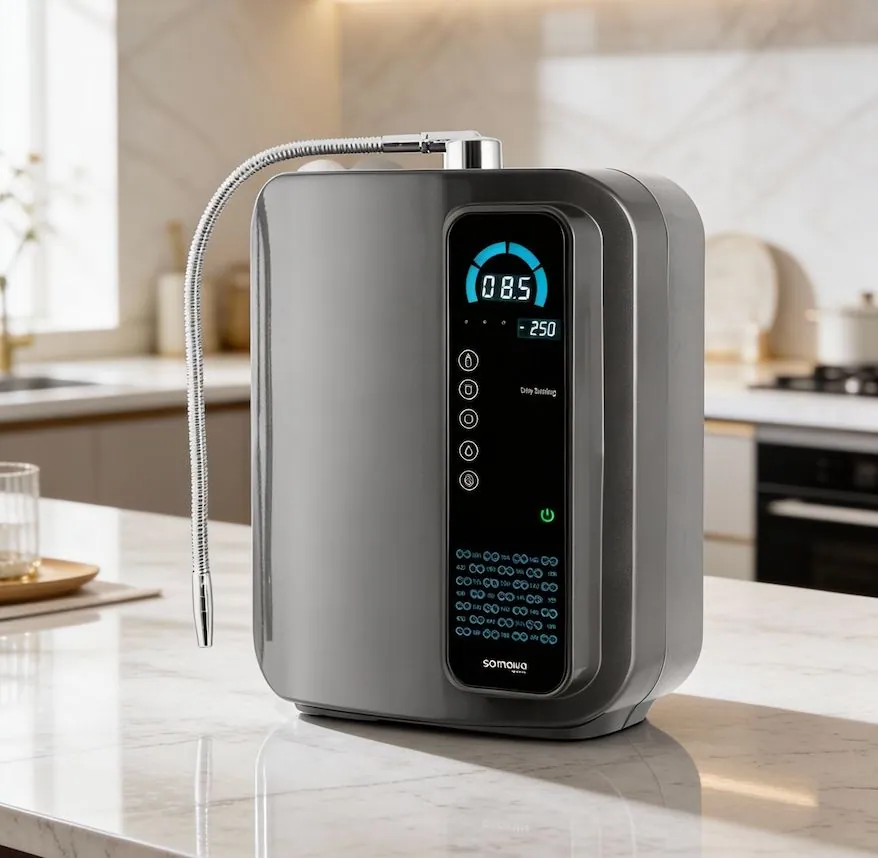 Amara
Amara
Pipeless AFS design. Think beyond health.
Learn more →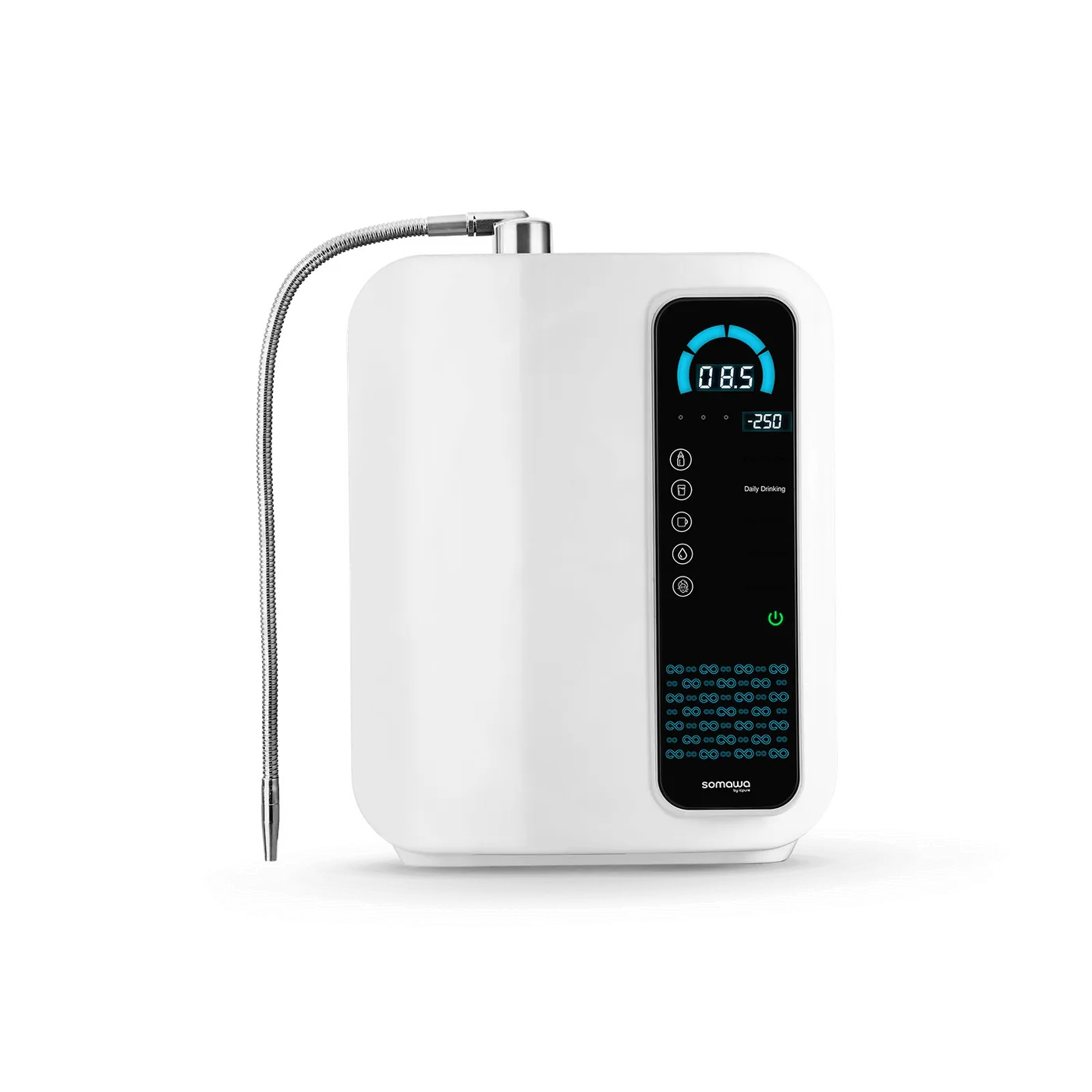 Amara NXT
The Amara platform, taken further.
Learn more →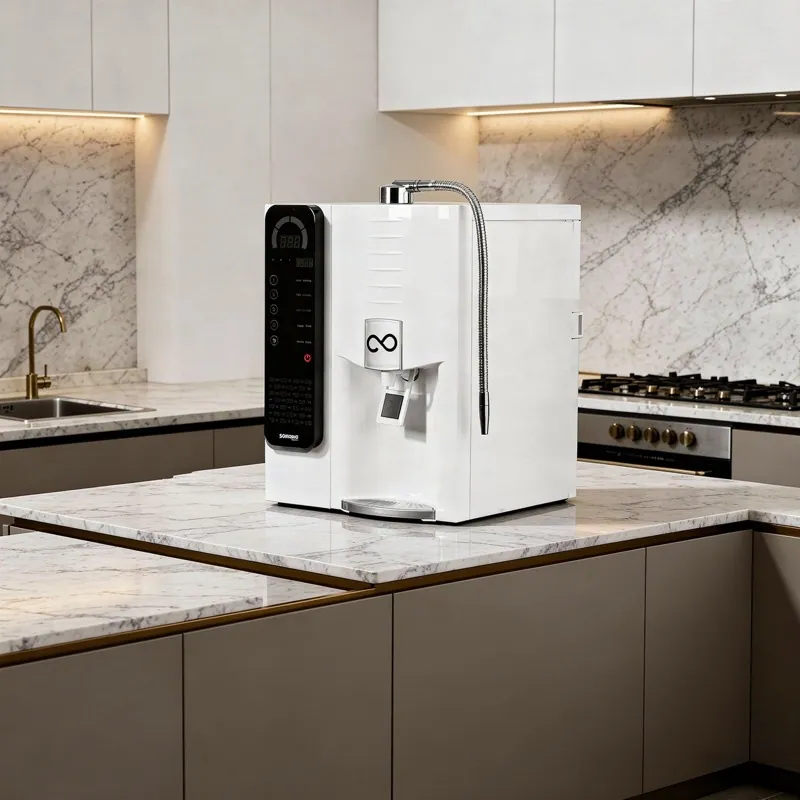 Udaka
Udaka
Built-in RO and ionisation in one unit.
Learn more →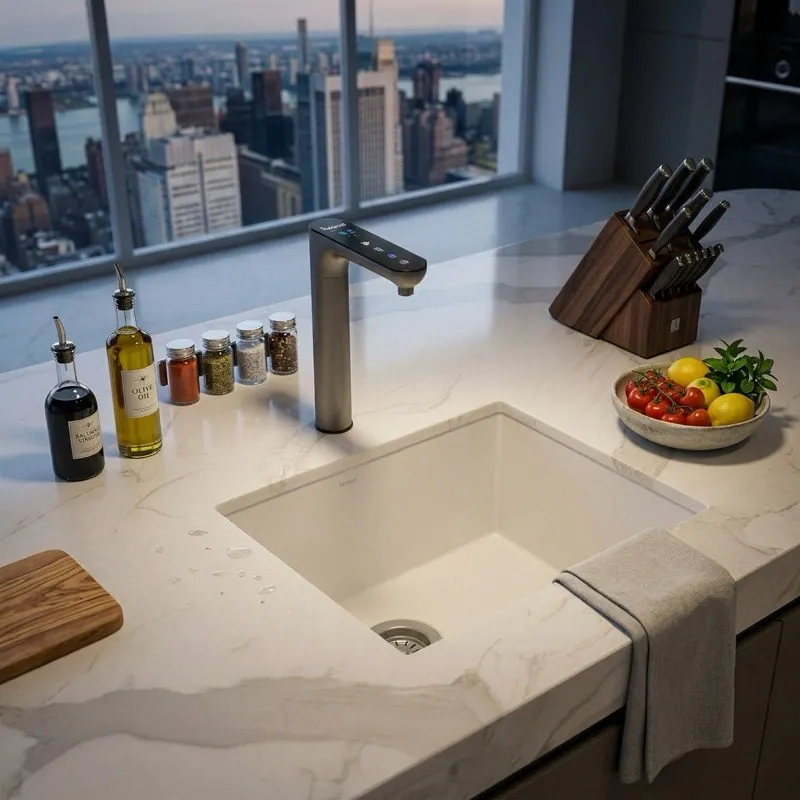 Modish
Nine plates. Designed to make a difference.
Learn more →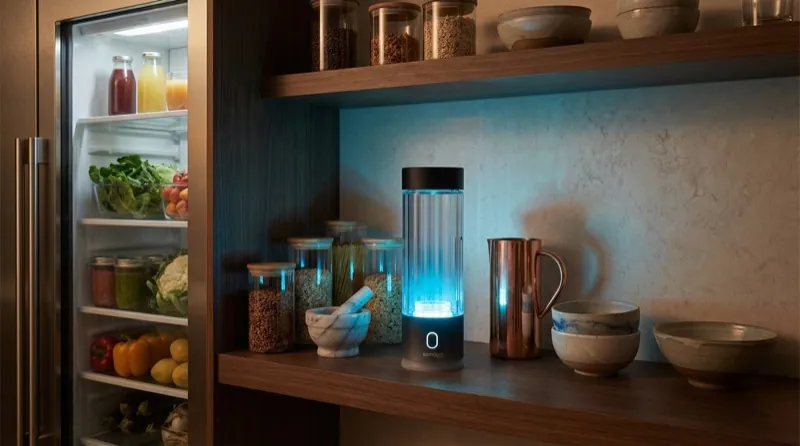 Toya
Toya
Experiential water. Infuses life in every drop.
Learn more →SOMAWA products are wellness devices, not medical treatments. Nothing on this page is medical advice. Customer experiences are individual and vary; they are shared as wellness outcomes, not clinical results. Research cited is indexed with DOIs where available. SOMAWA is incubated under NRDC, an enterprise of DSIR, Ministry of Science and Technology, Government of India.